

All Decarbonisation & environment articles
-
 News
NewsACI EUROPE launches Sustainability Strategy for Airports 2.0 to widen focus beyond decarbonisation
ACI EUROPE has published a revised sustainability framework for airports, extending its 2019 strategy to cover climate adaptation, biodiversity, circular resource use, accessibility and community engagement alongside decarbonisation.
-
 Opinion
Why airport decarbonisation is a leadership challenge, not just an environmental one
Davide Bassano, Head of Sustainability at Gruppo Save, explores why airport decarbonisation must be viewed as far more than an environmental challenge.
-
 Article
Sustainability & Infrastructure planning: Why 2026 is the year the numbers catch up
We explore the high-stakes trade-offs aviation leaders must navigate to fund decarbonisation and deliver complex live-site infrastructure.
-
 News
NewsDalaman Airport achieves global first with rooftop solar powered terminal
Dalaman Airport has become the first airport terminal worldwide to operate entirely on electricity generated by rooftop solar panels.
-
 News
NewsIATA alliance reaches 50 members to support aviation carbon markets
IATA’s alliance supporting aviation carbon markets has reached 50 participants as momentum builds behind CORSIA implementation.
-
 News
NewsAvinor electric aircraft trials support future zero emission aviation integration
New electric aircraft trials in Norway are shaping the future of zero-emission aviation, testing how battery-powered aircraft can safely operate alongside conventional traffic.
-
 News
NewsThe top 10 busiest airports in the world by passenger numbers
Read on to discover which airports had the highest passenger numbers in 2025, based on the total number of departing, arriving, transferring and direct passengers.
-
 Interview
The energy transition at Venice Marco Polo Airport: A Q&A with Davide Bassano, Director of Sustainability part 2
In part 2 of this series, Davide Bassano, Director of Sustainability at Gruppo SAVE answers audience questions received during IAR’s energy revolution webinar.
-
 Opinion
Advancing our skies: The digital transformation of air traffic management
As global aviation recovers and diversifies with emerging aircraft types, air traffic management must evolve through digitalisation and intelligent automation. CANSO’s Simon Hocquard explores how AI, machine learning and collaborative innovation are building the foundation for safer, more efficient and sustainable skies.
-
 Article
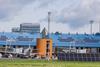
How did Tallinn Airport reduce its carbon emissions by 96%?
Tallinn Airport has achieved Airport Carbon Accreditation Level 3+ certification, reaching carbon neutrality through a 96% reduction in emissions since 2018. The Estonian gateway accomplished this milestone through systematic infrastructure investments, renewable energy adoption and fleet electrification, rather than carbon offsetting alone.
-
 Article
The Changi experience: Inside one of aviation’s most recognised brands
Singapore Changi Airport is evolving beyond operational excellence to position itself as a destination shaped by seamless connectivity, memorable passenger experiences and integrated marketing.
-
 Article
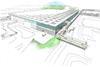
London Stansted Airport: Undertaking a transformative expansion
London Stansted is undergoing an extensive five-year programme to develop the airport, with the project consisting of a significant terminal expansion and the installation of new security technology
-
 Article
Top airport technology trends set to shape the future of airport operations in 2026
2026 marks a pivotal year for the sector’s sustainability and digital transformation. From renewable energy microgrids and SAF infrastructure, airports are rapidly adopting technologies that promise safer operations, reduced emissions and seamless travel experiences across the global network.
-
 Article
Redefining passenger experience: the transformation of Lucknow Airport’s Terminal 3
Chaudhary Charan Singh International Airport’s Terminal 3 (T3) in Lucknow has set a new standard for passenger experience in India – blending technology, local culture and operational efficiency into a seamless journey for millions of travellers annually.
-
 Report
The Airport Leader’s Report 2026: Leading through the digital age
Access this FREE eReport offering insights on the challenges that airports are experiencing around the globe.
-
 Article
How Frankfurt Airport is making the energy transition real
Michelle Sandbrink, Corporate Strategy and Sustainability Management, Fraport outlines how Frankfurt Airport is accelerating its long term renewable energy strategy through offshore wind, innovative vertical PV and large scale electrification to deliver resilient, low carbon airport operations.
-
 News
NewsBristol Airport study explores nuclear derived sustainable aviation fuel
Bristol Airport completes feasibility study with Equilibrion examining nuclear derived sustainable aviation fuel and hydrogen production in the South West.
-
 Article
PTE preview: Fraser Brown, Retail Director, Heathrow Airport
Ahead of his participation in PTE World, Fraser Brown, Retail Director of Heathrow Airport shares how the airport is reshaping its commercial strategy to ensure every journey feels seamless, relevant and future ready.
-
 News
NewsInternational Airport Summit launches 2026 edition in Rome supported by Aeroporti di Roma
The 2026 summit will gather global airport leaders in Rome this November, supported by Aeroporti di Roma as strategic partner for this year’s edition.
-
 News
NewsLondon Gatwick Airport reports strong 2025 performance and plans future growth
London Gatwick highlights strong financial performance, operational innovation and major investment plans supporting future growth and expanded capacity.