



Sustainability & net zero
Discover airport sustainability initiatives, decarbonisation strategies and net zero pathways, including carbon management, energy transition, environmental stewardship, community engagement and alternative fuel readiness to support responsible growth and long-term resilience.
Webinars and whitepapers
- Previous
- Next


Sustainability & net zero
 Article
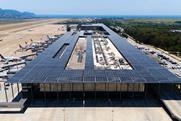
A world-first rooftop solar milestone at Dalaman Airport
Yiğit Laçin, Chief Executive Officer of YDA Dalaman Airport, outlines how 25,500 rooftop panels have enabled the terminal to cover its annual electricity demand, and what other airports can learn from the project.
 Interview
Nicolas Notebaert on building resilient, efficient and sustainable airports
President of VINCI Concessions, Nicolas Notebaert discusses network resilience, major expansion projects, smarter airport operations and the role of private operators in delivering sustainable growth.
 News
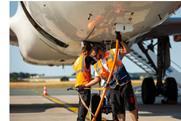
Bordeaux Airport electrifies all 29 passenger aircraft stands to cut ground emissions with EU support
Bordeaux-Mérignac Airport has completed an EU co-financed project to supply electricity to aircraft on the ground. Airlines can now switch off auxiliary power units at the stand, which the airport expects to avoid around 4,100 tonnes of CO₂ equivalent a year from 2027.
 News
In-depth: AGS Airports launches Horizons strategy as Glasgow Airport solar farm begins generating power
AGS Airports has unveiled its Horizons sustainability and ESG strategy as a 10MW solar farm at Glasgow Airport begins supplying around a quarter of the airport’s on-site electricity demand, supporting the group’s 2035 net zero target.
Join now
Unlimited access to industry intelligence that can make a difference to your business
- Bookmark articles and resources to access anytime
- Enjoy free access to industry leading resources, webinars and insights
- Stay informed with the latest news and interviews
- Receive updates and recommendations tailored to your professional interests
More Sustainability & net zero
 News
In-depth: London Luton Airport named GRESB sector leader for fifth consecutive year with perfect score
London Luton Airport has achieved a perfect GRESB score of 100 for the fifth year running, ranking first among more than 500 companies worldwide and reporting a fall of more than 40 per cent in operational carbon emissions since 2019.
 Article
Inside San Diego Airport’s efforts to manage aircraft noise
Chris Walker, San Diego International Airport’s Manager of Planning, Noise & Environment, explains how collaboration, monitoring and transparency underpin the airport’s approach to managing aircraft noise.
 News
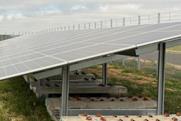
Bristol Airport solar arrays generate record renewable energy, up 20 per cent on 2025 levels
Solar arrays at the UK airport have produced more than 1,700,000 kWh so far this year, supporting its target of net zero operations by 2030.
 News
UK Civil Aviation Authority publishes report on managing drone and eVTOL aircraft noise
A new Civil Aviation Publication from the UK regulator sets out how established noise-management principles could be adapted for drones and eVTOL aircraft, as commercial operations move beyond trials.
 News
First hydrogen fuel-cell truck enters Cargo City operations at Milan Malpensa Airport in logistics trial
Gruber Logistics has used a hydrogen fuel-cell truck to make deliveries to handlers within Cargo City at Malpensa, testing the technology in live airport logistics operations as part of the European OLGA project.
 News
ACI EUROPE launches Sustainability Strategy for Airports 2.0 to widen focus beyond decarbonisation
ACI EUROPE has published a revised sustainability framework for airports, extending its 2019 strategy to cover climate adaptation, biodiversity, circular resource use, accessibility and community engagement alongside decarbonisation.
 News
Leeds Bradford Airport says night flying plans modernise noise management without raising overall limit
The airport has restated that its planning application would shift night-time controls from aircraft movement numbers to a noise-based quota, with the period for submitting support on Leeds City Council’s Planning Portal extended to 15 October.
 News
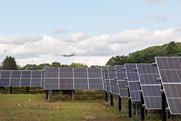
Picture of the week: London Stansted’s on-site solar farm becomes fully operational with 12.8 MW of AC capacity
Built by Onsite Power on land owned by the airport, the installation forms part of a £1.1 billion transformation programme and supports a commitment to net zero direct operations by no later than 2038.
 Article
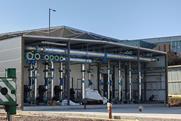
Pioneering sustainability: Bristol Airport’s Energy Centre and the path to net zero operations
Bristol Airport’s new Energy Centre will provide low carbon heating and cooling, supporting its target of achieving net zero airport operations by 2030.
 News
Bristol Airport innovation fund backs decarbonisation projects
Three projects focused on renewable energy, carbon removal and hydrogen operations have secured funding through Bristol Airport’s 2026 Aviation Carbon Transition programme.
 Opinion
Why airport decarbonisation is a leadership challenge, not just an environmental one
Davide Bassano, Head of Sustainability at Gruppo Save, explores why airport decarbonisation must be viewed as far more than an environmental challenge.
 Article
Sustainability & Infrastructure planning: Why 2026 is the year the numbers catch up
We explore the high-stakes trade-offs aviation leaders must navigate to fund decarbonisation and deliver complex live-site infrastructure.
 News
In-depth: Exeter Airport hydrogen trial reveals winter performance data for ground equipment decarbonisation
A winter trial at Exeter Airport has produced new operational evidence on the performance of dual-fuel hydrogen-diesel ground power equipment, building on the airport’s earlier Zero Carbon Turn project.
 Article
Bin there, done that: Schiphol’s hunt for its real climate hotspots in the rubbish
Denise Pronk, Head of Sustainability and Sara Solis, Circular Economy Lead at Royal Schiphol Group explore how Schiphol’s latest waste assessment uncovered hidden environmental impacts and challenged assumptions about what matters most in airport sustainability.
 Article
Sustainability and infrastructure planning: Why 2026 is the year the numbers catch up
Airports face growing pressure to align decarbonisation targets and infrastructure investment with costs, demand uncertainty and operational risk.
 Article
How to plan airport infrastructure amid uncertainty: future fuels, flexibility and resilient energy systems
Thomas Romig, Chief Airport Operations Officer of Masterise Group argues that airports do not need to predict the winning fuel of the future, they need to build the flexibility, energy capacity and infrastructure options to support SAF, hydrogen and electrification as the aviation transition unfolds.