
News
News
Western Sydney International details accessibility and inclusion facilities built into greenfield terminal design
Western Sydney International (Nancy-Bird Walton) Airport has set out the accessibility and inclusion offerings built into its terminal, from sensory spaces to hearing loop technology, as Australia’s first major greenfield airport in more than 50 years.

Picture of the week: Pittsburgh International Airport opens rare post-security outdoor terrace for passengers in new terminal
Pittsburgh International Airport has opened the first of two airside terraces in its new terminal, giving passengers outdoor space beyond security as part of a four-terrace programme designed into the building from the outset.
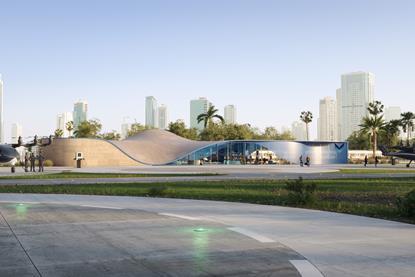
Signature Aviation and UrbanV establish joint venture for US advanced air mobility infrastructure
The joint venture, unveiled at NBAA-BACE 2026, will build a connected network linking existing Signature terminals with future dedicated vertiports.
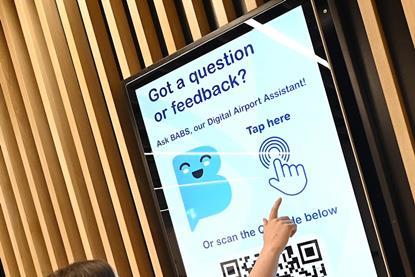
Birmingham Airport explores personalisation and staff support for AI customer assistant BABS
Birmingham Airport’s AI assistant, developed with Hello Lamp Post, now handles thousands of passenger enquiries, with personalisation, new integrations and colleague-facing support under consideration.
Join now
Unlimited access to industry intelligence that can make a difference to your business
- Bookmark articles and resources to access anytime
- Enjoy free access to industry leading resources, webinars and insights
- Stay informed with the latest news and interviews
- Receive updates and recommendations tailored to your professional interests
In-depth: AGS Airports launches Horizons strategy as Glasgow Airport solar farm begins generating power
AGS Airports has unveiled its Horizons sustainability and ESG strategy as a 10MW solar farm at Glasgow Airport begins supplying around a quarter of the airport’s on-site electricity demand, supporting the group’s 2035 net zero target.

In-depth: Edinburgh and Budapest Airports now offer off-site bag drop/collection
Two VINCI Airports members have introduced services letting passengers check in luggage away from the terminal, with Edinburgh piloting home collection and Budapest offering a downtown drop-off point.

In-depth: Operation Blue Skies launches AI trial to reduce aviation contrails
Operation Blue Skies marks the first state-backed attempt to coordinate contrail avoidance across an entire oceanic flight corridor.

Hamad International Airport expands biometric travel across more than 700 touchpoints
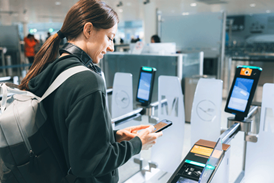
Hamad International Airport has expanded biometric processing across its departure journey, allowing passengers to use facial recognition at key airport touchpoints.

Skyfields invites hospitality and entertainment operators to help shape 3.12-hectare precinct at Perth Airport
Skyfields is seeking experienced operators for the Runway Entertainment Precinct at Dunreath Green, part of the first major expansion of development land on the Airport Estate since the 1990s.

Aspire names London City Airport’s first passenger lounge 09:LDN Suite ahead of 2027 opening
Swissport International’s hospitality arm has confirmed the name and general manager for the lounge, which marks the airport’s 40th year and will be open to all passengers.

In-depth: AGS Airports launches Horizons strategy as Glasgow Airport solar farm begins generating power
AGS Airports has unveiled its Horizons sustainability and ESG strategy as a 10MW solar farm at Glasgow Airport begins supplying around a quarter of the airport’s on-site electricity demand, supporting the group’s 2035 net zero target.
In-depth: Melbourne Airport progresses design of $4.5 billion international terminal expansion after opening new pick-up zones
New artist impressions show how Melbourne Airport’s international terminal will grow into the existing forecourt, as the first phase of a $17 billion privately funded pipeline takes effect.

Heathrow expansion plans expected to unlock at least 50,000 local jobs alongside new skills programmes
Heathrow has outlined how a third runway is expected to support at least 50,000 local jobs by 2055, with new work experience, careers and skills initiatives aimed at preparing local people for expansion roles.
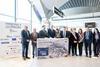
VINCI Airports starts Terminal 2 transformation at Lyon-Saint Exupéry ahead of 2030 Winter Olympics
VINCI Airports has marked the start of construction on a redesigned Terminal 2 at Lyon-Saint Exupéry Airport. The project is due to open by 2029 and forms part of a wider seven-year investment programme.

Picture of the week: Auve Tech autonomous shuttle operates without onboard safety operator at Tallinn Airport in European first
Auve Tech has removed the onboard safety operator from its MiCa autonomous shuttle service at Tallinn Airport. The shuttle now supports Magnetic MRO’s daily airside transport of employees and equipment under remote supervision.
In-depth: London Luton Airport named GRESB sector leader for fifth consecutive year with perfect score
London Luton Airport has achieved a perfect GRESB score of 100 for the fifth year running, ranking first among more than 500 companies worldwide and reporting a fall of more than 40 per cent in operational carbon emissions since 2019.
AirportsUK chair urges government to act on business rates as transport secretary backs aviation growth
At the AirportsUK Annual Conference, chair Baroness Ruby McGregor-Smith urged the government to back its growth agenda with action on business rates, while Transport Secretary Heidi Alexander set out progress on airport expansion, SAF and airspace modernisation.

Berlin Brandenburg Airport and Brandenburg police stage full-scale emergency drill simulating escalating protest
Berlin Brandenburg Airport and the Brandenburg state police have run a joint emergency exercise, rehearsing their response to a demonstration that escalates into fires, injuries and a breach of the airport’s aviation security area during a fictitious state visit.

ACI EUROPE and A4E call for urgent EES changes as border queues reach five hours
ACI EUROPE and A4E say border staffing shortfalls, unstable IT systems and limited use of automated gates are behind queues of up to five hours, and want the European Commission and Member States to act.
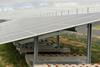
Bristol Airport solar arrays generate record renewable energy, up 20 per cent on 2025 levels
Solar arrays at the UK airport have produced more than 1,700,000 kWh so far this year, supporting its target of net zero operations by 2030.

UK Civil Aviation Authority publishes report on managing drone and eVTOL aircraft noise
A new Civil Aviation Publication from the UK regulator sets out how established noise-management principles could be adapted for drones and eVTOL aircraft, as commercial operations move beyond trials.
Houthis claim second strike on Riyadh’s King Khalid Airport, bringing death toll to 14
A second attack on Riyadh’s international airport in two days has closed the facility, brought the combined death toll to 14 and led to widespread cancellations as carriers across Europe and Asia suspend services.

Parliament reviews Heathrow expansion policy statement as support grows from unions, airlines and regional airports
Heathrow has published September traffic figures as Parliament considers the Heathrow Expansion National Policy Statement, with expansion backed by a widening group of stakeholders.

In-depth: Heathrow Reimagined welcomes CAA proposals for stronger governance and competition in Heathrow expansion regulation
The Heathrow Reimagined campaign has responded to the latest regulatory update from the UK Civil Aviation Authority, which sets out proposals for stronger oversight of capital investment as the airport’s expansion framework takes shape.