


IATA warns that air cargo bottlenecks put lives at risk
Posted: 26 March 2020 | International Airport Review | No comments yet
IATA has called for governments to keep global supply chains open for air cargo to keep up with the demand for vital medical equipment during the COVID-19 crisis.
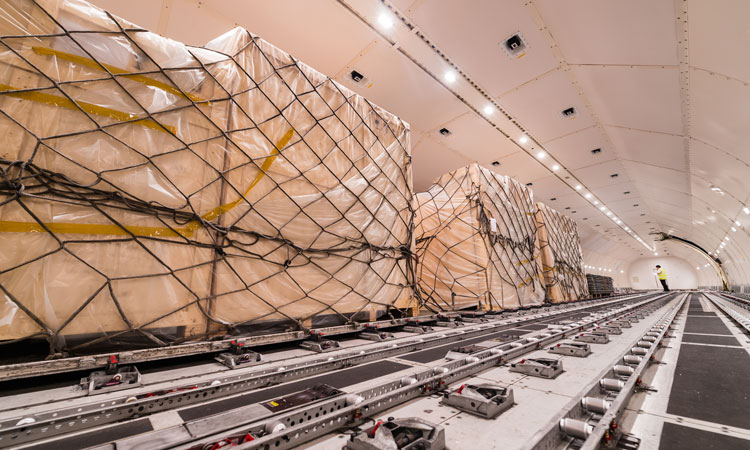
Governments should take urgent measures to ensure that vital air cargo supply lines remain open, efficient and effective, the International Air Transport Association (IATA) and its members have said.
“Air cargo is a vital partner in the global fight against COVID-19. But we are still seeing examples of cargo flights filled with life-saving medical supplies and equipment grounded due to cumbersome and bureaucratic processes to secure slots and operating permits,” said Alexandre de Juniac, IATA’s Director General and CEO. “These delays are endangering lives. All governments need to step up to keep global supply chains open.”
Airlines are scrambling to meet the gap between cargo demand and available lift by all means possible, including re-introducing freighter services and using passenger aircraft for cargo operations due to the COVID-19 crisis, the association said.
Join us live: Shaping the Next Generation of Hold Baggage and Air Cargo Screening
Join us live for an insightful webinar on 11th December at 14:00 GMT, in collaboration with Smiths Detection, as we explore the strategic balance of operational efficiency, regulatory compliance, and sustainability in high-volume security environments.
This session offers a focused look into future-proofing your security strategy.
Key learning points
- Cost Reduction: Strategies to minimize bag travel time while simultaneously reducing operational costs.
- Regulatory Roadmap: Insights into the next wave of regulatory changes and their impact on future investment decisions.
- Sustainable Systems: Practical approaches to building sustainability into security systems and lowering the total cost of ownership (TCO).
- Scalable Solutions: Real-world examples of scalable systems supporting current airport growth and preparing for tomorrow.
Register now for expert insights, case studies, and actionable strategies on operational efficiency!
To support these efforts, IATA has said governments need to remove key obstacles by:
- Introducing fast track procedures for overflight and landing permits for cargo operations, particularly in key manufacturing hubs in Asia in response to the increased number of cargo charters replacing withdrawn passenger operations
- Exempting flight crew members who do not interact with the public from 14-day quarantine requirements to ensure cargo supply chains are maintained
- Supporting temporary traffic rights for cargo operations where restrictions may apply
- Removing economic impediments, such as overflight charges, parking fees and slot restrictions to support air cargo operations during these unprecedented times
- Removing operating hour curfews for cargo flights to facilitate the most flexible global air cargo network operations.
“Around the world the frontline health workers who fight against COVID-19 need to be continuously supplied with necessary medical equipment and protective material,” added Paul Molinaro, Chief, Operations Support and Logistics, The World Health Organization (WHO). “It is our collective duty to keep these supply lines open by continuing air cargo operations. The scale-down of air passenger flow is seriously hurting our scheduled freight operations.
“We call on airline companies and governments to join the global effort to ensure dedicated freight capacity continues to operate on previously high volume passenger routes that are now closed down.”
WATCH NOW ON DEMAND: Enabling checkpoint flexibility with responsible open architecture
Join us for an essential virtual panel supported by Smiths Detection. We will explore how airports can overcome the challenge of mixed vendor systems by adopting a flexible, open approach to checkpoint technology.
This session offers a focused look into achieving efficiency, agility, and future-readiness.
Key learning points
- Understand what to ask during procurement to ensure long-term flexibility and avoid vendor lock-in.
- Learn how centralised image review and flexible algorithm use can help you get more from the technology you already own.
- Strategies to make mixed vendor screening systems work together to improve checkpoint performance and reduce costs.
- See examples of collaborative deployments and the operational agility they enabled.
Register now for expert insights from Los Angeles World Airports, Dutch Ministry of Justice and Security, and Smiths Detection!






 Chief Executive Officer
 CEO
CEO Airport General Manager
 Head of Operations
 Chief Strategy Development Officer
 Head of Operations, Safety and Emergency
 Chief Operating Officer
 CEO
CEO Chief Executive Officer