


Schiphol aims to promote sustainable active transport commuting
Posted: 5 September 2019 | International Airport Review | No comments yet
Amsterdam Airport Schiphol and the Ministry of Infrastructure and Water Management plan to invest in safe, swift and sustainable modes of commuting.
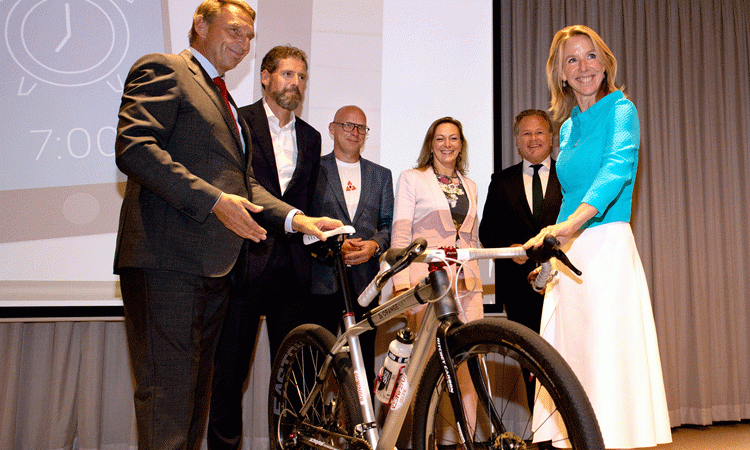
Amsterdam Airport Schiphol has announced its aim to increase the number of its employees who cycle to work. In order to make this a reality, the ‘goinGDutch’ bicycling programme has been developed.
The State Secretary for Infrastructure and Water Management, Stientje van Veldhoven, has officiated the programme’s official launch.
The airport employs over 66,000 people, around 4,000 of whom cycle to work. Schiphol is one of State Secretary Stientje van Veldhoven’s latest cycling ambassadors. As ambassador, Schiphol has teamed up with partners BAM, Microsoft and OrangeNXT to develop a bicycling programme entitled ‘goinGDutch’ in order to increase the number of employees who cycle to work.
Free webinar – The future of asset management in global aviation
15 January, 2026, 02:00PM GMT
Join this virtual panel to hear from some of the AtkinsRéalis and aviation sector experts as we discuss how asset management is changing and the impact it will have on the future operations of airports throughout the world.
Miriam Hoekstra – van der Deen, Director of Airport Operations at Amsterdam Airport Schiphol, commented: “Bicycles and e-bikes are a very attractive mode of transport for employees who live within 25km of Schiphol. It’s a sustainable means of commuting, it helps maintain your vitality and it helps ease traffic on other access roads into Schiphol. Together with its goinGDutch partners, Schiphol aims to increase the number of its employees who cycle to work on a regular basis to 7,000 by the end of 2020 and to 10,000 by the end of 2024.”
The goinGDutch bicycling programme includes specific plans to encourage cycling to and around the airport. These plans focus on infrastructure, bicycle facilities and encouraging cycling behaviour. Schiphol and the Ministry of Infrastructure and Water Management are investing in widening the cycle superhighways between Hoofddorp, Schiphol and Amsterdam. Furthermore, intersections will be made safer in order to improve the infrastructure further and bicycle facilities, including the number of bicycle parking facilities and charge points, will be expanded. Once this work is complete, Schiphol will take a proactive approach to encourage employees to use their bicycles, for instance by making it financially appealing.
van Veldhoven, said: “Proper routes and facilities for people who cycle to the airport will make a great contribution to airport accessibility, as well as lower costs and improve the well-being of the cyclists themselves. What’s more, every cyclist does his or her bit to lighten the load on Schiphol’s access roads. There’s also considerable potential as regards the many passengers who travel to and from Schiphol every day, especially those who fly often and travel light.”
Stay Connected with International Airport Review — Subscribe for Free!
Get exclusive access to the latest airport and aviation industry insights from International Airport Review — tailored to your interests.
✅ Expert-Led Webinars – Gain insights from global aviation leaders
✅ Weekly News & Reports – Airport innovation, thought leadership, and industry trends
✅ Exclusive Industry Insights – Discover cutting-edge technologies shaping the future of air travel
✅ International Airport Summit – Join our flagship event to network with industry leaders and explore the latest advancements
Choose the updates that matter most to you.
Sign up now to stay informed, inspired, and connected — all for free!
Thank you for being part of our aviation community. Let’s keep shaping the future of airports together!






 Chief Executive Officer
 CEO
CEO Airport General Manager
 Head of Operations
 Chief Strategy Development Officer
 Head of Operations, Safety and Emergency
 Chief Operating Officer
 CEO
CEO Chief Executive Officer