


Advancing our skies: The digital transformation of air traffic management
Posted: 16 February 2026 | Simon Hocquard | No comments yet
Simon Hocquard, President and CEO, CANSO (Civil Air Navigation Services Organisation), writes how the way we manage our skies must evolve, enabled by digitalisation and automation.
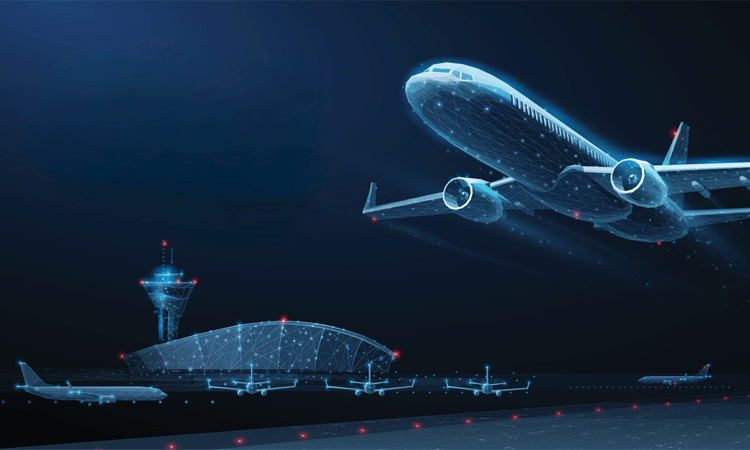
Air transport is in demand. The recovery from the pandemic is complete, and the global aviation sector is once again growing at pace. Passenger numbers are surging, new airlines are emerging, and our skies are welcoming a broader range of users than ever before, from commercial airliners and business jets to drones, air taxis, and even space launch operations.
This renewed dynamism brings both opportunity and challenge. To accommodate increasing complexity safely and efficiently, the way we manage our skies must evolve. The foundations of air traffic management (ATM) have served us well for decades, but the scale and diversity of future operations demand that we advance and digitally optimise how the system works end-to-end.
Digitalisation is the essential enabler of this transformation, unlocking higher levels of automation and system performance. Technologies once considered futuristic (cloud-based data services, artificial intelligence (AI), machine learning, and advanced automation) are now practical, proven tools that can help us manage airspace more safely, efficiently and sustainably. AI provides adaptive intelligence, machine learning is a subset technique within AI, and advanced automation is the operational application of rule-based and AI-enabled functions.
Automation
Automation has been part of aviation for over a century—from early autopilots to radar processing, flight-data systems and arrival sequencing. What matters now is what automation delivers: higher safety and predictability, more capacity when and where it is needed, and better environmental performance through optimised trajectories and fewer delays.
We also know how to bring it in safely. Aviation’s assurance disciplines—requirements traceability, verification and validation, safety cases and operational trials—give us a robust pathway for deploying new tools. As digitalisation improves data quality and interoperability, automation can take on broader, more time-critical tasks, while remaining transparent, auditable and under defined human responsibility.
From automation to intelligent systems
What makes this era different is the shift from automation to intelligent systems. Digitalisation allows data to flow seamlessly between systems, platforms and stakeholders. Artificial intelligence adds adaptive decision-making. Together, they enable a level of situational awareness and efficiency that was previously unimaginable.
What makes this era different is the shift from automation to intelligent systems.
AI can support traffic flow management, predict weather impacts, detect potential conflicts earlier, and assist with capacity balancing across regions. Machine learning can help refine airspace design, optimise runway use, and identify trends that improve safety and resilience.
We are already seeing practical applications emerge. In Europe, SESAR partners are developing AI-based decision support tools for controllers. Across the globe, ANSPs are exploring how digital twins (virtual replicas of airspace and operations) can test changes in real time without risk to live traffic. Together with common information services and interoperable data exchanges, these capabilities move us toward a connected, service-oriented ATM network rather than a patchwork of standalone systems.
CANSO’s Complete Air Traffic System (CATS) Global Council is at the heart of this transformation. It brings together industry leaders, regulators, technology providers, and researchers to shape a shared vision for 2045. The goal is simple but ambitious: to create a fully connected, interoperable, and sustainable airspace ecosystem.
Automation and AI are critical components of that vision, but so too are collaboration and human expertise. Delivering that vision depends on digitalisation first, with automation scaling as data and services become trusted, shareable and interoperable.
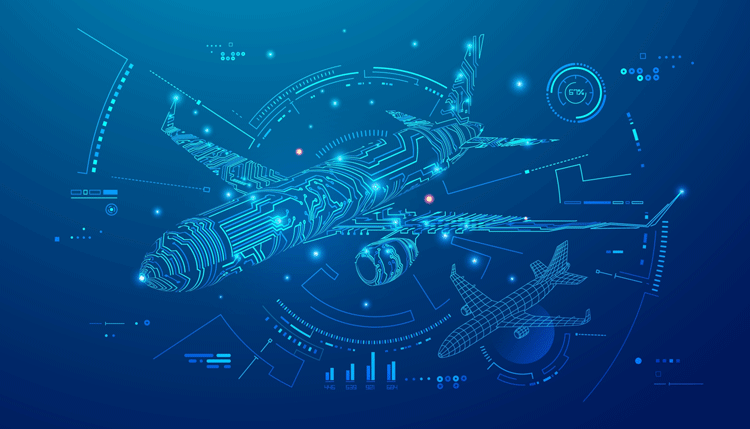
Humans and machines: redefining roles
Digitalisation and automation are transforming how tasks and decisions are shared across the aviation system. The goal is to rethink roles and responsibilities so that human and machine capabilities complement one another, optimising overall system performance.
This dynamic calls for new thinking in training and human–machine interaction.
What information does an ATCO need when certain processes are automated? How should it be presented—visually, audibly, or through alerts—to maintain awareness without overload? These are the kinds of human-factors questions that must be explored as we integrate new tools.
The future workforce will need a different skill set: one that blends traditional operational knowledge with digital literacy, data analysis, and system oversight. CANSO initiatives (including the CATS Global Council) and ANSP training academies across the industry are already addressing these shifts. The skill set evolves toward digital literacy, data interpretation, system-of-systems thinking and assurance of AI-enabled services. It’s an exciting time for the profession, one where technology enhances human potential.
Learning from Advanced Air Mobility
One of the most valuable test beds for this new human-machine balance is the emerging Advanced Air Mobility (AAM) sector.
AAM developers are racing to bring electric vertical take-off and landing (eVTOL) aircraft and other innovative platforms to market. In doing so, they are pioneering highly autonomous operations with human oversight – effectively creating the next generation of air traffic management in miniature.
Their test environments explore everything from automated separation and deconfliction to dynamic flight paths and integrated weather data. These systems must function in urban airspace with high density, low altitude, and variable conditions; a level of complexity that demands intelligent automation from day one.
As they progress, we in ATM will learn a great deal from their work. But it’s also worth remembering that the learning is mutual. Many of the technologies onboard eVTOL aircraft and in their control rooms, such as trajectory management, redundancy systems, and real-time data fusion, have roots in today’s air traffic control systems. We are the platform on which AAM is building. The reciprocity matters: AAM benefits from ATM’s assurance and interoperability heritage, while ATM benefits from AAM’s fast-cycle experimentation with highly automated operations.
And what do we call it when two sectors learn from each other? Collaboration. It’s a well-worn word, but it remains one of the most powerful tools in our industry. The relationship between AAM innovators and traditional ATM is a living example of how collaboration accelerates progress, ensures safety, and builds trust in emerging technologies.
Collaboration as the catalyst
Our work through the CATS Global Council embodies that spirit of collaboration. By bringing together stakeholders from across the aviation ecosystem, the Council is ensuring that innovation is not happening in silos. Regulators, ANSPs, airports, manufacturers and research institutions are sharing insights and aligning their visions for the digital future of airspace.
This collaboration is not just about technology. It’s about ensuring interoperability, standardisation and global harmonisation. Air traffic management must operate as one connected system worldwide. That means open standards, compatible data formats, and shared safety frameworks.
Digitalisation also plays a vital role in supporting sustainability goals. Through better data sharing, trajectory optimisation, and network-wide collaborative decision-making, we can reduce delays, shorten flight times, and minimise fuel burn – directly cutting CO₂ emissions.
Automation helps make aviation greener, not just more efficient.
The same collaborative ethos extends to cyber resilience. As systems become more connected, we must ensure they are secure by design. Information sharing and coordinated defence will be as important in the digital sky as coordinated separation is in physical airspace.
Looking ahead: embracing digital skies
As we move toward 2026 and beyond, air traffic management stands at a crossroads. On one path is the status quo: a patchwork of legacy systems and procedures. On the other lies a digital, data-driven and interoperable network capable of supporting crewed and uncrewed aircraft alike, seamlessly and sustainably.
Technology alone isn’t the answer; it is the enabler.
Choosing the second path means embracing change. It means investing in digital infrastructure, strengthening performance- and risk-based assurance frameworks for AI-enabled and automated functions, and preparing our workforce for new roles and responsibilities. It also means recognising that technology alone isn’t the answer; it is the enabler. The real transformation comes from how we use that technology to enhance collaboration, efficiency and safety.
The digitalisation of ATM is not a theoretical future; it’s already happening. From virtual towers and AI-assisted decision tools to cloud-based data sharing and satellite surveillance, we are witnessing a quiet revolution in how we manage the skies.
So yes, we will need automation (and increasingly, intelligent automation) to deliver the safe and seamless skies of the future. But it is not something to be wary of. It works. We have proven it for decades, and we are refining it every day.
Advancing our skies is not about replacing what works; it is about building on it—using digitalisation as the foundation and automation as the force multiplier for a smarter, safer, more sustainable future for all who share the sky.
 Simon Hocquard has over 30 years of experience across the air traffic management industry and is accountable for leading and managing CANSO as the global voice of air traffic management. He is also responsible for delivering on all CANSOs commitments to its members and the wider industry at large whilst creating sustainable association growth, presence and relevance with its industry peers and stakeholders.
Simon’s previous roles have included Operations Director at NATS, leading 1,500 people through the successful air traffic management for the 2012 London Olympics and other change programmes; Operations and Strategy Director at NATS, where he was also accountable for the entire regulated business; appointed by the European Commission as Chairman of the Network Management Board for 10 years where he worked very closely with governments and international institutions across Europe.
He is also Chair of the Complete Air Traffic System (CATS) Global Council, an independent forum that facilitates collaboration among leaders from across the aviation & aerospace industries, with the goal of building a unified vision for the future skies.
Stay Connected with International Airport Review — Subscribe for Free!
Get exclusive access to the latest airport and aviation industry insights from International Airport Review — tailored to your interests.
✅ Expert-Led Webinars – Gain insights from global aviation leaders
✅ Weekly News & Reports – Airport innovation, thought leadership, and industry trends
✅ Exclusive Industry Insights – Discover cutting-edge technologies shaping the future of air travel
✅ International Airport Summit – Join our flagship event to network with industry leaders and explore the latest advancements
Choose the updates that matter most to you.
Sign up now to stay informed, inspired, and connected — all for free!
Thank you for being part of our aviation community. Let’s keep shaping the future of airports together!
Related topics
Advanced air mobility (AAM), Air traffic control/management (ATC/ATM), Artificial intelligence (AI), Autonomous Technology, Digital transformation, New technologies, Regulation and Legislation, Sustainability, Workforce



 Chief Executive Officer
 CEO
CEO Airport General Manager
 Head of Operations
 Chief Strategy Development Officer
 Head of Operations, Safety and Emergency
 Chief Operating Officer
 CEO
CEO Chief Executive Officer