


Singapore Changi International Airport: The benchmark for smart airports
Posted: 22 December 2025 | Changi Airport Group | No comments yet
In this article, we delve into the smart airport initiatives at Changi Airport, which are setting the benchmark for airports around the world.
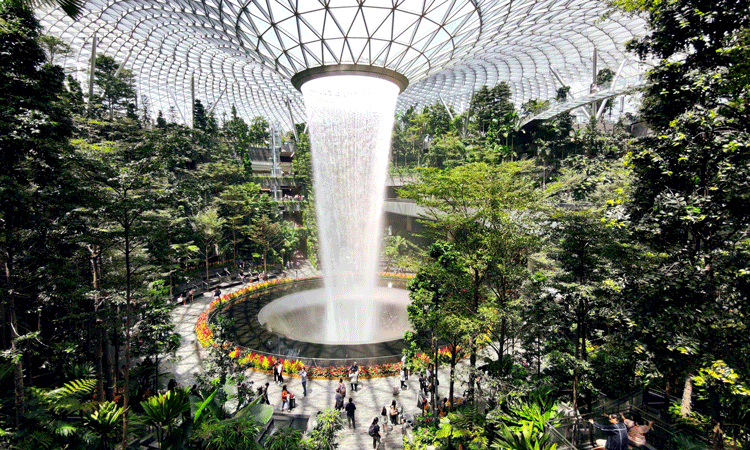
When airport leaders talk about smart airports, one name inevitably comes up: Singapore’s Changi Airport, which won Skytrax’s World’s Best Airport this year for the 13th time – a new record. Changi is often referred to as the benchmark for smart airports for how it uses technology to create a world-class passenger experience, and with a SMART Airport Vision and plans to invest over S$3bn over the next six years, Changi is in pole position to realise this vision. In this article, we delve into what they have done to acquire this reputation.
Changi as a “living lab”
Changi is often referred to as the benchmark for smart airports for how it uses technology to create a world-class passenger experience.
In 2017, Changi Airport Group launched the Living Lab Programme with the support of the Civil Aviation Authority of Singapore. The lab provides a platform for government agencies, ground handlers, concessionaires and security providers to test and demonstrate new solutions. The lab focuses on automation and robotics, data analytics and IoT, security tech and smart infrastructure management and demonstrates its commitment to innovation.
Biometrics
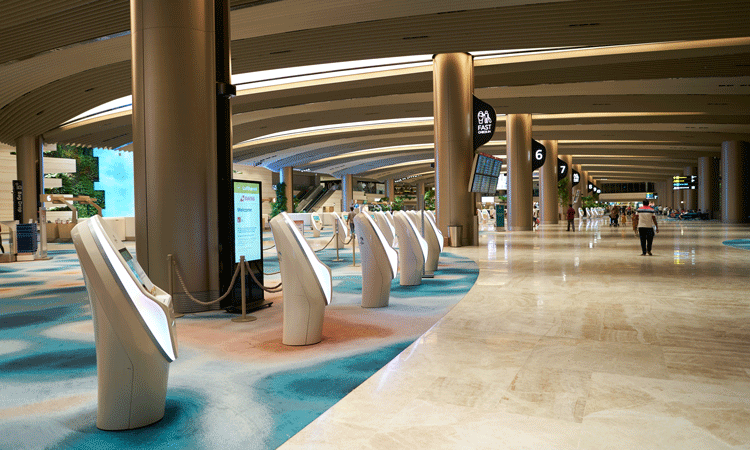
As part of the Fast and Seamless Travel (FAST) system, all passengers above the age of six can enjoy the benefits of automated gates at all four terminals when they have registered their biometrics during arrival immigration clearance.
Passengers can therefore drop their bag, pass through immigration and board their flight without having to show their passport. The use of biometrics greatly improves the passenger experience by reducing queue time by 40% thereby allowing passengers more time to explore the airport facilities and alleviating stressful moments in the journey. As a result, Changi does not need to deploy as many staff to oversee these processes, thereby optimising operating costs and allowing staff to focus instead on high value interactions with passengers.
Data-driven operations
The airport uses real-time data from sensors around the airport and predictive analytics to anticipate bottlenecks, detect queues forming, deploy staff or open new lanes. They are also exploring the potential of agentic AI, which can predict and recommend the next steps in a given scenario. For airports that use standard operating procedures, agentic AI could be very useful.
Through Airport Collaborative Decision Making (A-CDM), the airport shares relevant operational data with its airlines, ground handlers and air traffic control to enable better aircraft turnaround, gate allocation and help reduce delays to aircraft.
Changi Airport has also made use of a digital twin specifically within the Terminal 4 project, which allowed them to plan and monitor in real time, optimise resources, simulate scenarios and enable better decisions to be made.
Automation & robotics
Changi Airport is brimming with automation and robotics – the most famous of which is the first ever bartender robot in an airport. The Makr Shakr “Toni” robot resides in the Terminal 3 Lotte Duty Free store. It can prepare 80 drinks per hour and is a great hit with passengers.
The airport’s staff roster also includes cleaning robots that can navigate busy areas and interact with passengers. You can also see robots that return trolleys and pull heavy bins along a pre-mapped route, stopping for tenants to empty their rubbish. This reduces the need for manual collection and allows cleaners to focus on other duties as needed.
For a few years, Changi has been trialling driverless baggage tractors and autonomous baggage handling loaders on the airside, which can load and unload baggage containers autonomously. It is expected that this type of technology will play a crucial role in the turnaround of wide-body flights, which will help achieve efficiency savings and environmental gains. The driving of baggage tractors requires the highest number of drivers on the airside, so this solution helps to alleviate the labour shortage, which is impacting the whole sector.
Changi is the first airport in the world to trial end-to-end autonomous baggage handling solutions.
Changi is the first airport in the world to trial end-to-end autonomous baggage handling solutions, and reflects the airport’s vision of the future where routine airside logistics are automated with humans only overseeing and supervising operations.
Mobile app
Billed as a personal concierge in the palm of your hand, Changi Airport’s mobile app offers real-time flight updates, the ability to make dining and experience reservations, click & collect, baggage tracking, payments and rewards for you when you shop and dine. In return for your data, the app makes personalised recommendations and sends targeted deals to boost non-aeronautical revenue spend and make the passenger feel as if they are tailoring their travel journey.
A dress rehearsal for Terminal 5
Changi has been testing smart technologies for many years, which will eventually be deployed into the Changi East development, the airport’s fifth terminal, which will open around the mid-2030s and incorporate a three-runway system, a smart air cargo hub, urban district, ferry terminal and ground transportation centre. The positive operational and passenger response that Changi Airport is getting from these initiatives is galvanising the group even further to become the smart airport of the future and to continue to win World’s Best Airport for many more years to come.
Stay Connected with International Airport Review — Subscribe for Free!
Get exclusive access to the latest airport and aviation industry insights from International Airport Review — tailored to your interests.
✅ Expert-Led Webinars – Gain insights from global aviation leaders
✅ Weekly News & Reports – Airport innovation, thought leadership, and industry trends
✅ Exclusive Industry Insights – Discover cutting-edge technologies shaping the future of air travel
✅ International Airport Summit – Join our flagship event to network with industry leaders and explore the latest advancements
Choose the updates that matter most to you.
Sign up now to stay informed, inspired, and connected — all for free!
Thank you for being part of our aviation community. Let’s keep shaping the future of airports together!
Related topics
Airport Collaborative Decision Making (A-CDM), Autonomous Technology, Biometrics, Data, Digital transformation, Innovation, Passenger experience and seamless travel, Robotics




 Chief Executive Officer
 CEO
CEO Airport General Manager
 Head of Operations
 Chief Strategy Development Officer
 Head of Operations, Safety and Emergency
 Chief Operating Officer
 CEO
CEO Chief Executive Officer