


Beacons are much more than a techie fad
- Like
- Digg
- Del
- Tumblr
- VKontakte
- Buffer
- Love This
- Odnoklassniki
- Meneame
- Blogger
- Amazon
- Yahoo Mail
- Gmail
- AOL
- Newsvine
- HackerNews
- Evernote
- MySpace
- Mail.ru
- Viadeo
- Line
- Comments
- Yummly
- SMS
- Viber
- Telegram
- Subscribe
- Skype
- Facebook Messenger
- Kakao
- LiveJournal
- Yammer
- Edgar
- Fintel
- Mix
- Instapaper
- Copy Link
Posted: 3 November 2016 | Ron Reed, Director, Business Intelligence Portfolio, SITA | 2 comments
Why are beacons so appealing to airports the world over? In a nutshell, beacons make it possible for airports and airport vendors to know where people are and send them relevant, personalised information. The information might be a gate number, a baggage carousel, flight status, or even a passenger’s favourite coffee shop. We hear from SITA’s Ron Reed, Director, Business Intelligence Portfolio on why beacons are more than just a tech obsession and have empirical and real value to the airport industry…
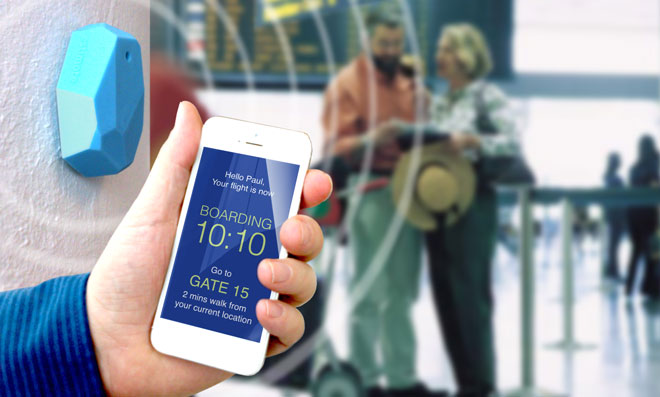
And of course, it’s not just for passengers; beacons can be used for staff notifications and to beam operational information – such as temperature, noise levels, vibrations – throughout the whole airport to make operations more efficient and, therefore, cost-effective.
Beacons appeal to airlines and airports that are investing in programs which help them connect directly with customers thanks to their efficacy at such a low cost. Covering a large floor space with beacons is a significantly cheaper proposition than with other connectivity solutions, such as Wi-Fi.
Beacons also benefit from a tiny energy footprint. They run off Bluetooth Low Energy, which provides considerably reduced power consumption compared to classic Bluetooth. In fact, a single coin-battery will be sufficient for one beacon for up to nine years.
Clearly, maintenance is minimal.
The information might be a gate number, a baggage carousel, flight status, or even a passenger’s favourite coffee shop.
Beacons can be placed anywhere around the airport and thanks to SITA’s common-use registry, each beacon can be used by multiple stakeholders. Airports, airlines, and retailers’ apps can leverage beacons to trigger tailored content directly to passenger and personnel devices.
Of course, we must be careful not to bombard the passenger with information. App developers can ensure that only relevant information is triggered according to a passenger’s location and/or stage of the journey to eradicate this problem.
MIA leading the charge
Miami International Airport (MIA) is already showing the rest of the world what’s possible with beacons, with its location-aware app. The airport has leveraged beacons across its entire campus to create a personalised experience more akin to a concierge service than your standard airport experience.
The app provides full coverage of the airport and as travellers make their way through the airport, the app provides information and support that is relevant to their individual journey, including updates on their gate, flight times and baggage collection, as well as nearby food and retail outlets, prioritising suggestions based on their current location. And with ‘blue-dot’ functionality, map rotation, turn-by-turn directions, ‘walk times’ and a ‘near me’ feature, they allow passengers to quickly locate virtually anything inside the airport.
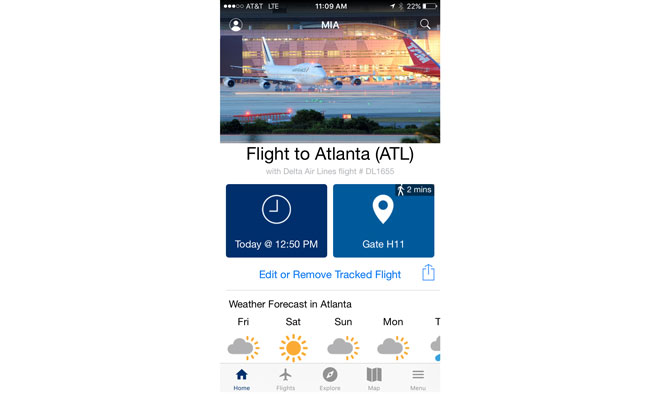
The app has been well-received and continues to be well used by passengers who really value having this information at their fingertips in real-time.
Passengers can find information about all airport tenants but soon concessionaires within the airport can also write their own app. They have access to the same beacons which MIA’s app uses.
Future applications
Beacons are still a nascent technology and the SITA Lab team are looking at what else might be possible with these sensors. At Miami International Airport, SITA is testing beacon bag tags to track baggage in the terminal but also airside in the baggage handling system and at arrival. By leveraging the same infrastructure as the one used for the airport mobile application, baggage can be precisely located in real time.
Exploring different and ambitious applications is what makes SITA Lab’s work so exciting. The team is given license to truly push the boundaries and ensure that SITA’s customers continue to benefit from the latest available technology.
Related topics
Maintenance, New technologies, Passenger experience and seamless travel





 Chief Executive Officer
 CEO
CEO Chief Operating Officer
 Head of Operations, Safety and Emergency
 Chief Strategy Development Officer
 Head of Operations
 Airport General Manager
 CEO
CEO Chief Executive Officer
Interesting read and certainly an alternative means to talk to customers and staff, where wifi connectivity remains a challenge.
Thanks Ron,
very interesting article. May I asked how many beacons have been deployed at MIA? Also I would like to know how the map for the navigation app has been created?
Best from Munich, Germany.
Philipp