


Security & border
Explore airport security, border management and identity solutions, including screening technologies, biometrics, customs processes and cybersecurity strategies that strengthen resilience, regulatory compliance and seamless passenger processing while protecting critical infrastructure.
Webinars and whitepapers
- Previous
- Next




Security & border
 News
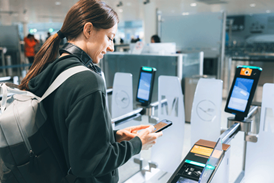
Hong Kong International Airport becomes world’s first to achieve IATA One ID Certification
Hong Kong International Airport has been certified against global standards for digital identity, biometrics and passenger data governance, with its Flight Token system now available to more than 80 per cent of departing passengers.
 News
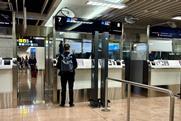
Brussels Airport adds eight border control positions and six e-gates as EES delays persist
Brussels Airport is investing in eight more arrivals border control positions and six additional e-gates, as the European Entry/Exit System continues to lengthen processing times and queues for non-European passengers.
 Airports
Modernising passenger security through advanced CT screening at Cologne Bonn Airport
Cologne Bonn Airport’s Simone Lutz and Robin Katernberg outline how a fully CT-equipped checkpoint is changing throughput, staffing and the passenger experience, and what the project taught the airport about delivery.
 News
ACI EUROPE and A4E call for urgent EES changes as border queues reach five hours
ACI EUROPE and A4E say border staffing shortfalls, unstable IT systems and limited use of automated gates are behind queues of up to five hours, and want the European Commission and Member States to act.
Join now
Unlimited access to industry intelligence that can make a difference to your business
- Bookmark articles and resources to access anytime
- Enjoy free access to industry leading resources, webinars and insights
- Stay informed with the latest news and interviews
- Receive updates and recommendations tailored to your professional interests
More Security & border
 Article
The nexus of physical and cyber-security: one system, one security
Oliver Braun and Ricardo Roth explain how Berlin Brandenburg Airport is integrating cyber, physical and operational security to defend against hybrid threats and strengthen resilience in an increasingly unstable geopolitical environment.
 News
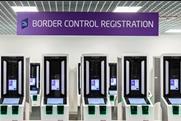
Prague Airport introduces passenger care and multilingual measures to speed up non-Schengen border checks
Prague Airport is working with Czech authorities on an action plan to reduce waiting times at passport control, with the aim of raising Entry/Exit System registration completion from 60 per cent to 80 per cent.
 News
Airport, airline and technology groups form coalition to back voluntary biometrics in EU Digital Omnibus
Five organisations spanning airports, airlines and technology have formed a coalition to press EU policymakers on how the Digital Omnibus treats the voluntary use of biometrics in air travel.
 Article
When the buffer disappears: the human factor in an automated security operation
Oliver Braun, Senior Vice President Corporate Security at Flughafen Berlin Brandenburg (BER), argues that the industry’s greatest challenge is not technological adoption, but preserving the human judgement, expertise and resilience that underpin effective security operations.
 Airports
Digital identity, biometric journeys, and what airport leaders must do now
Carol-Ann Gaddis, Director of Information Technology and Innovation at Richmond International Airport explores the governance challenges airports must address now to ensure the frictionless journey is built on trust.
 News
Prague Airport expands Terminal 1 border control to increase capacity and reduce passenger waiting times
Prague Airport is expanding and modernising Terminal 1’s arrivals border control area, adding passport desks, self-service gates and a larger passenger waiting area.
 News
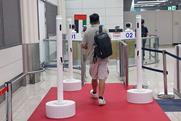
Dubai’s biometric Red Carpet processes more than 439,000 travellers in six months
Dubai’s biometric “Red Carpet” service processed more than 439,000 travellers during the first half of 2026, as the emirate continues to expand its use of artificial intelligence and biometric technology to streamline airport border procedures.
 News
In-depth: UK aviation cyber assessment finds suppliers remain the sector’s biggest cyber security weakness
A new cyber security assessment of UK aviation has identified significant weaknesses among airport suppliers, with ground handling, passenger processing and airfield technology organisations carrying the majority of exposed employee credentials.
 Article
Delivering throughput through CT, automation and regulatory alignment at Bahrain International Airport
Technology can boost security checkpoint capacity, but only as part of a wider transformation, writes Hamad AlZayani, Assistant Manager, Airport Security Operations & Training at Bahrain Airport Company.
 News
In-depth: Manchester Airports Group confirms cyber attack
Manchester Airports Group has confirmed a cybersecurity incident in which an unauthorised third party accessed customer data linked to car park, lounge and WiFi bookings.
 News
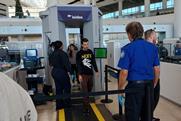
TSA sets three-goal plan to modernise checkpoints as it marks 25th anniversary
The Transportation Security Administration has set out a strategy to modernise checkpoints, expand PreCheck and strengthen security across multiple transport modes as it turns 25.
 News
Hamad International Airport expands biometric travel across more than 700 touchpoints
Hamad International Airport has expanded biometric processing across its departure journey, allowing passengers to use facial recognition at key airport touchpoints.
 News
David Cummins sworn in as new TSA Administrator
The newly confirmed TSA Administrator has identified workforce development, technology and security as priorities for the agency.
 Opinion
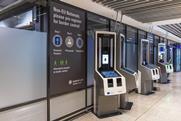
The real test of EES begins this summer
Why the success of Europe’s new digital border system will depend less on biometrics than on airport operations according to aviation commentator, Raúl Valencia.
 Report
eReport: Airport security in a geopolitically complex world
Are you prepared to manage the consequences of threats you cannot control?
 News
World’s first operational CT hold baggage scanner in use at Maastricht Aachen Airport
New technology enhances detection capability and throughput while supporting improved passenger processes and future regulatory compliance.