


Airport and airline bodies say Entry/Exit System queues still routinely exceed two hours and have proposed six measures to cut border delays.

ACI EUROPE and Airlines for Europe (A4E) have called for immediate operational and regulatory changes to the Entry/Exit System (EES), warning that long border control queues are still causing significant disruption across the Schengen area.
Nearly six months after the system’s full implementation, the European airport trade body and Europe’s largest airline association say waiting times routinely exceed two hours, reaching five hours at peak times in the most extreme cases. That is despite considerable efforts by border authorities, backed by airports.
Passengers are missing flights and connections, while terminals face severe congestion and staff are under exceptional pressure.
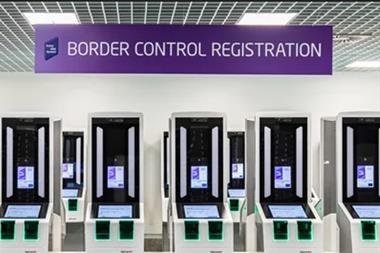
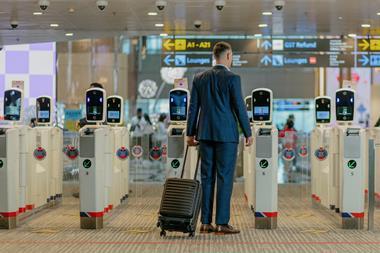
The organisations blame structural shortcomings that remain largely unaddressed despite months of warnings. These include inadequate border control staffing, unstable IT systems underpinning EES, limited use of self-service kiosks and automated border control gates, and the limited functions and deployment of the Travel to Europe pre-registration app.
ACI EUROPE Director General Olivier Jankovec and A4E Managing Director Ourania Georgoutsakou said the EES “has strengthened the security of Europe’s external borders”.
“But six months into its full rollout, the system is not delivering on efficient border crossings and the promise of faster, more seamless travel remains unmet,” they added.
“This is no longer a teething problem, nor can passengers, airports and airlines keep paying the price for avoidable disruption. The time for simply managing the symptoms is over. We need decisive action to fix the structural problems in the EES, streamline its processes and secure efficient border crossings.”
Six-point plan to cut EES waiting times
The proposals aim to reduce operational constraints, streamline biometric and data processes, increase remote pre-enrolment and automated border control, and allow flexibility during exceptional or sustained congestion. They call for:
- Eliminating “double verification”
- Optimising biometric verification
- Preventing duplicate EES profiles
- Rethinking and upgrading the Travel to Europe app and web portal
- Accelerating and harmonising automated border control for third-country nationals
- Restoring the option to partially suspend the EES, with no biometric registration, as a permanent flexibility mechanism when waiting times become excessive
Jankovec and Georgoutsakou said Europe needs a border management system “that is both secure and operationally effective”.
“Our six proposals offer a practical pathway towards that outcome. We are urging the European Commission and Member States to implement them at the earliest, in full cooperation with the industry.”





No comments yet