
Prague Airport is working with Czech authorities on multilingual notices, kiosk support staff and peak forecasting to speed up border checks for non-Schengen arrivals.
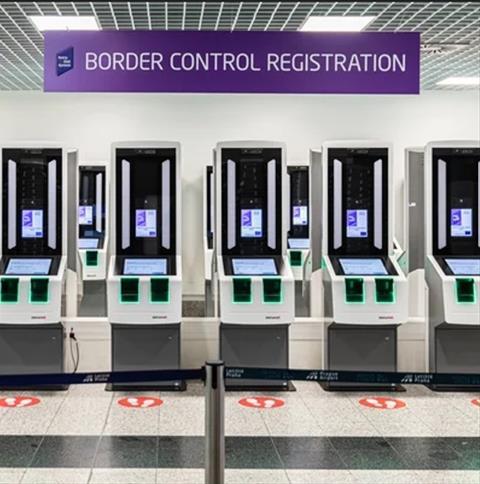
Prague Airport (PRG) is working with the Police of the Czech Republic and the Ministry of the Interior of the Czech Republic to introduce a package of measures designed to ease border checks for passengers arriving from non-Schengen countries.
Following a decision at an extraordinary board meeting on 18 September, where Chairman Radomír Lašák presented the proposed action plan, the airport said it is gradually managing peak arrival times more smoothly. Passenger care and operational coordination within the passport control area are the key priorities.
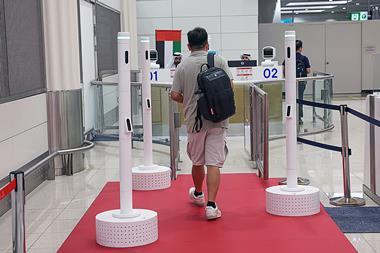
Passenger care and EES kiosk support at Prague Airport
“Everything we do is geared towards achieving our goals – we don’t want passengers to spend even a minute longer than absolutely necessary at passport control. The key to eliminating queues lies in a detailed understanding of why people make mistakes at self-service kiosks or fail to complete the registration. We are introducing a series of measures, such as a new standard of care and significantly improved communication across multiple languages. Our goal is not merely to resolve the immediate situation, but to create a stable and resilient system for the long term,” said Radomír Lašák, Chairman of the Board of Directors of Prague Airport.
Several measures have already been implemented. When the European Entry/Exit System (EES) was introduced last year, members of the airport’s ‘Red Team’ were permanently deployed in the terminal to help coordinate passenger flow and prioritise the processing of elderly passengers, families with children and people with reduced mobility.
The airport has also analysed critical arrival times from non-Schengen countries using a heatmap, and forecasts peak periods 30 days in advance so that capacity can be increased in good time. Preparations are under way with the Immigration Police and the Ministry of the Interior for additional checkpoints and increased processing capacity.
Further actions have been commissioned for immediate implementation. Expanded multilingual apology and information notices will appear on display screens, now including languages such as Hebrew and Chinese. Complimentary bottled water and apologies are also being provided to passengers waiting in queues.
Trained staff stationed at the self-service EES kiosks will ask passengers about the specific reasons for unsuccessful registrations. This will inform user experience adjustments aimed at increasing the registration completion rate from the current 60 per cent to 80 per cent.
Additional floor signage is being installed in the terminal to guide passengers more intuitively, while preparations are under way with airlines to inform passengers before they arrive in Prague.





No comments yet