


Cologne Bonn Airport’s Simone Lutz, Head of Passenger and Bag Security, and Robin Katernberg, Director of Airport Performance & Services, share how advanced security lanes equipped with CT technology are proving transformative to the efficiency and experience of the passenger security process.
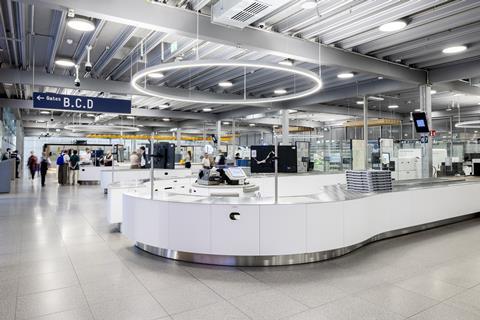
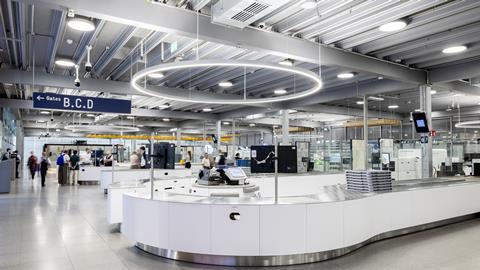
Cologne Bonn Airport has officially opened its fully modernised security checkpoint. The airport has invested more than €25 million in completely redesigning its security checkpoints as a key part of its ‘Next Chapter’ modernisation programme, which is gradually updating the airport’s terminals.
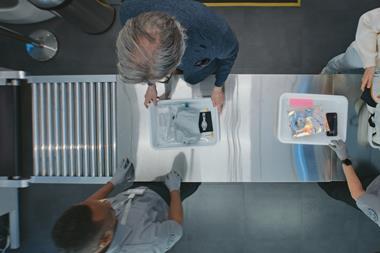
After just a few months of renovation, travellers now have access to 11 state-of-the-art security lanes with the latest CT technology. Cologne Bonn is the first major airport in Germany to fully equip its security checkpoint with this technology, making it one of the most advanced security checkpoints in Europe.
Key objectives behind the security checkpoint redevelopment
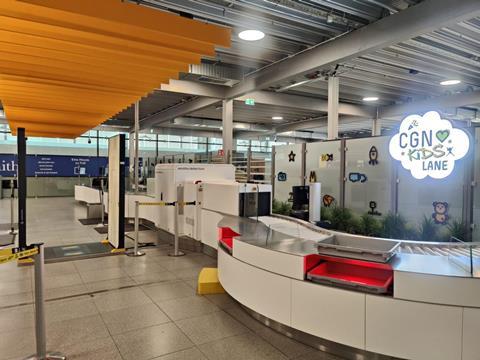
Our goal is to offer our customers the best possible travel experience while maintaining the highest security standards. Anyone who has ever travelled by air will be aware that security checks can be time-consuming and inconvenient. The new security lanes are more focused on the needs of passengers and the overall processes are better coordinated, making the security check more convenient, more comfortable and more efficient for travellers. Passengers can choose the pace at which they go through the processes as there is a separate lane not just for business travellers, but also for families with children. Here, kids can use steps to put their luggage on the belt themselves and to take it off again. Ultimately, the increase in efficiency leads to more satisfied passengers and, at the same time, a reduction in aviation security fees.
CT screening technology and the passenger security process
CT technology is currently one of the major innovations in aviation security – and its reputation is well deserved. Now, passengers hardly need to prepare for the security lane and can keep liquids up to two litres and electronic devices, such as laptops, in their hand luggage. If there are no prohibited or hard-to-identify items in the hand luggage, this eliminates the need for additional screening and significantly speeds up the security process.
Comparing former technology, where a maximum of 95-115 passengers per hour could be processed per lane, new CT screening lanes takes this figure to 220-250 passengers per hour per lane. Ultimately, this not only speeds up the control process but also leads to increased staff efficiency. While we had a total of 16 security lanes with aTiX technology in the former security checkpoint setup, even after reducing to 11 CT lanes, we now have an overall higher capacity than before and are well prepared for potential passenger growth.
Harmonising security checkpoint renovation with daily operational needs
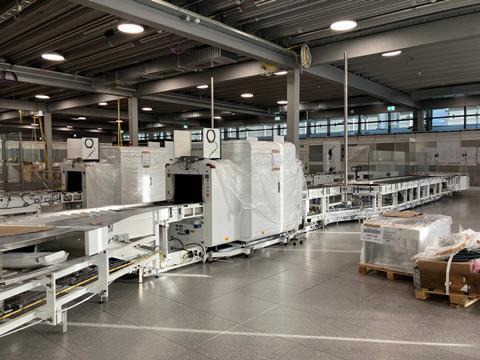
From November 2025 until July 2026, the transition to modern CT technology was realised. The entire renovation project was carried out in five consecutive construction phases, always mindful to minimise any negative impact on passenger comfort and experience. At first, the old security lanes in Terminal 1 were removed, one after the other and then gradually replaced with new and more efficient CT lanes. This phase was very challenging and required us to find short-term solutions to address operational challenges.
Lessons learnt from implementing CT technology
It is crucial to carry out proactive risk management and to consider, at an early stage in the project, how security checks can be guaranteed if problems occur in the start-up phase of the new lanes.
Furthermore, aviation security staff should be involved at an early stage and given enough time to get used to the new control processes. This was also a key focus during our transformation process. This should include not only theoretical and intensive practical training measures, but also good management of the transition process, including regular feedback sessions to further optimise the control processes with the requirements of daily operations.
On the one hand, a short conversion period is very stressful, but on the other hand, it shortens a lengthy period of painful disruptions in daily operations.
Next steps as part of the airport’s wider modernisation strategy
We are currently rolling out the remote screening project at our checkpoints. This means that the security screener will no longer work right in the security lane, but in a separate room where he or she can better focus on image analysis. Remote screening aims at deploying staff and resources more flexibly and efficiently while maintaining the highest security standards.
In addition, we plan to use an AI-based software system that will automatically detect prohibited items at airport security checkpoints. The new software system will not only ease the workload for screening staff but will further increase aviation security and efficiency.
The Next Chapter modernisation programme
Through the Next Chapter programme, we are making targeted investments in Cologne Bonn’s future viability. Next Chapter comprises the entire passenger journey – from arrival, through check-in and security screening, to the time spent in a terminal and boarding. The programme consists of four key areas: modernisation and automation of processes, further development of security checks, enhanced quality of passenger experience, and new catering, retail and lounge facilities. This includes modern catering concepts, redesigned passenger areas with new furniture, the transformation of arrival and departure facilities, expanded digital services and much more.
The new security checkpoint is a central component of the Next Chapter modernisation programme.
Proven success
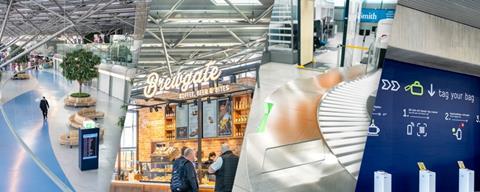
This year, we have been awarded the global ‘4-Star Regional Airport Rating’ by the international rating organisation Skytrax. This is a fantastic result, rewarding the hard work of previous months. In its audit, Skytrax describes the new security checkpoint as ‘pioneering’ and particularly highlights its bright, spacious design, clearly signposted route guidance and well-structured procedures. Furthermore, Skytrax rates the new seating and waiting areas in Terminal 2 – with their design, numerous power sockets, plants and open-plan layout – as particularly successful. The way travellers are guided is inspired by the river Rhine’s course and thus, offers passengers a regionally embedded and pleasant atmosphere. The good result in the Skytrax audit is proven by a strong improvement in terms of customer satisfaction.




No comments yet