



Digital & automation focus
Digital & automation
 Article
Designing smoother airport journeys through data-driven insights
Airports have never lacked data. The real challenge is joining it up and using it to transform the passenger journey from check-in to gate.
 Opinion
Why we need to stop talking about AI pilots
As airports navigate the complex landscape of digital transformation, the most valuable insights often come from the deployments that didn’t go as planned.
 Report
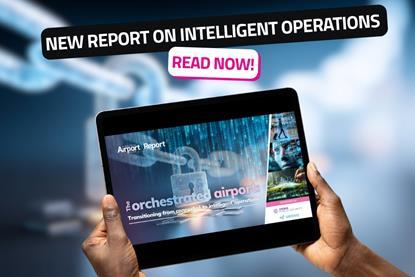
eReport - The orchestrated airport: Transitioning from connected to intelligent operations
This eReport explores how airports can move from siloed automation to system-wide Total Airport Management, unlocking capacity gains without new terminal construction.
Featured

Article
Designing smoother airport journeys through data-driven insights
Airports have never lacked data. The real challenge is joining it up and using it to transform the passenger journey from check-in to gate.

Opinion
Why we need to stop talking about AI pilots
As airports navigate the complex landscape of digital transformation, the most valuable insights often come from the deployments that didn’t go as planned.
Report
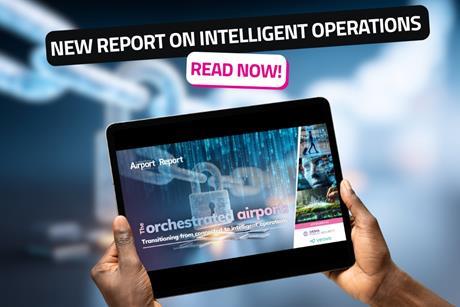
eReport - The orchestrated airport: Transitioning from connected to intelligent operations
This eReport explores how airports can move from siloed automation to system-wide Total Airport Management, unlocking capacity gains without new terminal construction.
- Previous
- Next



Join now
Unlimited access to industry intelligence that can make a difference to your business
- Bookmark articles and resources to access anytime
- Enjoy free access to industry leading resources, webinars and insights
- Stay informed with the latest news and interviews
- Receive updates and recommendations tailored to your professional interests
More Digital & automation
 Interview
Redefining what it means to be an airport: Pittsburgh Airport CEO, Christina Cassotis
Holly Miles sat down with Christina Cassotis, winner of IAR’s Airport Leader of the Year in 2025, to discuss how they are challenging conventional thinking, redefining the role of an airport and why the industry’s future depends on bolder leadership.
 Video
VideoInside one of the world’s most automated airports: Hong Kong’s AI revolution
International Airport Summit speaker and CEO Vivian Cheug shares a sneak peak into what she will discuss at the International Airport Summit 2026.
 Article
Building the data foundation for a predictive airport
Every airport wants to move from firefighting disruption to predicting it, yet most are held back by fragmented systems and incomplete data foundations. International Airport Review explores what is possible once a robust foundation is built.
 Airports
Computer vision and AI overlays at scale: building the foundations for real-time airport operations
Chris Crist, Chief Information Officer shares Hartsfield-Jackson Atlanta International Airport’s computer vision journey, evaluating how to move from isolated pilots to enterprise-scale AI capabilities.
 Article
Agentic AI in airports: from assistive tools to autonomous airport orchestrators
Agentic AI is redefining airport operations in 2026, moving from reactive tools to autonomous systems that optimise turnaround, enhance passenger experience and unlock new commercial opportunities.
 Article
Why airports must learn to implement innovation, not just imagine it
Justin Erbacci, Director General of ACI World, spoke to Holly Miles about why culture, leadership and shared accountability for innovation are essential if airports are to modernise safely while meeting rising operational and workforce pressures.
 Interview
Baggage visibility and traveller trust: digitising the end-to-end bag journey
Digital baggage transformation at Vancouver International Airport is improving operational visibility, predictive maintenance and passenger trust without requiring major physical infrastructure expansion.
 Video
VideoHow Rome Fiumicino is shaping the airport of the future: ADR CEO Marco Troncone
What does it take to move from a good airport to a truly great one?
 Article
How can airports close the drone defence gap before disruption becomes the new normal
Drone threats are escalating across European airports, forcing operators to rethink security strategies as technology advances faster than regulation and operational preparedness can respond.
 Article
Autonomous vehicles for airport operations
From baggage towing to autonomous wheelchairs, airports are rapidly expanding the use of driverless technology to improve productivity, safety and passenger experience.
 Article
Veovo to acquire Dubai Technology Partners, deepening its Middle East footprint
A new airport technology acquisition is set to strengthen operational intelligence capabilities across the Middle East and expand AI driven airport management services globally.
 Article
Narita Airport’s data-driven strategy for sustainable capacity growth
As Japan’s workforce ages and passenger demand rises, Narita International Airport is pursuing capacity growth without increasing headcount. Executive Officer Shinichiro Motomiya explains how the airport is using data integration, targeted automation and embedded sustainability to build flexible infrastructure for the next three decades.
 Opinion
Advancing our skies: The digital transformation of air traffic management
As global aviation recovers and diversifies with emerging aircraft types, air traffic management must evolve through digitalisation and intelligent automation. CANSO’s Simon Hocquard explores how AI, machine learning and collaborative innovation are building the foundation for safer, more efficient and sustainable skies.
 Article
How did Tallinn Airport reduce its carbon emissions by 96%?
Tallinn Airport has achieved Airport Carbon Accreditation Level 3+ certification, reaching carbon neutrality through a 96% reduction in emissions since 2018. The Estonian gateway accomplished this milestone through systematic infrastructure investments, renewable energy adoption and fleet electrification, rather than carbon offsetting alone.
 Article
The Changi experience: Inside one of aviation’s most recognised brands
Singapore Changi Airport is evolving beyond operational excellence to position itself as a destination shaped by seamless connectivity, memorable passenger experiences and integrated marketing.
 Article
Data in action: Why airports can’t afford to get this wrong
Senior airport leaders at International Airport Summit 2025 questioned the industry’s rush toward AI and advanced analytics, arguing that foundational data governance, trust and operational focus remain the critical barriers to extracting value.