


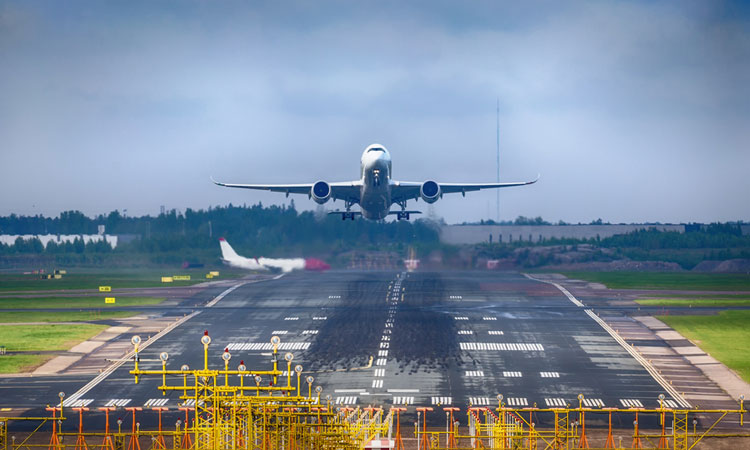
Almost every year, due to international safety regulations, there is an airport in some part of the world that needs to renumber, and therefore rename, its runways.
In the international aviation world, all runways are numbered following the same logic so that pilots can be sure they are landing on the correct runway and from the correct direction.
These numbers are painted on both ends of the runway, shown in sign panels, and used when communicating with air traffic control and with international databases.
Join us live: Shaping the Next Generation of Hold Baggage and Air Cargo Screening
Join us live for an insightful webinar on 11th December at 14:00 GMT, in collaboration with Smiths Detection, as we explore the strategic balance of operational efficiency, regulatory compliance, and sustainability in high-volume security environments.
This session offers a focused look into future-proofing your security strategy.
Key learning points
- Cost Reduction: Strategies to minimize bag travel time while simultaneously reducing operational costs.
- Regulatory Roadmap: Insights into the next wave of regulatory changes and their impact on future investment decisions.
- Sustainable Systems: Practical approaches to building sustainability into security systems and lowering the total cost of ownership (TCO).
- Scalable Solutions: Real-world examples of scalable systems supporting current airport growth and preparing for tomorrow.
Register now for expert insights, case studies, and actionable strategies on operational efficiency!
The numbers are based on the runway’s magnetic bearing, indicating their position to the Earth’s North Magnetic Pole.
For instance, Helsinki Airport’s runway two has a magnetic bearing of around 145 degrees. This number is rounded off to the closest decadegree, 150, and the last digit is dropped, which makes 15.
Because runways can be used from both ends, the official name of the runway has the numbers for both directions. The opposite end of the runway always differs by 180 degrees, so it is numbered 18 higher or lower. In the case of runway two at Helsinki Airport, this makes it 15+18=33.
The official runway name is a combination of these two numbers: 15/33. If there are two parallel runways at an airport, they are identified with a letter: L for left and R for right.
Why do the numbers need to be changed?
The North Magnetic Pole wanders constantly, by around 60 kilometres per year. If the compass bearing will, at a certain point, round off to another decadegree, the runway must be renamed based on international aviation regulations.
In 2018, this was done at Geneva Airport. Around 100 sign panels were replaced, and 150 kilograms of paint was used for repainting the numbers on the runway.
The Dwight D. Eisenhower National Airport in Wichita, USA, is preparing to renumber / rename its three runways in 2019. The renewal is estimated to cost hundreds of thousands of dollars.




 Chief Executive Officer
 CEO
CEO Airport General Manager
 Head of Operations
 Chief Strategy Development Officer
 Head of Operations, Safety and Emergency
 Chief Operating Officer
 CEO
CEO Chief Executive Officer
Nice article.
I have recently seen charts of Nairobi International Airport with runway designator as 02/24 but are aligned as 053deg/233deg. Magnetic variation is indicated as 1deg E
Can you help explain to me this deviation from the norm
Thanks,