
As airside operations face growing complexity, airport leaders shared candid insight at the International Airport Summit on why data integration, AI and digital ecosystems are now central to efficiency, resilience and performance.

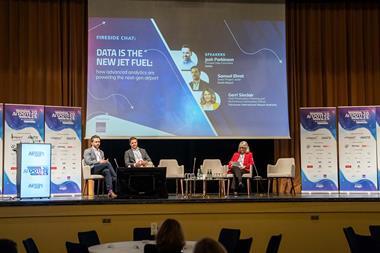
Airside operations are entering a decisive moment. Pressured by capacity constraints, sustainability targets and growing operational complexity, airports are being forced to rethink how data, technology and people come together beyond the terminal. At the International Airport Summit 2025, a fireside chat brought together Noida Airport, Aena, Brussels Airport and Bentley Systems to explore what it really means to deliver a fully digital airside and why the industry can no longer afford incremental change.
Redefining the digital airside
The conversation opened with a simple question: how should airports define a digital airside?
For Thomas Romig, Chief Operations Officer at Brussels Airport, the answer is less about definitions and more about outcomes. “Aviation is an industry which hasn’t transformed a huge amount over the years,” he noted. “Some of the operations we have on the airside are the same that we’ve been doing for the past 40 or 50 years. The real value comes from connecting different assets and systems together, not just digitalising a single process.”
While passenger and baggage systems have benefited from significant digital investment, airside operations remain fragmented, siloed and heavily manual. The real opportunity lies in creating true interconnectivity across the airport ecosystem. That means linking airside, landside, terminal systems and external stakeholders into a shared operational picture. The value is not just visibility, but the ability to make better decisions faster and to use constrained airport capacity more intelligently.
For multi-airport operators like Aena, scale introduces both complexity and opportunity"
From Aena’s perspective, Vanessa Calvo, Head of Applied Innovation at Aena, framed the digital airside as a cornerstone of a much broader ambition: the transition towards autonomous and intelligent airports. “We are not working on small innovations or incremental improvements,” she said. “We want to transform the airport into an autonomous and intelligent ecosystem. By collecting data and monitoring processes, we can streamline operations and start automating tasks across the network.”
Critically, Calvo emphasised that the digital airside cannot be treated in isolation. Landside processes, infrastructure and services all influence airside performance. “A truly digital airside reflects the full end-to-end operation that airlines and passengers experience,” she added.
The integration gap: data without orchestration
While the industry generates vast amounts of data, panellists were clear that volume alone is not the problem. The real challenge is integration.
At Brussels Airport, Romig described an ongoing shift away from vertical, system-specific views of operations towards a transversal, cloud-based approach. “Part of the challenge is being able to get all the different data sources, integrate them and make them available into a single view,” he said. “This allows us to create common situational awareness for all the organisations running operations within the airport.”

Afrin Shaikh at International Airport Summit. Credit: IAR[/caption]
This includes linking turnaround monitoring with passenger flow data, incorporating operational technology sensors from boarding bridges and terminal assets, and understanding how disruptions in one area ripple across the wider system. Without this orchestration layer, data remains trapped in silos, limiting its value.
Capacity constraints make this integration challenge even more urgent. Many airports are already operating at or beyond their designed limits. While infrastructure expansion continues, Romig argued that better use of existing capacity through data-driven decision making could defer major capital investment and improve resilience. “We are always running behind capacity,” he said. “Using data to drive operations helps us use what we have more effectively.”
Digital twins and visual decision making
From the technology provider perspective, Dimple Patel, Transportation Industry Strategist at Bentley Systems, highlighted the growing role of digital twins in bridging the gap between data and action. “Airports are like small cities, with complex infrastructure and thousands of assets,” she said. “Digital twins allow you to visualise these assets, monitor performance in real time, and plan maintenance or operational interventions with confidence.”
Equally important is communication. Visualisation helps airport owners and operators explain needs and priorities to stakeholders who may not be embedded in day-to-day operations. “Digital twins are not just technical tools,” Patel added, “they are enablers of alignment and trust across all stakeholders.”
Scaling innovation across airport networks
For multi-airport operators like Aena, scale introduces both complexity and opportunity. Calvo explained that operating across dozens of airports allows Aena’s innovation teams to draw on a wide range of operational contexts, including cargo hubs, regional airports and major international gateways. “With so many airports, we can merge all that experience and define standards that allow our network to speak the same language,” she said.
“Stand allocation is repetitive and rule-based. By letting AI learn from human decisions, the system can eventually automate routine allocations while still allowing oversight for disruptions.”
The challenge is turning diversity into standardisation. Defining common data models, shared terminology and interoperable systems is essential if innovation is to be deployed consistently across a network. Without a shared language, collaboration between airports, airlines and partners quickly breaks down.

Dimple Patel at IAS. Credit: IAR[/caption]
Aena is actively deploying solutions such as passenger flow monitoring, turnaround monitoring and computer vision across its network. These initiatives have revealed just how much operational data was previously underused. In some cases, artificial intelligence models have identified more than double the number of detectable operational events once algorithms were properly trained. “Data is valuable, but only if you know what to do with it,” Calvo noted. “We need to apply AI to analyse it, otherwise the sheer volume overwhelms any human operator.”
AI as an enabler, not a replacement
Few topics provoke more debate than artificial intelligence, particularly in highly regulated and safety-critical environments like airside operations. The panel took a pragmatic stance.
AI should be seen as an enabler rather than a replacement for human expertise. Its greatest value lies in repetitive, rule-based processes where consistency and speed matter, such as stand planning or resource allocation.
Romig offered a concrete example. “Stand allocation is repetitive and rule-based. By letting AI learn from human decisions, the system can eventually automate routine allocations while still allowing oversight for disruptions,” he said. Over time, this shift could free skilled staff to focus on co-ordination, optimisation and strategic decision making rather than manual scheduling. However, he noted that cultural change remains a barrier: “You need people to trust the system as much as the process, and that takes time.”
Patel reinforced the importance of embedding rules, regulations and validation into AI-driven tools. “AI is only as good as the data and logic you feed it,” she said. “Expert oversight is still essential.”
Sustainability, efficiency and real-world impact
One of the most compelling use cases shared came from Brussels Airport’s winter operations. De-icing and surface treatment involve significant cost and environmental impact, yet historically offered limited visibility over where fluids were applied and in what quantities.
By integrating data from multiple service providers into a single dashboard, the airport can now track which vehicles applied which materials, where and when. “Previously, vehicles were covering the same area multiple times. Now we know exactly where treatment is applied, reducing waste and environmental impact,” Romig explained. The initiative has delivered both cost savings and operational efficiency, highlighting the tangible benefits of digital airside transformation.

Vanesa Calvo at IAS in Berlin. Credit: IAR[/caption]
Interoperability is the industry’s unfinished business
As the discussion ended, attention turned to interoperability. Despite years of effort, inconsistent data definitions and governance models continue to limit collaboration between airports, airlines, ground handlers and air navigation service providers.
Romig argued that the industry still lacks a shared semantic model. “Airports define passengers one way, airlines another. Without standardisation, true connectivity is impossible.” Patel added, “Collaboration is key, not just between organisations but between technologies themselves. You cannot build a connected airport on disconnected systems.”
Procurement also has a role to play. Airports must demand standardised data models and open architectures when tendering new systems, rather than reinforcing fragmentation through bespoke solutions.
Why digital airside transformation matters now
What made this fireside chat stand out was its honesty. The panellists did not pretend that digital airside transformation is easy or quick. It requires standardisation, cultural change, investment and sustained collaboration across a complex stakeholder landscape.
Yet the direction of travel is clear. As data fuels airport operations, the airside can no longer remain the industry’s least digitised domain. “AI, digital twins, integrated data, these are tools to help us operate smarter, not replace people,” Patel said. Airports that succeed in integrating data, applying intelligence responsibly and aligning stakeholders will unlock new levels of performance, resilience and sustainability.
Those that do not, risk being constrained not just by concrete and runways, but by their own inability to connect the dots.
And if you weren’t in the room? Let’s just say this is one conversation you won’t want to miss next time.
Sign up for the 2026 summit in Rome today.