


Shaping Glasgow Airport’s passenger experience with £3.7 million upgrade
Posted: 10 December 2025 | Tom Hack | No comments yet
Tom Hack, Retail Director of AGS Airports, shares how passenger feedback helped shape Glasgow Airport’s new F&B and retail offerings, creating a significantly elevated departure lounge experience.
Credit: AGS Airports
At Glasgow Airport, our commitment to continuous improvement is more than a guiding principle; it’s a strategic imperative. In line with this ethos, we recently completed a £3.7 million transformation of our departure lounge, designed to elevate the passenger experience, enhance commercial performance, and prepare the airport for a new era of growth.
This investment is not just about aesthetics or convenience; it’s about reimagining the airport journey for millions of travellers who pass through our doors each year. With a holistic approach to design, layout and customer feedback, the upgrade reflects our ambition to make Glasgow Airport the airport of choice for Scotland’s central belt.
A holistic vision for passenger experience
The project began with a comprehensive review of the departure lounge and the customer journey. We identified key areas for improvement: category right-sizing, layout optimisation, and overall ambience. With pronounced peaks in departing passenger volumes, it was essential to create a greater sense of space, improve sightlines to retail units and boarding gates, and streamline passenger circulation to maximise both comfort and retail engagement.
One of the most significant findings was a shortfall in casual dining space. In response, we reconfigured the lounge to expand our food and beverage (F&B) offerings, ensuring passengers have more choice and a higher standard of dining.
New dining concepts and retail enhancements
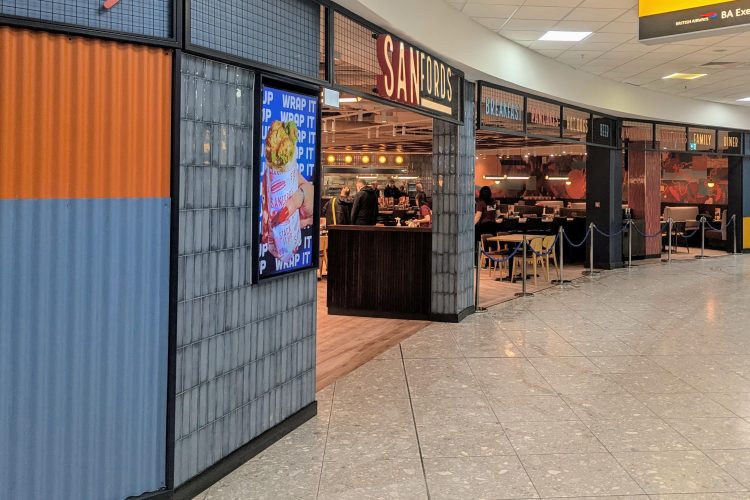
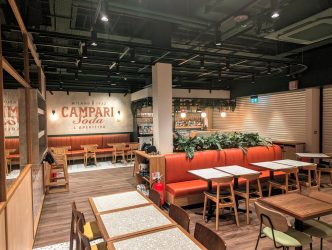
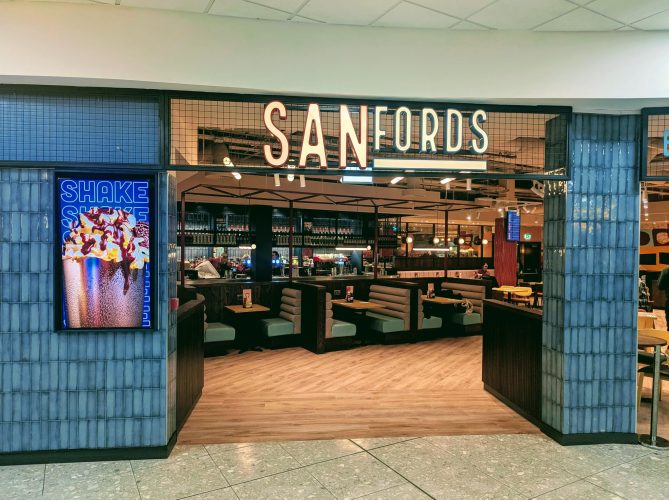
The upgrade introduced several exciting new dining concepts. Sanford’s American Diner replaced Frankie & Benny’s, offering a family-friendly menu of burgers, waffles, pizzas and milkshakes. Primo Volo, a stylish Italian café bar, now serves ciabatta sandwiches, pasta dishes and Italian cocktails, adding a touch of continental flair to the terminal. Primo Volo also complements new Italian routes in Milan and Rome that were launched by airline partner Wizz Air this October.
Credit: AGS Airports
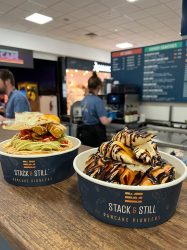
Meanwhile, Bird and Signet Bar & Kitchen received a refreshed interior and improved menu, and Stack & Still, the popular pancake house, was relocated for better accessibility and visibility.
Retail enhancements were equally impactful. New Accessorise and Travelex units opened, and Boots underwent a full refurbishment, expanding its range of travel essentials and health products. These changes not only improved the shopping experience but also aligned with evolving passenger needs.
Partnering for excellence and listening to passengers
Credit: AGS Airports
New restaurant and retail partners were selected through competitive tenders, with a strong emphasis on unit design and customer experience. We worked closely with TRG Concessions, SSP, Boots, Accessorise, and Stack & Still to refine layouts and deliver a cohesive, high-quality environment.
Passenger feedback played a vital role throughout. All F&B units participate in Google reviews, which are monitored weekly and inform ongoing action plans.”
Passenger feedback played a vital role throughout. All F&B units participate in Google reviews, which are monitored weekly and inform ongoing action plans. This feedback helped shape the tender briefs, ensuring our upgrades aligned with customer preferences and expectations. For example, insights from reviews highlighted the need for more seating, better dining options, and improved wayfinding, all of which were addressed in the final design.
Enhancing comfort, convenience and digital engagement
The enhancements have significantly elevated the departure lounge experience. Refurbished retail units now feature dynamic product displays that respond to social media trends, particularly those gaining traction on platforms like TikTok. This agility ensures passengers are met with fresh, relevant offerings.
We also relocated several units to improve visibility and added new in-line units, which allowed us to increase seating and improve circulation. The result is a more spacious, comfortable environment that encourages dwell time and enhances the overall journey.
Additional upgrades include enhanced Wi-Fi, more charging stations, and real-time flight information displays, features that cater to the modern traveller’s digital expectations.
Credit: AGS Airports
Strategic investment ahead of major transformation
This upgrade is part of a broader £350 million investment across AGS Airports, announced by our new owners, AviAlliance. This is the largest capital programme since AGS was formed in 2014, with major expansion projects planned for Aberdeen, Glasgow and Southampton over the next four years.
At Glasgow, the main terminal will undergo a comprehensive transformation to deliver best-in-class operational and retail facilities. This includes expanded floor space, additional airline gates and energy-efficient systems. By enhancing the customer experience now, we’re not only meeting immediate needs but also preparing for future disruptions during construction phases.
Increasing F&B throughput and seating capacity ensures we can maintain strong commercial performance even as we embark on larger-scale developments.
Sustainability and economic impact
Sustainability is central to our strategy. AGS Airports aims to achieve net zero direct emissions by 2035. All three airports, Glasgow, Aberdeen and Southampton, have already achieved carbon neutrality for emissions under their direct control (Scopes 1 and 2). This commitment is reflected in our design choices, operational practices and long-term planning.
Our ambition is clear: to create memorable experiences for every passenger, whether they’re departing on a journey or returning home.”
Glasgow Airport also plays a vital role in Scotland’s economy, supporting over 30,000 jobs and contributing approximately £1.44 billion in Gross Value Added (GVA) annually. Enhancing the passenger experience strengthens our position as a key transport hub and economic driver.
Navigating challenges in a live terminal
Executing such a transformation in an operational terminal came with its challenges. While noisy works were scheduled overnight where possible, time constraints meant some daytime activity was unavoidable. During these periods, we used hoarding strategically to communicate our investment message and reassure passengers of the improvements underway.
Looking ahead
We closely monitor customer satisfaction and participation across all retail and F&B units, and early indicators suggest positive trends in both. These upgrades are a key step in positioning Glasgow Airport as the airport of choice for Scotland’s central belt.
Our ambition is clear: to create memorable experiences for every passenger, whether they’re departing on a journey or returning home. This vision will guide our future developments and ensure Glasgow Airport remains a vital transport hub for the region.
About the author

Credit: AGS Airports
Tom Hack joined AGS Airports in February 2024 as Group Retail Director, bringing over two decades of experience in airport operations and commercial development. Prior to joining AGS, Tom spent 23 years at Bristol Airport, where he held a variety of roles across terminal operations and commercial functions. During his time there, he played a pivotal role in shaping the airport’s car parking and retail strategies and ultimately served as Head of Commercial, overseeing all non-aeronautical revenue streams.
Since joining AGS, Tom has led the delivery of transformative retail initiatives across Aberdeen, Glasgow and Southampton Airports. He is now deeply involved in major infrastructure projects aimed at expanding and modernising all three airports, helping to enhance the passenger experience and drive commercial growth.
18.9 billion passengers are coming. Is your airport ready for 2026? ✈️
Access the FREE Airport Industry Intelligence Handbook for expert strategies on scaling sustainably, modernising ATM, and securing cargo logistics.
Featuring insights from ACI World, TIACA, CANSO, and ACI EUROPE.
Related topics
Airport construction and design, Food and Beverage (F&B), Innovation, Non-aeronautical revenue, Operational efficiency, Passenger experience and seamless travel, Retail, Sustainability, Terminal operations, Workforce
Related airports
Aberdeen Airport (ABZ), Glasgow Airport (GLA), Southampton Airport (SOU)





 Chief Executive Officer
 CEO
CEO Airport General Manager
 Head of Operations
 Chief Strategy Development Officer
 Head of Operations, Safety and Emergency
 Chief Operating Officer
 CEO
CEO Chief Executive Officer