


IAA confirms remote towers trial a success
- Like
- Digg
- Del
- Tumblr
- VKontakte
- Buffer
- Love This
- Odnoklassniki
- Meneame
- Blogger
- Amazon
- Yahoo Mail
- Gmail
- AOL
- Newsvine
- HackerNews
- Evernote
- MySpace
- Mail.ru
- Viadeo
- Line
- Comments
- Yummly
- SMS
- Viber
- Telegram
- Subscribe
- Skype
- Facebook Messenger
- Kakao
- LiveJournal
- Yammer
- Edgar
- Fintel
- Mix
- Instapaper
- Copy Link
Posted: 6 February 2017 | Deirdre Forrest IAA | 1 comment
The IAA has successfully completed operational trials on remote tower technology.
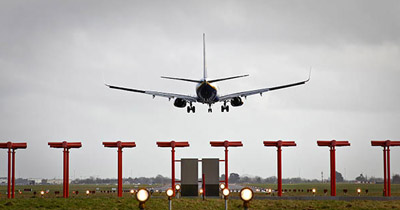
In 2016, the IAA, along with a consortium of stakeholders, validated the SESAR JU concept of remote tower technology through a series of operational trials (based on over 50 demonstrations). These highly successful trials built upon the experience of single remote tower operations and validated the capability for single air traffic controller operation of multiple remote towers.
Peter Kearney, Director of ATM Operations and Strategy, IAA said:
“Following these trials, we firmly believe that tower services at multiple airports can be safely provided by a single air traffic controller remotely. With carefully designed procedures, it will almost certainly be possible to allow one controller to simultaneously provide ATM services for more than one low volume aerodrome. This would be subject of course to successful completion of safety assessments, regulatory approval and appropriate stakeholder consultation.”
He added that, “The IAA has a strong tradition of being innovative to deliver cost efficiency, improved safety and higher productivity levels. With this in mind, we are delighted with the outcome of our recent Remote Tower technology trials. We believe this work represents the world’s first trial of multiple tower remote operation’s by a single air traffic controller.”
In March 2016, the IAA completed the system installation, which was supplied by Saab. This was composed of three main elements:
- Remote towers, sensors and cameras at Cork and Shannon airports,
- A Remote Tower Centre in Dublin, and finally
- Network connectivity between the remote sites at Shannon and Cork and the Centralised Control Room in Dublin.
From June to August 2016, the IAA worked to validate the system through operational trials, which tested the bounds of remote tower technology. Trials started with low volume traffic levels to emulate nighttime operations at Shannon and Cork. Traffic levels were then progressively increased throughout the trials to investigate the level of air traffic that can be safely handled. These trial validated that single controller operation of multiple remote towers in a live air traffic environment, this we believe is a world first.
IAA also demonstrated the significant safety benefits from the enhanced visual displays offered by the Remote Tower Centre. These include integrated track and label information as well as the ability to digitally enhance imagery.
“There are many critical areas to be addressed and these trials are a significant milestone in proving the reliability and integrity of these systems. Remote tower technology will play a vital role in the future of air traffic service provision for aerodromes across the world including Ireland” added Mr. Kearney.
This technology is still at a relatively early stage of development, with only a few operational implementations at isolated airports with few movements. Remotely operated towers do offer significant potential to assist air navigation service providers (ANSPs) to reduce and control their costs in line with airline and European Commission expectations without negatively impacting on safety and/or service delivery. This potential is greatest at smaller, less busy regional airports where the volume of traffic is likely to be insufficient to cover the costs of service provision at a user charge that is sustainable from the customers’ perspective.
Furthermore, remotely operated towers may also provide a solution for busier airports in terms of effectively managing operations at night time and other periods of low traffic. The potential of remotely operated towers will, however, only be realised if safety and operational reliability are guaranteed. To this end, early regulatory approval in Europe is required.

 Chief Executive Officer
 CEO
CEO Chief Operating Officer
 Head of Operations, Safety and Emergency
 Chief Strategy Development Officer
 Head of Operations
 Airport General Manager
 CEO
CEO Chief Executive Officer
This requires at least:
1- Extremely robust connectivity and communications of all sensors and cameras to remote tower “with a backup channel”
2- Staff at the remote supervising tower must increase on the spot in case of extreme bad weather, close disaster or emergency landing
3- Minor aerodromes must update the remote tower on the spot on any local maintenance or unusual issue
4- Central weather reporting for all aerodromes