


Industry leaders from Denver International Airport and daa share insights on navigating complex upgrades, integrating emerging technologies and building operational resilience for sustainable long-term growth - a topic that will come up for discussion at the International Airport Summit 2026 in Rome.
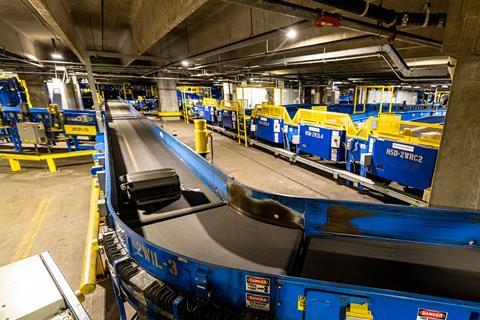
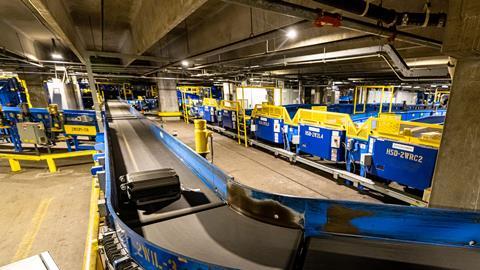
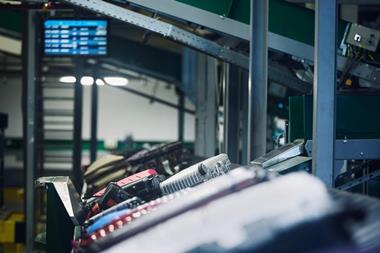
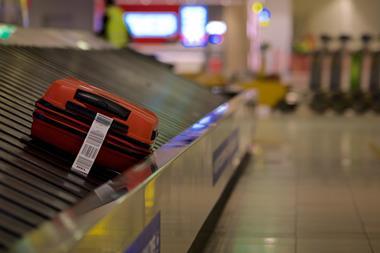
As global passenger numbers continue to climb, airports are facing mounting pressure to modernise ageing baggage handling systems that were never designed for today’s operational demands. From capacity constraints to reliability risks, legacy infrastructure is increasingly becoming a bottleneck, forcing airports to rethink how baggage systems are designed, integrated and maintained.
For many operators, modernisation is no longer optional; it is a strategic necessity tied directly to long-term growth, operational resilience and passenger satisfaction.
This is a topic that will be up for discussion at the upcoming International Airport Summit 2026 in Rome. Register now to join in the conversation with the likes of Narita International Airport and Brussels Airport.
Growth, ageing infrastructure and the case for change
Few airports illustrate this challenge more clearly than Denver International Airport (DEN), where sustained passenger growth has pushed legacy systems to their limits.
“Over the past decade, annual passenger volumes at Denver International Airport have increased nearly 35%, growing from 54 million passengers in 2015 to 82.4 million in 2025,” explains Matt Robb, DEN Senior Vice President of Technical Operations. “This sustained growth has driven a corresponding increase in checked baggage volumes, placing greater demand on system capacity and reliability.”
However, rising demand is only part of the story. Much of DEN’s baggage infrastructure dates back to its original construction in the early 1990s, with additional systems introduced in the years following 9/11. Many of these components are now approaching, or exceeding, their intended service life.
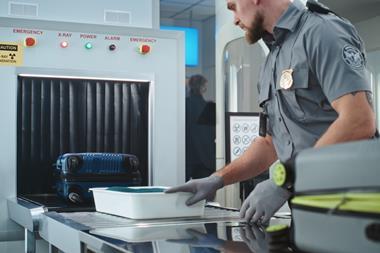
“Critical components such as the airport’s explosive detection systems (EDS), installed shortly after 11 September 2001, are no longer capable of meeting current performance and service expectations,” Robb adds.
Modernisation will reduce downtime, lower maintenance costs, improve throughput and enhance data visibility.”
This combination of ageing infrastructure and rising throughput requirements has made modernisation a central pillar of DEN’s Vision 100 Strategic Plan, which aims to prepare the airport to handle up to 100 million passengers annually within the next decade.
Similar pressures are being felt across Europe. At daa, which operates Dublin Airport, long-term cost considerations are increasingly shaping decision-making around system upgrades.
“One of the main drivers is total lifecycle cost,” says Marc BrennanBrennan , Head of Baggage, Asset Management at daa. “With the type of assets that we select these days, it’s usually important that we can maintain it within our own space, because the way things have gone, the total lifecycle cost has gone far beyond the actual initial investment.”
Brennan also highlights the physical constraints that complicate modernisation projects.
“The spatial constraints of airports make it a real challenge,” he notes. “We have to spend so much more time planning baggage projects because they are so complex and intricate.”
Technology, integration and the complexity of live upgrades
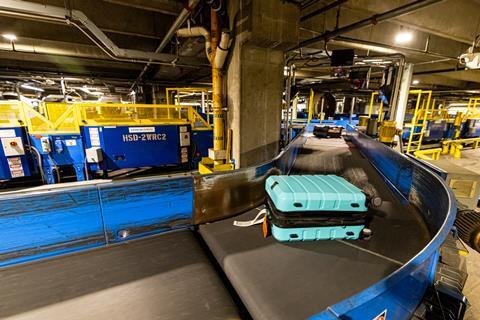
Modernising a baggage handling system is not simply a case of replacing old equipment. It requires a carefully orchestrated transformation of both hardware and software, often while the system remains fully operational.
At DEN, the upgrade programme spans the entire baggage ecosystem, targeting reliability, capacity and operational efficiency. Key improvements include the installation of variable frequency drives (VFDs) to optimise conveyor performance, the replacement of legacy Profibus networks with Ethernet-based communications, and upgrades to sortation controllers and belt control systems.
“The most effective solutions are those that balance standardisation, scalability and maintainability,” Robb explains. “At the same time, they must provide real-time system visibility and diagnostics to support operations and maintenance teams.”
One particularly complex area is oversize baggage handling, a critical function for DEN given its role as a gateway to Colorado’s ski resorts.
“Upgrading oversize lines, including lifts and associated equipment, will ensure the system can reliably handle peak seasonal demand and reduce operational bottlenecks,” affirms Robb.
Across the industry, digital technologies are also playing an increasingly important role in improving system performance and resilience. At daa, optical character recognition (OCR) is emerging as a key enabler.
“One of the main things we’re moving into this year is OCR, optical character recognition,” Brennan explains. “It’s a challenge for us relying on multiple different IT systems, so we are always looking to bring in resilience around that.”
OCR enables more accurate and automated baggage identification, reducing reliance on manual processes and improving data consistency across systems. Alongside this, projects such as early bag storage (EBS) are helping airports better manage peak demand and optimise baggage flow.
“We’re currently in Dublin introducing an early bag store,” Brennan discloses. “This is something that we know our customers need and will certainly make our lives easier for batch building of make-up positions.”
Yet, the introduction of new technologies brings its own challenges, particularly when integrating them into legacy environments.
“Integration is one of the most complex aspects of modernisation,” Robb notes. “Much of the system must remain operational 24/7, requiring phased implementation strategies, careful co-ordination between legacy and new interfaces, and close collaboration between contractors, operations, TSA and airlines.”
Brennan echoes this, emphasising the human and organisational dimension of system upgrades.
“Honestly, with great difficulty,” he says when asked about maintaining operations during implementation. “It really comes down to stakeholder engagement between operations, asset management, IT, security, airlines and handlers.”
Modernisation will evolve, not reduce, the workforce.”
“If you sell the product on what it’s going to be, stakeholders are more patient with you. They will move around into different areas.”
Crucially, built-in redundancy within existing systems can provide the flexibility needed to carry out upgrades without major disruption.
“We’re always thinking N+1, N+2,” Brennan adds. “So we have that little bit of scope to be able to squeeze things when we need to take out one system and replace it.”
Building resilience for the future
As baggage systems become more complex and more critical to airport operations, resilience has emerged as a defining performance metric.
At DEN, resilience is framed not just as reliability, but as the ability to maintain operations under stress and recover quickly from disruption.
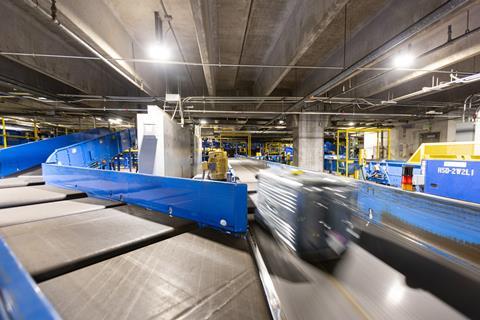
“Resilience is the ability of the system to maintain operations during disruptions and recover quickly when failures occur,” Robb explains. “This includes redundancy in critical components, the ability to isolate failures, strong contingency procedures, and rapid diagnostics and recovery capabilities.”
In practice, this means designing systems that can absorb shocks, whether caused by equipment failure, operational errors or surges in demand, without cascading into wider disruption.
Interestingly, not all failure points are purely technical. Operational factors such as bag presentation, staffing levels and adherence to conveyance standards can be just as significant.
“The most common operational challenges often stem from how the system is used,” Robb notes. “Close co-ordination with airline partners is critical to maintaining overall system performance.”
Looking ahead, emerging technologies such as artificial intelligence (AI) and robotics are expected to play a transformative role in enhancing resilience and efficiency.
“I think there’s two sides to it,” says Brennan. “The robotic piece in the manual side is going to make a big change, particularly around health and safety and lifting.”
AI, meanwhile, is expected to underpin a wide range of applications, from predictive maintenance to passenger flow optimisation and security screening.
“AI is going to be the big thing,” Brennan adds. “It’s going to underpin all of our different changes, whether it’s reliability, passenger flow, data analytics, or screening and detection.”
However, he cautions that the industry is still in the early stages of adoption.
“It hasn’t really gotten off the ground enough yet,” he informs. “We’re just starting to move into finding the right AI tools… there’s definitely a niche there that we can exploit.”
Beyond performance improvements, modernisation is also delivering tangible sustainability and cost benefits. Energy-efficient equipment, intelligent controls and improved system flow all contribute to reduced power consumption and lower operational waste.
At DEN, this translates into measurable efficiencies.
“Modernisation will reduce downtime, lower maintenance costs, improve throughput and enhance data visibility,” Robb explains. “Over time, these improvements lead to lower total cost of ownership and more predictable operating expenses.”
Importantly, the shift towards more advanced systems is also reshaping workforce requirements.
“Modernisation will evolve, not reduce, the workforce,” Robb emphasises. “There will be increased need for technical expertise in controls, automation and data analysis, along with greater emphasis on proactive system monitoring and performance optimisation.”
As airports continue to scale operations in response to rising demand, the modernisation of baggage handling systems will remain a critical investment area. The challenge lies not only in deploying new technologies, but in integrating them effectively within complex, live environments, while maintaining resilience at every stage.
Want to know more about this topic, join in the conversation and hear how other airports are tackling this challenge? Register to attend the International Airport Summit 2026 taking place on 11-12 November in Rome to hear from the likes of Narita Airport Corporation and Brussels Airport speaking on this very topic.






No comments yet