



Dublin Airport has introduced Ireland’s first pantograph charging system, supporting a new electric shuttle bus fleet and advancing airport decarbonisation.
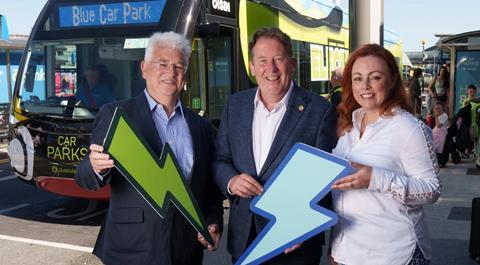
Dublin Airport (DUB) has unveiled Ireland’s first pantograph electric bus charging infrastructure as part of a €17 million investment designed to accelerate the airport’s transition to low-carbon ground transport.
The new automated high-power charging system supports a fleet of 14 zero-emission shuttle buses operated by Aircoach, which transport passengers between the airport’s terminals and car parks. The fleet can accommodate up to 120 passengers per journey and serves approximately 2.5 million passengers each year.
Pantograph charging uses retractable overhead charging arms to rapidly recharge electric buses at the end of each route, eliminating the need for vehicles to return to a depot during the day. This enables continuous operation with reduced downtime while improving the reliability and efficiency of shuttle services.
New charging infrastructure supports airport decarbonisation
The €17 million investment includes the installation of the pantograph charging system alongside major electrical network upgrades required to support the technology. The project also features a dedicated seven-bay depot charging facility that provides overnight and contingency charging, improving operational resilience across the shuttle fleet.
Part of the investment was supported through a €4.7 million grant from the European Commission’s Connecting Europe Facility Alternative Fuels Infrastructure Facility. The funding contributes to Dublin Airport’s wider Campus Electrification programme, which is expanding electric vehicle charging infrastructure and supporting the airport’s long-term carbon reduction strategy.
Aircoach has separately invested €11 million in the new electric buses. Replacing the previous diesel fleet is expected to reduce carbon emissions by more than 1,470 tonnes of CO2 equivalent each year, supporting Dublin Airport’s science-based decarbonisation targets.
Minister for Transport Darragh O’Brien welcomed the project, highlighting the importance of investing in renewable energy and sustainable transport within one of the most challenging sectors to decarbonise. He also noted the future MetroLink station at Dublin Airport, located close to the charging infrastructure, as another important development that will help reduce transport emissions.
Vincent Harrison, Chief Commercial and Development Officer at daa, said the fast charging technology is particularly suited to high-frequency airport shuttle services, allowing buses to recharge quickly during operations rather than relying on lengthy depot charging. He added that the investment improves passenger journeys while helping future-proof airport operations.
The airport’s sustainability programme also includes wider electrification measures such as LED lighting, fixed electrical ground power for aircraft, expanded electric vehicle charging infrastructure and the continued transition of its operational vehicle fleet away from diesel. Dublin Airport is also working with airlines and transport partners on initiatives including sustainable aviation fuel, hydrogen-powered aviation and improved public transport links to further reduce emissions across the wider airport ecosystem.





No comments yet