
This International Airport Review webinar examined the future of airport baggage handling, specifically focusing on the transition toward automation and data-driven operations by 2026.
Airports are no longer held back by a lack of ideas; the real challenge lies in turning innovative concepts into daily operations while managing daily complexities, workforce shortages, and rising passenger expectations. In the recent International Airport Review webinar, Scaling Baggage Innovation for Operational Resilience 2026, industry experts gathered to discuss exactly how to move these ideas beyond the pilot stage.
Featuring deep dives from John Maduro (Baggage Handling Systems Engineer at Aruba Airport Authority) and Henk Brandsma (Strategic Process Developer for Baggage Handling at Amsterdam Schiphol Airport), the session offered a masterclass in modernising airport infrastructure.
If you missed the live broadcast, you can watch the full webinar on-demand now to view the presentation slides, see the robotics in action, and catch the comprehensive audience Q&A. In the meantime, here is a roundup of the key themes discussed.
1. Moving from reactive handling to predictive data
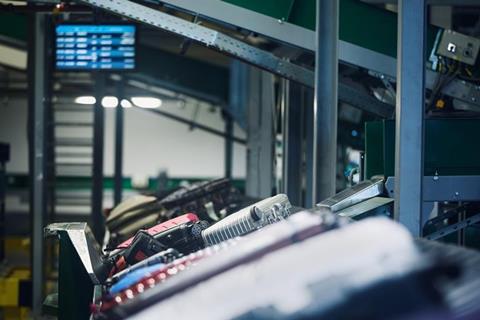
At the heart of Aruba Airport’s recent transformation was the shift from a 1999 legacy setup to a modern, ICS-based baggage handling system equipped with real-time RFID tracking and an integrated early bag storage (EBS) facility. However, as John Maduro highlighted, mechanical upgrades alone are not enough. Operational stability relies heavily on reliable data and system integration.
Aruba overcame early congestion issues by implementing auto-clearance and rule-based “back warnings,” which trigger alerts before bottlenecks escalate. Instead of merely reacting faster to problems, the airport now focuses on detecting issues before they impact the operation. “The predictability is what creates resilience,” Maduro noted, emphasising that detecting disruptions early is the key to maintaining a stable operation. While AI is a popular buzzword, the immediate value for Aruba has been in raw data visibility - using live operational metrics to make faster, better-informed decisions.
2. Targeted automation and the “Tetris” challenge
For Amsterdam Schiphol Airport, strict working condition regulations have been a primary driver for mechanising the baggage process. Henk Brandsma shared Schiphol’s decades-long journey of implementing baggage robots, from early lifting aids to advanced systems like the MK2 robot, which was specifically designed to fit within the restrictive 2.5-meter height limits of existing baggage halls.
Schiphol is also exploring highly innovative operational models, such as exchanging traditional laterals or carousels directly with robots to save space and simplify integration. Furthermore, new offloading robots are being used strategically for “peak shaving” - buffering baggage by time slot in automated containers to relieve system pressure.
However, Brandsma pointed out that automation’s biggest hurdle remains standardisation. Training a robot to load bags is often compared to a game of Tetris, but with unpredictable, bulky luggage that slides out of place, the process is far more complex. If passengers were incentivised to use standardised hard-case suitcases, the efficiency of these robots would increase dramatically.
3. Navigating the “Bermuda Triangle” of stakeholder collaboration
A recurring theme throughout the webinar was the critical need for cross-industry collaboration. Both experts agreed that testing new technologies in a silo takes too long and that the industry is currently “over-piloting”.
Brandsma aptly described the complex ownership of new technologies (like automated guided vehicles or AGVs) as the “Bermuda triangle” between the airline, the airport, and the handler. To scale innovation successfully, airports must look beyond their traditional segments of the baggage journey and integrate the total process all the way to the aircraft.
Maduro echoed this, sharing how Aruba’s shared data ecosystem allows U.S. Customs and Border Protection (CBP) to remotely review 3D baggage scans and permits airlines to receive automatic updates when a passenger changes flights. By opening up communication lines and working together, stakeholders can vastly improve system flexibility.
Watch on-demand
To truly grasp the operational capacities of Schiphol’s robots, or to understand the technical nuances of Aruba’s early bag storage deployment, we highly recommend viewing the session in its entirety.
Watch the webinar on-demand today to hear the full insights from John Maduro and Henk Brandsma. Additionally, you can explore more case studies by downloading the free Innovating the Baggage Handling Operation for the Future of Air Travel e-report, available now on the International Airport Review website.







No comments yet