
Facing rising capacity and staffing challenges, Narita International Airport is turning to data‑sharing, automation and locally produced sustainable aviation fuel to rethink how it will operate over the coming decades.
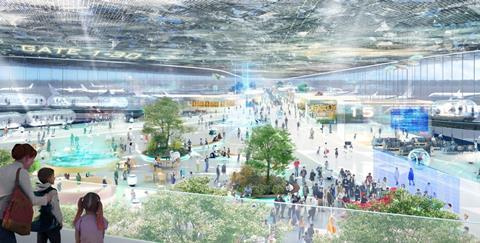
As global aviation rebounds and long-term demand continues to rise, Narita Airport is confronting a challenge familiar to many major hubs: how to grow capacity without simply adding more people, more complexity or more carbon. Speaking to International Airport Review Editor Holly Miles, Shinichiro Motomiya, Executive Officer for the Planning Department at Narita Airport Corporation outlined a strategy rooted in data-first decision making, targeted automation and sustainability treated as core infrastructure, rather than a side project.
What emerged was not a story of flashy technology, but of deliberate choices about where innovation genuinely adds value.
The New Narita Airport: Growing without more staff

With Japan’s ageing workforce and runway expansion on the horizon, Narita is planning for growth that is not dependent on headcount. Automation and autonomy are therefore not optional enhancements but structural requirements. The airport is exploring autonomous vehicles and labour-saving systems to support both its own expansion and increased third-party handling activity, allowing capacity to rise without placing unsustainable pressure on staffing.
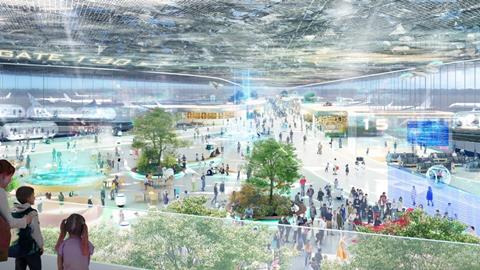
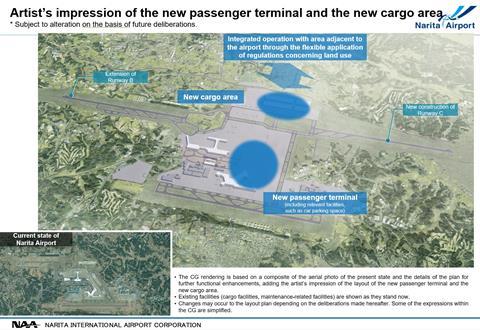
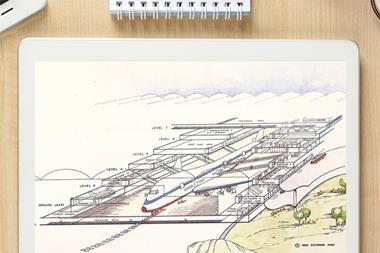
This thinking underpins Narita’s broader operational efficiency strategy, including their plans for a major “New Narita Airport” expansion including expanding from two runways to three, extending a runway and consolidating passenger terminals into a One Terminal concept, and a new cargo area featuring automated systems, supported by clustered forwarder facilities to maximise logistics efficiency.
Air Narita and ‘total airport management’: data before gadgets
At the core of Narita’s transformation is Air Narita, its digital master policy. While often described as a digital transformation programme, Motomiya is clear that technology itself is secondary.
“The most important is data gathering,” he said.
Today, much of that data sits in silos. “In the world right now, stakeholders keep their data,” he explained. “They will not show the data to the other stakeholders because they do not see any benefit.”
Narita’s response is a gradual, trust-based approach to data sharing, supported by early-stage trials. “We are taking a step-by-step approach by going through a trial, and if it is mutually beneficial then we will progress to the next step.”
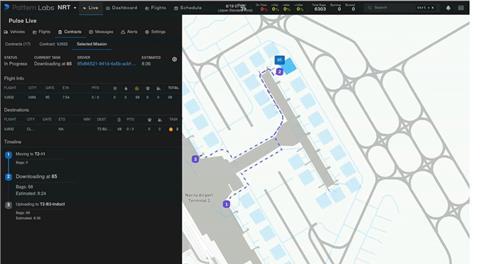
The long-term goal is Total Airport Management (TAM), integrating data from airport access, terminal operations and airside activity into a single platform. This includes extending collaborative decision-making beyond airside. “Airside A-CDM is already operational,” he noted. “Now we try landside CDM. We call it L-CDM.”
Digital twins, IoT and progressive data integration will underpin TAM, enabling predictive and dynamic management rather than reactive operations.
Automation, robotics and baggage: trials with a clear purpose
Automation at Narita is being introduced through tightly defined trials, not large-scale deployments. One example is a proof of concept that ran for three months and completed in December; a robot was installed to sell souvenirs at an unstaffed store in Terminal 3, which was been developed in collaboration with Nomura Research Institute (NRI). The project has not continued because of the relatively large amount of space required, as well as the need for further system improvements to enable fully autonomous operation without human
intervention. However, the airport is currently considering downsizing the system and implementing additional enhancements. This is one potential way that the airport can reduce its reliance on human capital.
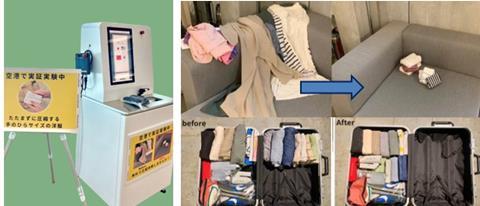
Baggage is a more pressing operational focus. Post-COVID passenger behaviour has shifted, with travellers arriving earlier and carrying more bags. “The baggage per person number is a little bit higher,” he explained, particularly for departing passengers making last-minute purchases. We have all experienced the stress of trying to fit all your souvenir purchases into your luggage and passengers opening their suitcases in the terminal and sitting on bags desperately trying to close them is a common sight. To help with this, Narita Airport teamed up with SJOY Inc. to run a proof of concept on an automatic compression service that shrinks clothes so that you can fit them in the suitcase. The feedback from passengers has been positive according to Motomiya and they are evaluating full implementation of this service which decreases packing stress, provides value and enables passengers to purchase more souvenirs.
Narita’s early bag storage (EBS) capacity remains limited at fewer than 1,000 bags, significantly below that of major European and Asian hubs. To address this, the airport is evaluating expanded EBS capability and AI-based baggage identification systems.
Elsewhere, robotics trials are underway for baggage handling, alongside anomaly detection for predictive maintenance and image-based screening. Future AI applications are expected to include foreign object debris detection on runways and optimisation of ground support equipment fleets.
The emphasis throughout is clear operational value rather than experimentation for its own sake.
Sustainability as infrastructure, not window dressing
Narita’s sustainability strategy is formalised through its Sustainable NRT 2050 roadmap, aligned with Japan’s decarbonisation goals and a net zero ambition by 2050. “The energy issue is very important in Narita Airport,” Motomiya said.
Electrification is already being treated as infrastructure. “Now we plan about 100 electric vehicle chargers at the same time,” he explained, supporting airlines and ground handlers transitioning to electric fleets.
Sustainable aviation fuel (SAF) presents a different challenge. Narita’s distance from Tokyo’s industrial centres makes long-distance fuel transport inefficient, prompting the airport to explore local production. Current trials include SAF produced from sorghum-based feedstocks.
Narita is also preparing infrastructure for hydrogen and electric aircraft, signalling a view of sustainability as a long-term systems challenge rather than a compliance exercise.

Caption: Narita is currently running a proof of concept on an AI-enabled recycling bin. The scanner uses AI to tell the passenger which bin their rubbish belongs in.
Source: Credit: Narita International Airport Corporation.
Long-term planning: flexible terminals and mindset change
With a new master planning phase approaching, Narita is consciously challenging established planning assumptions. “The most important is the change of mindset,” Motomiya said.
After more than 50 years of operation, experience is both an asset and a constraint. “We need new ideas,” he explained.
This has driven a broader innovation approach that extends beyond aviation. Narita’s innovation team is working with universities, academia and non-aviation industries to introduce new thinking into airport planning.
Flexibility is a recurring theme. Terminal buildings may last decades, but passenger needs will constantly evolve. Narita is designing terminals with sufficient space and adaptability to allow regular internal modification, rather than locking in fixed layouts that struggle to evolve.

Passenger expectations and personalisation
Digital self-service has fundamentally changed passenger behaviour. “Many people can control their itinerary with their own fingertips,” Motomiya noted. “That makes a really big difference.”
Narita’s response is a move away from uniform service models towards persona-based design.
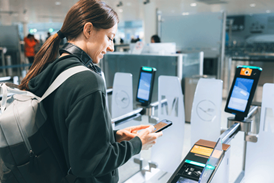
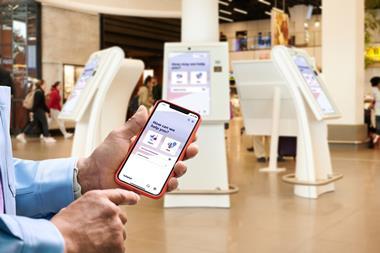
Fast Travel initiatives such as self-service check-in and bag-drop are already in place, alongside trials of off-airport remote check-in using facial recognition. AR navigation, AI-powered multi-lingual assistance and stress-reduction tools are being explored to support increasingly diverse passenger profiles.
A strategy shaped by realism
Narita’s roadmap stands out for its restraint. Rather than chasing innovation headlines, the airport is building foundations: shared data, flexible infrastructure, targeted automation and sustainability embedded into operational planning.
For airport leaders grappling with similar constraints around workforce, capacity and carbon, Narita’s experience offers a compelling case study in how to plan for the next 20 to 30 years, not just the next traffic forecast.
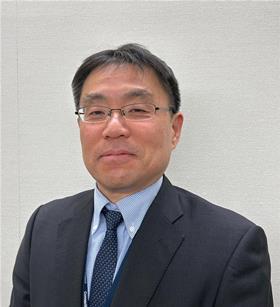
About the interviewee
Mr. Motomiya joined Narita International Airport Corporation (NAA) in 1991. Since joining NAA, he has held various positions related to airport operations.
From 1996 to 1998, and again from 2012 to 2014, he was seconded to the Civil Aviation Bureau of the Ministry of Land, Infrastructure, Transport and Tourism (MLIT), where he was responsible for offshore planning for Haneda Airport and providing technical support to overseas airports. In 2019, he became the first General Manager of the newly established Marketing Department. In 2023, he became General Manager of the Airport Planning Department, overseeing future airport development projects such as the new terminal and new cargo facility.
Narita Airport representatives will be speaking at International Airport Summit 2026 in Rome on 11-12 November
- Masaki Takeuchi, Manager, Facilities Planning, Airport Planning Department, Narita International Airport Corporation will be speaking on panel ’Unblocking passenger flow and satisfaction in constrained terminals’
- Tatsuya Izumi, Deputy General Manager, Airport Planning Department, Narita International Airport Corporation will be speaking on panel ’Baggage visibility and traveller trust: digitising the end-to-end bag journey’.
Make sure you are in the room when they are on stage. Register for your free* place today.
*Free aviation leader tickets are applicable to senior managers and above from airports, airlines, regulatory bodies and aviation authorities.





No comments yet