

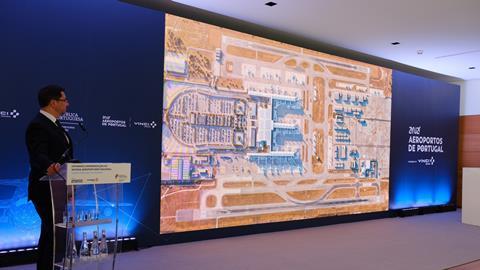
VINCI Airports has reached a key milestone in the development of the new Lisbon airport with major planning documents now submitted.
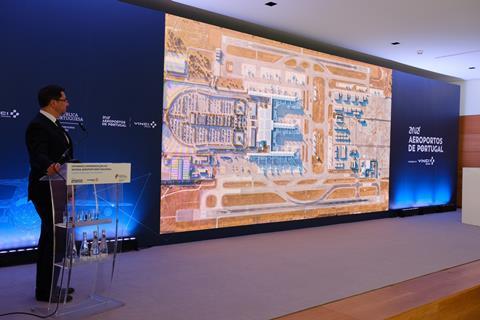
Aeroportos de Portugal, a subsidiary of VINCI Airports, has submitted the Engineering, Cost and Construction Report for the new Lisbon Luís de Camões Airport to Portugal’s Ministry of Infrastructure and Housing, marking a significant milestone in the development of the country’s future international gateway.
The report brings together the findings of preliminary design studies covering operational capacity, the airport’s functional programme, multimodal connectivity and long-term infrastructure planning. It was delivered in line with the timetable established under the airport concession agreement.
The company also confirmed that the project’s Environmental Impact Assessment will be submitted to the Portuguese Environment Agency before the end of July. Once both submissions have been reviewed by the relevant authorities, the project will move into the detailed design and architectural phase.
New airport designed to support future passenger growth
The new Lisbon Luís de Camões Airport is planned with an initial capacity of 56 million passengers annually and is intended to support Portugal’s long-term aviation growth. The proposed development includes two runways, 120 aircraft stands, approximately 500,000m² of terminal space, 194 self-service check-in kiosks and a range of digital technologies designed to improve operational efficiency and the passenger experience.
The airport will also be integrated into wider transport infrastructure through connections with the planned third bridge over the Tagus River, Portugal’s high-speed rail network and new road links.
Alongside the new airport, ANA and VINCI Airports continue to invest across Portugal’s airport network, including terminal improvements in Lisbon, runway rehabilitation in Porto Airport (OPO) and infrastructure upgrades at Faro Airport (FAO), as well as airports in the Azores and Madeira.
The project currently involves more than 250 engineers, technical specialists and environmental experts as planning progresses towards the next stage of development.








No comments yet