

Gabriel Higgins, Editorial Assistant at International Airport Review, spoke with Jim Parashos, Chief of Aviation to explore how Melbourne Airport’s next-generation baggage system is transforming capacity, efficiency and the passenger experience.
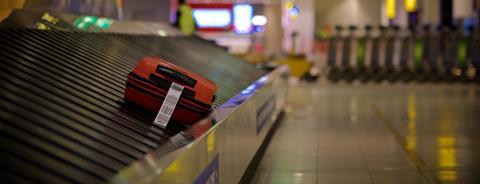
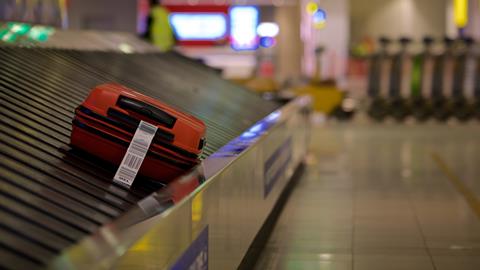
For most passengers, baggage handling remains largely invisible, yet behind the scenes, it is one of the most critical and complex systems within any airport. As global passenger volumes continue to climb and operational pressures intensify, airports are being forced to rethink legacy infrastructure that can no longer keep pace with demand.
At Melbourne Airport, a major transformation is underway. The airport is introducing a new high-capacity, tote-based baggage system designed to fundamentally reshape how bags move through the terminal. The implications extend far beyond throughput, touching everything from passenger behaviour to airline efficiency and long-term airport growth.
From constraint to capability
Baggage systems have traditionally been one of the hardest operational constraints within an airport. While terminals can be reconfigured and aircraft movements optimised, baggage infrastructure often represents a fixed bottleneck.
Melbourne’s existing system, with a capacity of around 1,800 bags per hour, has increasingly required manual intervention to cope with peak demand. The new system will more than double this, reaching approximately 4,000 bags per hour. This is not simply an incremental upgrade but a structural shift in capability.
The most significant change lies in the system architecture. Rather than relying on conventional belt conveyors, the new system operates using individual totes, each carrying a single bag with a unique identifier. This allows for end-to-end tracking and precise control of each item throughout its journey.
“It is all mechanical, no belts throughout the system, and every bag has its own tote with an identifier,” Parashos explains. “We can track bags all the way through the journey and go straight to the source if there is an issue.”
The number of people may stay the same, but what they do will change.”
This design mirrors systems already deployed at major global hubs, including Doha, Singapore Changi, San Francisco and Toronto. The adoption of this model signals a broader industry transition towards more modular, data-driven baggage operations.
Crucially, the benefits are not limited to speed. The tote-based approach enables dynamic storage and sequencing of bags. Instead of moving directly from check-in to aircraft build-up, bags can be held within the system and released at optimal times, introducing a level of operational flexibility that traditional systems cannot achieve.
Efficiency above and below the wing
One of the most immediate impacts of this new capability is the introduction of early bag-drop and more flexible check-in models. Traditionally, passengers are constrained by fixed check-in windows, typically opening three to four hours before departure. This creates predictable surges in demand, placing pressure on check-in counters, security screening and staffing.
With the ability to store bags within the system, airports can decouple check-in from flight departure times. Passengers can check-in much earlier, smoothing demand across the day and reducing peak congestion.
For Melbourne, this is particularly relevant given its passenger mix. Around half of its travellers are international visitors, many of whom arrive at the airport well in advance of their flights. Under the old system, these passengers would often wait landside until check-in opened. The new system allows them to complete the process earlier and move through the terminal at their own pace.
“I think the new system both responds to and reshapes customer behaviour,” says Parashos.
This shift also benefits transfer passengers and those being dropped off by family or friends. The removal of rigid check-in windows creates a more flexible and less stressful passenger journey, while also increasing dwell time within the terminal.
Below the wing, the operational gains are equally significant. Ground handlers traditionally operate within tight and often inefficient timeframes, with staff required to anticipate when bags will arrive and build loads accordingly.
“When check in opens three or four hours before departure, staff are trying to guess the flow of bags,” Parashos notes. “With the new system, we can store bags and then inject them back out 60 to 80 minutes prior to departure, which makes the whole process much more efficient.”
You can squeeze more people into a terminal, but if you cannot move the baggage, that becomes a hard stop.”
Real-time tracking plays a central role in this transformation. By assigning each bag a unique identity within the system, airports and airlines gain full visibility over its location and status.
“It is going to be a game-changer,” he reveals. “Not just for tracking mishandled bags, but for quickly locating and removing bags for passengers who do not board. That has a direct impact on on-time performance.”
Interestingly, many baggage issues are not caused by physical handling failures, but by limitations in scanning and control systems.
“These systems are a lot more than belts and trays,” Parashos adds. “Quite often the issue comes down to technology and reading rather than the physical make-up area.”
Building for growth in a live environment
Implementing such a system in an operational airport presents its own challenges. Unlike greenfield developments, most major airports must upgrade infrastructure while maintaining continuous operations. Melbourne operates around the clock, with peak activity extending late into the night and resuming early in the morning.
“To do any work in a 24-hour, curfew-free airport is always a challenge,” Parashos says. “You are effectively building while the operation continues around you.”
To manage this, much of the new baggage facility has been developed as a brownfield project, allowing construction to take place alongside existing operations. The final and most complex phase involves integrating the new system with legacy check-in infrastructure and ensuring compatibility with airline and ground handling systems.
“We are doing it slowly but surely,” he explains. “We need to make sure our airline customers and ground handlers are keeping up, and that the technology is speaking across all systems.”
Looking ahead, the investment in baggage infrastructure is closely tied to broader expansion plans. Melbourne currently handles around 12 to 13 million international passengers annually, with ambitions to reach 24 to 25 million over the next decade.
“You can squeeze more people into a terminal, but if you cannot move the baggage, that becomes a hard stop,” Parashos states. “This system removes one of those key constraints.”
Supporting this growth will require not only terminal expansion but also additional runway capacity, with a third runway planned to become operational by 2031. In this context, baggage is not just an operational function but a strategic enabler.
The new system also positions the airport to explore further innovations, from automation in container loading to autonomous ground vehicles. However, Parashos is clear that progress must be measured.
“It is such a step-change for us that we need to treat it as an evolution rather than a revolution,” he affirms. “We want to make sure it is working as it should before we layer in additional technologies.”
There is also a shift in workforce dynamics. While staffing levels may remain broadly stable, roles are evolving.
“I think we will see less manual handling and more oversight,” he notes. “The number of people may stay the same, but what they do will change.”
Ultimately, the transformation of baggage systems represents a shift in how airports think about operations. What was once a hidden utility is now recognised as a central component of performance, passenger experience and commercial success. As more airports follow this path, the standard for what constitutes an efficient and resilient baggage operation is being redefined.
Baggage transformation is a topic that is explored in greater depth in International Airport Review’s ‘Scaling baggage innovation for operational resilience’ webinar taking place on 20 May, featuring speakers from Schiphol, Kuala Lumpur and Queen Beatrix International Airport in Aruba. To watch the webinar live or on-demand click here to register.
We will be continuing the discussion on baggage handling and transforming operations in a live business environment in-person at the International Airport Summit taking place in Rome on 11-12 November. To view the full agenda and register for your FREE ticket, head over to the official event website.
About the Interviewee
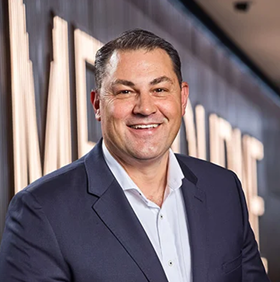
Jim Parashos joined Melbourne Airport as General Manager International Recovery in January 2022 and stepped into his new role as Chief of Aviation in 2023.
Jim brings over 25 years of experience in the airports and tourism sectors. Prior to joining Melbourne Airport he was Executive General Manager Aviation at Brisbane Airport Corporation, responsible for Operations, Aviation Development and Aeronautical Commercial.
Jim joined BAC in February 2017 as Head of Aviation Business Development, until appointed EGM Aviation Development and Partnerships in March 2019.Jim holds an MBA in Aviation (RMIT), Business degree in Tourism and International Trade and is a Graduate of AICD (GAICD).





No comments yet