
International Airport Review interviews airport operators, planners and technology leaders to explore how the industry is using technology, data and smarter terminal design to improve passenger flow and satisfaction in increasingly constrained airport environments.
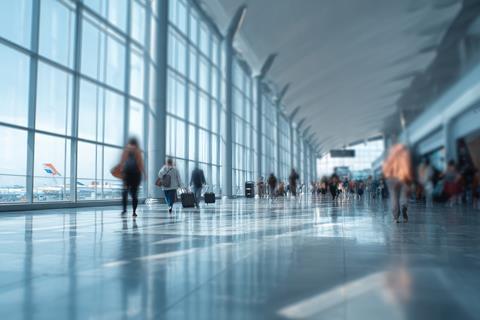
As airports continue to deal with rising passenger numbers and ageing infrastructure, constrained terminals are becoming one of the industry’s defining operational challenges. Across Europe and beyond, airports are attempting to modernise facilities that were never designed for today’s traffic levels, while maintaining smooth operations and a positive passenger experience.
The challenge is no longer simply about moving passengers from kerb to gate. Airports are now under pressure to improve efficiency, reduce stress, increase commercial dwell time and operate more sustainably, all within terminals where physical expansion is often difficult, expensive or impossible.
From AI powered forecasting and biometric processing to dynamic wayfinding and integrated data ecosystems, airports are increasingly turning to technology to manage passenger flow more intelligently. However, industry leaders argue that operational collaboration, flexible terminal design and a better understanding of passenger behaviour are just as important as automation itself.
Tackling the pressure points inside constrained terminals
For many airports, the most difficult passenger flow challenges still revolve around the same core touchpoints. Check-in, security, immigration and boarding continue to create pressure during peak periods, particularly in terminals with limited room for expansion.
According to Henrik Rothe, Senior Lecturer for Air Transport Management at Cranfield University, security remains one of the biggest constraints.
“Security is the key bottleneck,” he states. “You have a triple wait situation in terminals for check-in or bag drop, security and immigration. If you can reduce that and expose the passenger to a more commercially inviting time, then you can also make the person happier.”
Gözde Kaygusuz, Director of Masterplan, Planning and Construction at Düsseldorf Airport, believes bottlenecks often emerge where large volumes of passengers meet limited infrastructure capacity.
A good strategy is modular terminal design which allows parts of the terminal to be expanded or adapted later as passenger numbers increase.”
“In my view, the biggest bottlenecks are at process interfaces where large numbers of passengers meet limited infrastructure capacity,” she explains. “For smaller or older terminals, this becomes an even bigger problem because there is less space to manage queues or redirect passengers.”
The challenge is not simply operational. Passenger uncertainty can quickly lead to overcrowding, confusion and frustration. Airports are therefore increasingly focusing on making the passenger journey more intuitive.
At Centralny Port Komunikacyjny (CPK) in Poland, passenger flow has been embedded into the airport’s planning strategy from the very beginning. Robert Szymczak, Airport Capacity and Development Strategy Team Manager at Centralny Port Komunikacyjny, tells how passenger movement became one of the earliest considerations during the design process.
“We think it is one of the top priorities because it influences the whole experience,” he shares. “Passenger flows were one of the first elements mapped in the design process.”
The new airport’s architecture has been specifically designed to support intuitive passenger movement through the terminal.
“The structure of the roof guides passengers naturally,” Szymczak explains. “Each process is clearly separated and clearly one after another.”
This growing emphasis on intuitive wayfinding reflects a wider industry shift. Rather than relying solely on traditional signage, airports are increasingly using architecture, sightlines and visual cues to reduce stress and improve navigation.
Chris Wilson, Head of Terminal and Capacity at Birmingham Airport, believes airports must also think about the passenger journey as one interconnected system.
“There is no point having an incredibly efficient check in operation if you are going to create a bottleneck upstream,” he highlights. “It is the same in immigration. There is no point having a really efficient immigration process if the bags are not there.”
That systems-based thinking is becoming more important as airports attempt to process larger passenger volumes without endlessly increasing terminal footprints.
Data, automation and AI reshaping passenger flow management
Technology is now playing a central role in helping airports manage constrained terminals more effectively. Across the sector, operators are investing in tools that provide real-time visibility of passenger movement and allow operational teams to react more dynamically.
Virtual queuing has emerged as one of the most practical examples. Kaygusuz reveals it allows airports to distribute passenger demand more evenly:
“If passengers can book a time slot for security, fewer people need to wait in physical lines and the flow of passengers can be spread more evenly.”
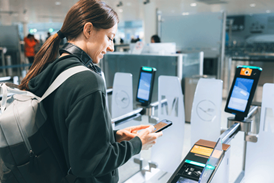
Automation is also helping airports increase processing speeds while reducing pressure on terminal infrastructure. Self-service bag drop systems, biometric boarding gates and automated passport control technologies are increasingly becoming standard parts of the airport journey.
Rothe believes these technologies are already transforming the passenger experience.
“If you have biometrics for boarding control or passport control, that reduces queueing time and processing time dramatically,” he affirms.
At Zurich Airport, automation has become a major strategic focus. Davide Caenaro, Head Passenger Information Services at Zurich Airport Ltd, imparts that the airport is using automation to both improve passenger experience and address workforce shortages.
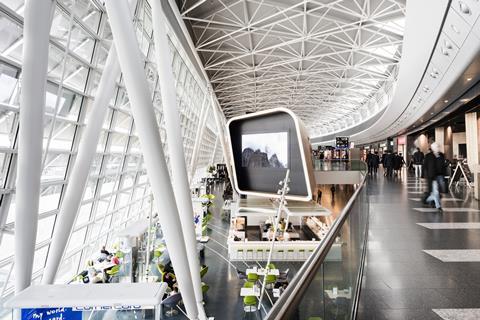
“Automation is a huge strategic value,” he explains. “As routine tasks become increasingly automated, employee roles can evolve towards more strategic and customer-focused activities, such as helping and guiding passengers more proactively.”
Zurich Airport has introduced more than 40 digital touchpoints across the terminal, allowing passengers to access support services, information and navigation assistance through QR codes and digital platforms.
“This helps us reach passengers where they are,” Caenaro shares. “It helps answer their questions in the moment.”
Alexander Lindner, Senior Project Leader at Zurich Airport Ltd, notes that airports are increasingly focusing on predictive management and the use of data-driven decision making.
To address this, airports are increasingly investing in simulation, forecasting and AI powered analytics.
At Birmingham Airport, Wilson says simulation tools are now being used years in advance to identify potential operational pinch points.
“We are looking at summer 2027 now to understand where those pinch points might appear,” he explains. “The most effective tools are being able to simulate and create stories before it happens.”
Rather than simply monitoring queues after congestion appears, airports are trying to forecast passenger behaviour and proactively allocate resources.
“We have incredible data lakes now with years and years of data,” Wilson adds. “AI helps us analyse that big data and understand scenarios before they happen.”
Data integration is also becoming increasingly important from a commercial and customer experience perspective.
Dolores González, Data Science Manager at Aeropuertos Argentina, says airports generate vast amounts of information across operational systems, retail platforms and customer interactions.
“The real value comes from connecting those signals into a single ecosystem that allows us to understand passengers better,” she reveals.
Aeropuertos Argentina combines operational data with anonymised Wi-Fi analytics and retail information to understand how passengers move through terminals and where congestion develops.
We have incredible data lakes now with years and years of data.”
“This allows us to identify congestion points, improve wayfinding, optimise resource allocation and redesign parts of the journey to reduce friction,” González explains.
The organisation has also developed passenger personas based on behavioural patterns and travel preferences.
“A business traveller usually prioritises speed and efficiency, while leisure travellers or families may value comfort, food options or time to relax.”
That behavioural understanding is increasingly shaping how terminals are managed and designed.
Collaboration and flexibility driving the future airport terminal
Despite the rapid growth of digital tools, airports consistently stress that technology alone will not solve passenger flow challenges. Collaboration between airports, airlines, ground handlers and service providers remains essential.
Wilson described Birmingham Airport’s approach as creating a “triangle of trust” between the airport, airlines and ground handlers.
“We all share the same objective to get aircraft out on time,” he states. “What we are trying to do is deploy our teams to smooth out any friction in the journey.”
Historically, airports and airlines have often had competing priorities. Airports generally want passengers to spend more time in retail areas, while airlines focus on moving passengers to the gate as efficiently as possible.
“Airports want to have the passenger as long as possible,” Rothe shares. “Airlines want to have the passenger in the boarding zone as quickly as possible.”
However, the industry is increasingly recognising the need for closer operational alignment. Rothe points to airports such as Copenhagen, where closer cooperation with airlines has improved check-in efficiency and delayed the need for expensive expansion projects.
“There is more ambition to collaborate,” he notes. “If you synchronise data flows, you can make the passenger journey much easier and reduce operational costs.”
Flexibility is also emerging as one of the defining characteristics of future terminal design. Airports are increasingly aware that passenger behaviour, airline operations and processing requirements will continue to evolve.
Kaygusuz believes modular design will become critical.
“A good strategy is modular terminal design which allows parts of the terminal to be expanded or adapted later as passenger numbers increase,” she says.
At Centralny Port Komunikacyjny, flexibility has been built directly into the airport’s long-term development model.
“We can make decisions at the last responsible moment,” Szymczak confirms. “The design allows flexibility depending on future passenger growth.”
For many industry leaders, the future airport terminal will not necessarily be significantly larger than today’s facilities. Instead, it will need to be smarter, more adaptable and far more responsive to passenger behaviour.
“The terminal becomes more like a space where you want to be rather than a tunnel to go through,” Rothe concludes.
That balance between operational efficiency and passenger comfort is increasingly becoming one of the industry’s central priorities. As constrained terminals continue to face growing pressure, airports are realising that passenger flow is no longer simply an operational issue. It has become a defining factor in overall airport performance, passenger satisfaction and commercial success.
We will be exploring this topic in even greater depth at the upcoming International Airport Summit 2026 taking place in Rome on 10-12 November. To network with like-minded airports on this topic make sure you register to attend the event so you do not miss out.







No comments yet