

Seattle Tacoma International Airport has completed its major Gateway Project, modernising passenger processing security baggage handling and terminal infrastructure ahead of peak international travel demand.
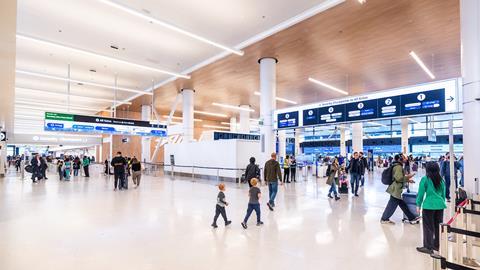
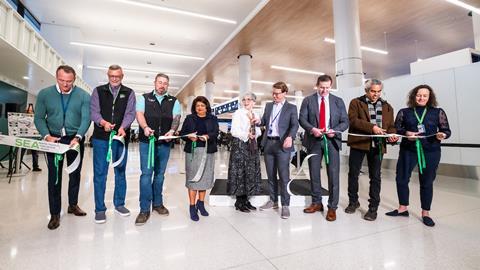
For years, the greater Seattle region has and continues to experience unprecedented growth in population and popularity as a travel destination. To meet this demand, Seattle-Tacoma International Airport (SEA) has taken on a series of transformative construction projects under Upgrade SEA, its customer-facing capital improvement program campaign. One of the biggest projects in the program’s portfolio is the SEA Gateway Project. Completed in January, the project kicks off a year full of capital project successes and achievements ahead of the world’s largest soccer competition this summer. SEA Airport is ready to welcome the world!
Construction on the SEA Gateway Project kicked off in 2022 as part of a Tenant Reimbursement Agreement (TRA) with Alaska Airlines, with the goal of reconfiguring and modernising 40-year-old facilities at the north end of the main terminal. Since then, the project has been a masterclass in collaboration between SEA Airport, Alaska Airlines, and its designers and contractors.
Improving the passenger journey
The upgrades targeted nearly every aspect of the passenger journey — curbside, ticketing, security, and bag claim. Here’s what’s new:
- · Digital signage on the Departures Drive featuring new Alaska digital imagery
- · Accessible door portals on Departures and Arrivals drives
- · New and upgraded check-in areas for Alaska passengers
- · Updated restrooms that include a Nursing Room and a Companion Care Restroom with an adult changing table
- · Redesigned Security Checkpoint 6 with more space and a beautiful recompose area
- · Lighter and brighter Baggage Claim Level with new or updated bag claim devices
- · Artwork on every level
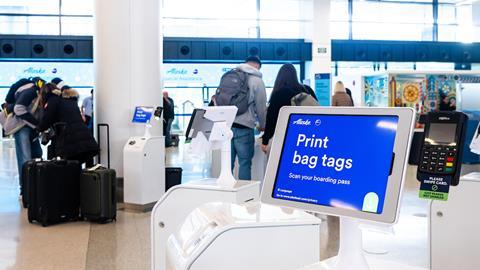
On the Ticketing Level, where travellers begin their airport journey, Alaska upgraded its check-in systems to new Automated Bag Drop (ABD) self-service kiosks. It was the first U.S. carrier to deploy ABDs at scale in its largest hub. These ABDs complement Alaska’s industry-first Bag Tag stations and help fulfil Alaska’s goal to move people from check-in to security in under five minutes. This new technology boosts traveller throughput in the bag drop line compared to the volume before ABD installation. Although the technology can be used by most passengers, Customer Service Agents still provide personalised service to those who need help.
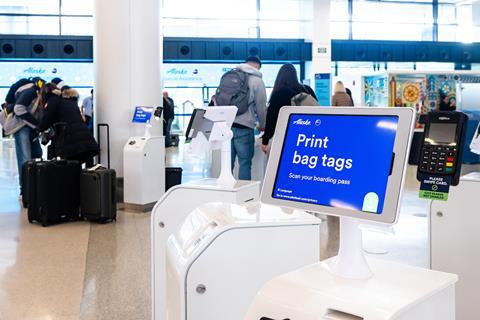
Alaska Airlines Bag Tag stations in the newly redesigned north end Ticketing Level, photo courtesy of Port of Seattle
Intentional design elements like the floor-to-ceiling window walls brighten the space with natural light in the often-cloudy Pacific Northwest. That light plays off the crisp, white terrazzo flooring and reflects the brilliant and colorful new art pieces spread out between the Ticketing, Bridge, and Baggage Claim levels. These eight new art pieces are gallery-worthy and eye-catching. Additionally, the open-space environment makes it easy to navigate from check-in through security, making the passenger journey as easy and efficient as possible.
As SEA Airport continues to grow into a major international hub, its facilities and technology are following suit.”
In an innovative twist, the project created new usable spaces within the same footprint, finding over 24,000 square feet for offices and ticket counters on a new Bridge Level between the Ticketing and Baggage Claim levels. Alaska also added new check-in/bag drop service areas on the terminal side of the skybridges coming from the airport garage. This design accommodates more passengers during high traffic times, encouraging them to check-in, drop bags, skip ticketing, and head straight to the security checkpoints.
Planning for today and tomorrow
With construction impacting all three levels of the airport’s front doors, the challenge became maintaining passenger flow and keeping operations moving at one of North America’s fastest-growing — yet smallest-footprint — international gateways. Finding ways to minimise impacts to passengers was key and involved communication to travellers as early as possible.
The Port focused on consistent updates across paid, earned, and owned channels to reach travellers before they arrived at the airport. Teams across multiple departments partnered on strategic communication for major project milestones, creative wayfinding design, and empathetic messaging that spoke to the reality of challenges while emphasising the positive outcomes.
Alaska prioritised moving passengers to a more mobile check-in process so they arrived prepared for their journey. Shared communication efforts between Alaska and the Port showed travellers what to do and where to go during construction, and presented a clear, intuitive path from curb to checkpoint.
One major accomplishment during the construction period was maintaining checkpoint wait times. Although the SEA Gateway Project shut down an entire security checkpoint for one year, wait times remained consistent with pre-construction averages thanks to other Upgrade SEA projects happening simultaneously. The new Checkpoint 1, located on the Baggage Claim Level, opened ahead of the Gateway completion and is an innovative solution to SEA’s small footprint. Checkpoint 1 added five lanes and about 2,000 square feet of queuing space to accommodate all types of screening passengers.
Like SEA Airport, Alaska is experiencing growth and expanding into new international markets. SEA welcomed five new international services in 2025 on top of a record-setting eight in 2024. More are on deck this year, including Alaska’s nonstops to Rome, London, and Reykjavik. Delta will add Rome and Barcelona, and Cathay Pacific will bring back Hong Kong service. The focus on new technology and efficient processes aligns with airports around the world as well as SEA Airport’s goal to make checking in easy to understand, regardless of which language you speak.
Collective collaboration
SEA employees continue to find innovative ways to upgrade existing spaces, make the airport more efficient, and reflect the personality of the region by working with external and internal stakeholders. Some of the key Port teams supporting this initiative include:
- · Capital program and project management groups, finding new ways to construct within the airport’s operating parameters
- · Environmental and architecture teams, making buildings as beautiful and sustainable as possible
- · The Operational Readiness and Activation Transition (ORAT) team, coordinating with airport stakeholders to mitigate capital project impacts and activations when new spaces are ready to open
- · Public Art Program, turning the airport into a modern gallery featuring local and global talent
- · Airport Dining and Retail (ADR), bringing a variety of food and retail options to the new spaces
- · Security and Operations teams, finding the optimal efficiencies with new and redesigned checkpoints along with new facility upgrades
- · Customer Service, Communications, and Wayfinding teams, supporting all SEA passengers along the way with critical information digitally and in person
What’s Next for Upgrade SEA?
As SEA Airport continues to grow into a major international hub, its facilities and technology are following suit. Upgrade SEA projects are moving the terminal into the future, while keeping the airport operational with as little impact to the travelling public as possible.
There is exciting momentum as the suite of projects progresses. The Restroom Renovation project, which upgraded restrooms on the B, C, and D concourses, and the Checkpoint 1 Relocation project are meeting passenger needs in a big way. And still to come is the completion of Roadway Improvements and the C Concourse Expansion projects before peak summer travel season.
Looking ahead, SEA Airport will continue its quest to make smart and informed updates, one capital project at a time, while centring the traveller experience as the first priority. SEA continues to invest in the Puget Sound region by supporting travel and commerce. The new and beautiful airport gateway will be ready for international soccer fans to experience the beauty and character of the Pacific Northwest this summer, as well as locals who use SEA to see the world. And how exciting it is that one of their first impressions will be the refreshed SEA Airport terminal.





No comments yet