

As global passenger volumes continue to climb, airports face a persistent challenge. How do you increase baggage handling capacity, improve reliability and enhance passenger confidence without expanding physical infrastructure? The answer is increasingly digital.
At Vancouver International Airport (YVR), one of North America’s key Pacific gateways, baggage operations are evolving through a combination of intelligent systems, data-led decision making, and closer collaboration across the airport ecosystem. The result is a more adaptive and transparent baggage journey that directly supports both operational performance and traveller trust.
Scaling smarter, not larger
With nearly 27 million passengers handled in 2025, Vancouver Airport is operating at a scale that demands efficiency at every level. Rather than relying on physical expansion, the airport has focused on making its existing baggage infrastructure more intelligent.
“A large part of this for us at YVR is realised through our world-class baggage operations, which leverages innovation to deliver bags efficiently, reliably and accurately,” explains Sree Priya, Manager of Baggage Operations. “We lean on technology and seamless integration across teams to make the existing system smarter and more adaptive rather than adding physical space.”
This approach is centred on unlocking latent capacity within the current footprint.
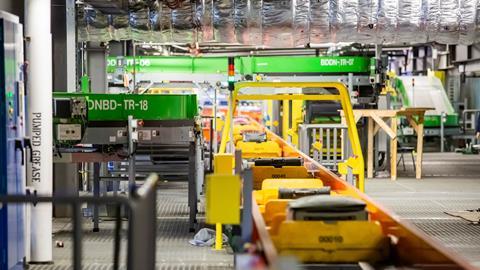
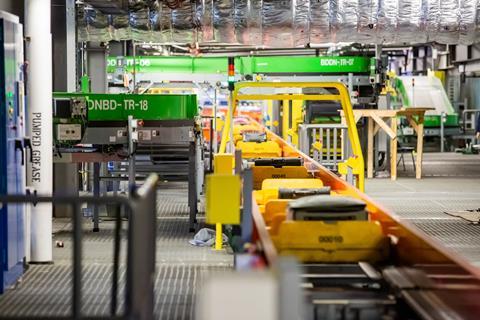
“Smarter allocation of operational assets such as baggage piers, and transfer lines unlock further capacity by optimising how flights are assigned to available processing zones,” Priya adds. “This maximises utilisation of the existing footprint and improves overall throughput without new construction.”
This reflects a broader industry shift. As land constraints and capital costs rise, digital optimisation is becoming a more viable and scalable solution than physical expansion.
From reactive to predictive operations
A central pillar of this transformation is the growing role of data analytics and predictive maintenance. Traditionally, baggage systems have relied on reactive interventions, addressing faults only after they occur. This approach is no longer sufficient in high-volume environments where even minor disruptions can escalate quickly.
“Data analytics plays a central and growing role at YVR,” says Priya. “Our planning and asset teams work with operations, using real-time dashboards to identify emerging risks, monitor demand patterns, and make prescriptive adjustments before problems escalate.”
We balance visibility and protection through a privacy-by-design approach and robust cyber-security practices.”
The airport is progressing towards a Reliability-Centred Maintenance model, moving from reactive processes to predictive and eventually prescriptive operations.
“We are on a clear journey toward Reliability-Centred Maintenance as our long-term goal,” he continues. “This includes progressing through condition-based maintenance and advancing AI-based capabilities. By turning performance data into actionable insights, we can maintain smoother flow during peaks and disruptions and minimise unplanned downtime.”
Alongside this, intelligent auto-routing is already reshaping operational performance.
“At YVR, intelligent auto-routing combined with advanced data analytics is currently having the biggest impact,” Priya explains. “Auto-routing dynamically optimises baggage flow in real time as conditions change, while our analytics capability turns data into immediate operational decisions.”
Despite these advances, full automation is not yet the universal standard. Instead, Vancouver is adopting a hybrid approach.
“We see the future in systems that combine automation with human oversight and collaboration,” he reveals. “Our focus remains on building a resilient, adaptive ecosystem where technology, empowered teams and strong partnerships work together.”
Building trust through visibility and collaboration
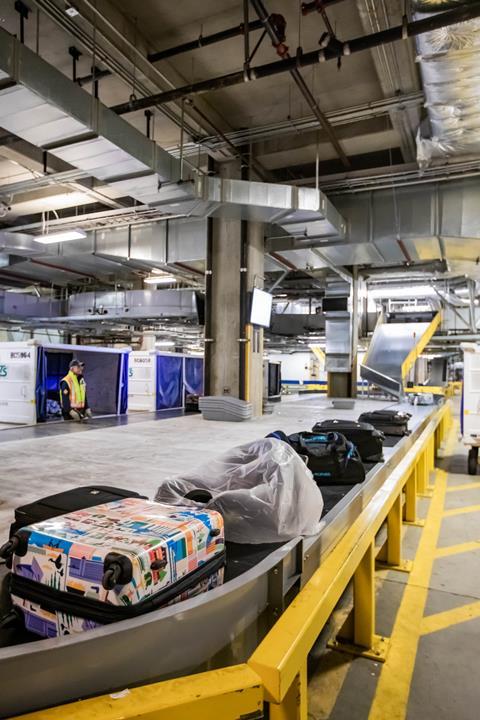
While operational efficiency is critical, the ultimate measure of success lies in passenger confidence. Baggage remains one of the most sensitive parts of the journey, and a lack of visibility can quickly erode trust.
“By enhancing tracking accuracy, providing more predictable delivery times, and enabling smoother connections, we reduce uncertainty, which is one of the top frustrations for travellers,” states Priya. “Passengers notice greater consistency and reliability, which builds confidence.”
This improved visibility is underpinned by a more collaborative approach to data sharing across the airport ecosystem.
“YVR has moved beyond traditional silos by implementing a holistic data-sharing approach,” he explains. “This brings the airport, airlines and ground handlers together under one common performance framework focused on shared outcomes such as reliability, resilience and fast recovery.”
This unified model allows stakeholders to plan and respond collectively, improving coordination during both normal operations and disruption scenarios.
“Instead of separate responsibilities, we now plan and respond collaboratively using unified data and visibility platforms,” Priya adds. “This has greatly improved coordination and created a much more connected, end-to-end view of baggage handling.”
However, achieving this level of integration is not without its challenges. Legacy systems often present barriers when integrating with modern digital platforms.
“Differences in data formats, legacy protocols, and ensuring seamless real-time communication require careful planning and phased implementation,” he notes. “We address these through strong partnerships, rigorous testing, and a resilience-first mindset.”
At the same time, increasing visibility must be balanced with privacy and cyber-security requirements.
“We balance visibility and protection through a privacy-by-design approach and robust cyber-security practices,” Priya affirms. “Data systems focus on operational insights while strictly limiting unnecessary personal information, ensuring that enhanced visibility improves service without compromising trust.”
Smarter allocation of operational assets such as baggage piers, and transfer lines unlock further capacity by optimising how flights are assigned to available processing zones.”
The digital baggage ecosystem
The evolution of baggage handling is no longer centred on individual technologies, but on how those technologies are integrated into a cohesive system. Data analytics, intelligent routing, predictive maintenance, and collaborative platforms are collectively reshaping operations.
For airports like Vancouver, the objective is clear. Not simply to move bags more efficiently, but to create a system that is resilient, transparent and responsive to both operational demands and passenger expectations.
As passenger volumes continue to rise, this digital-first approach will become increasingly critical. The airports that succeed will be those that can translate operational visibility into passenger confidence, turning the baggage journey into a seamless and trusted part of travel.
About the interviewee

Sreethu Priya is the Manager of Baggage Operations at YVR, bringing 12 years of experience in the airport industry. In his five years with YVR Airport Authority, he has improved baggage performance by enhancing maintenance practices, workforce skills, and data-driven decision-making. He is known for building accountable teams, improving system reliability, and aligning operations and its stakeholders with YVR’s long-term strategic and service excellence goals.








No comments yet