

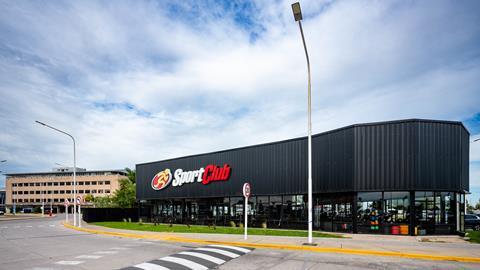
Ezeiza International Airport has expanded its passenger wellbeing strategy through the opening of the world’s largest airport gym integrated into the terminal environment.

As passenger expectations evolve, airports are expanding beyond traditional services. At Ezeiza International Airport (EZE), the opening of the world’s largest airport gym reflects a broader strategy focused on wellbeing, experience and the transformation of airport infrastructure.
The changing role of airports
Airports worldwide are redefining their role within the travel ecosystem. No longer viewed solely as transit infrastructure, they are increasingly becoming environments designed to improve comfort, productivity and the overall passenger experience.
This transformation is being driven by changing passenger expectations. Passengers today spend more time at airports than ever before and increasingly seek services that go beyond the traditional offer of retail, food and lounges. Wellness, health and lifestyle services are becoming part of a broader conversation about how airports can create more meaningful and differentiated experiences.
At Ezeiza International Airport, this evolution led to the development of a new concept within the airport ecosystem: the integration of the world’s largest airport gym.
The project was designed not simply as an additional service, but as part of a wider vision to rethink how airport spaces can generate value for passengers, employees and the broader airport community.
Why wellbeing matters in the airport ecosystem
Travelling can often involve stress, long waiting periods and physical fatigue. As a result, airports are increasingly exploring ways to improve passenger wellbeing throughout the journey.
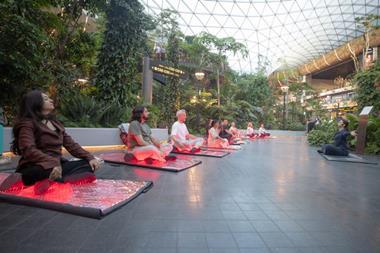
This trend accelerated after the pandemic, when health and wellness became more central to traveller priorities. Airports responded by incorporating services aimed at improving comfort and emotional wellbeing, including sensory rooms, relaxation areas, family-friendly spaces and pet-friendly services.
The introduction of a large-scale wellness facility at Ezeiza represents the next step in that evolution.
Rather than positioning wellness as a premium or secondary offering, the project integrates it directly into the airport experience. The goal is to provide passengers with new ways to use their time productively and positively while at the airport, whether before departure, during a layover or after arrival.
At the same time, the initiative also addresses the wellbeing of airport employees, recognising that airports operate as large communities with demanding operational environments.
Developing the world’s largest airport gym
The facility was developed in partnership with SportClub, one of Argentina’s leading fitness and wellness operators.
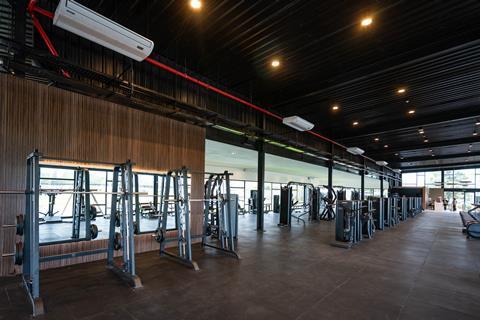
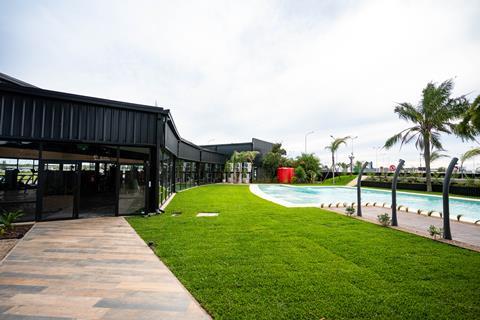
Spanning more than 3,250 square metres, the gym is currently the largest fitness facility located within an airport anywhere in the world.
The space includes:
- More than 1,200 square metres dedicated to strength and functional training
- State-of-the-art equipment and personalised training programmes
- A semi-Olympic outdoor heated swimming pool
- A solarium and recovery area
- Premium changing rooms with sauna facilities
- Solar-powered showers supporting sustainability initiatives
The project was designed to operate with flexibility and accessibility in mind. In addition to traditional memberships, passengers can access the facility through daily passes, allowing them to integrate wellness into their travel experience regardless of flight schedules or travel duration.
This operational model enables the gym to serve both frequent users and occasional travellers while maintaining integration with the airport’s broader commercial and service ecosystem.
Designing for both passengers and employees
One of the most important aspects of the project is its dual focus on passengers and airport employees.
Airports function as complex operational ecosystems supported by thousands of workers across airlines, security, retail, logistics and airport operations. At Ezeiza, more than 25,000 people form part of the daily airport community.
The wellness facility was therefore designed not only as a passenger service, but also as infrastructure that supports employee wellbeing.
This approach creates several advantages. For employees, access to fitness and recovery spaces contributes to improved quality of life within a high-demand operational environment. For passengers, the facility introduces a new dimension to the airport experience and helps transform waiting time into valuable personal time.
Importantly, the project also reflects a broader shift in airport planning, where infrastructure increasingly needs to serve multiple user groups simultaneously rather than focusing exclusively on travellers.
Operational and strategic value
Beyond its scale and visibility, the project also demonstrates how wellness infrastructure can support broader airport objectives.
As airports continue competing for passenger preference, service diversification has become increasingly important. Passenger experience is no longer defined only by operational efficiency, but also by how airports respond to evolving traveller behaviours and expectations.
Wellness services can contribute to this strategy in several ways:
- Enhancing the overall airport experience
- Increasing passenger satisfaction and engagement
- Improving perception of airport quality and innovation
- Supporting longer dwell times within the airport ecosystem
- Creating new commercial and partnership opportunities
At Ezeiza, the gym complements an ongoing strategy focused on passenger-centric services, including improved connectivity, digital solutions, family spaces and inclusive infrastructure.
The integration of wellness into the airport environment also reinforces the idea that airports can function as destinations in themselves, rather than simply points of departure and arrival.
What this means for the future of airports
The opening of the world’s largest airport gym represents more than a single infrastructure project. It reflects a broader industry shift toward more holistic and experience-driven airport models.
As passenger expectations continue evolving, airports will likely need to explore new ways of integrating services traditionally associated with hospitality, lifestyle and wellbeing.
For Ezeiza, the initiative reinforces a long-term commitment to innovation and continuous improvement of the passenger experience. For the industry more broadly, it demonstrates how airport infrastructure can adapt to emerging traveler needs while also supporting employees and operational communities.
In an increasingly competitive aviation environment, projects like this suggest that the future airport experience may be defined not only by efficiency and connectivity, but also by the ability to create spaces that improve how people feel during their journey.









No comments yet