


Sustainability & net zero
Discover airport sustainability initiatives, decarbonisation strategies and net zero pathways, including carbon management, energy transition, environmental stewardship, community engagement and alternative fuel readiness to support responsible growth and long-term resilience.


Sustainability & net zero
 News
NewsBristol Airport innovation fund backs decarbonisation projects
Three projects focused on renewable energy, carbon removal and hydrogen operations have secured funding through Bristol Airport’s 2026 Aviation Carbon Transition programme.
 Opinion
Why airport decarbonisation is a leadership challenge, not just an environmental one
Davide Bassano, Head of Sustainability at Gruppo Save, explores why airport decarbonisation must be viewed as far more than an environmental challenge.
 Article
Sustainability & Infrastructure planning: Why 2026 is the year the numbers catch up
We explore the high-stakes trade-offs aviation leaders must navigate to fund decarbonisation and deliver complex live-site infrastructure.
 News
NewsIn-depth: Exeter Airport hydrogen trial reveals winter performance data for ground equipment decarbonisation
A winter trial at Exeter Airport has produced new operational evidence on the performance of dual-fuel hydrogen-diesel ground power equipment, building on the airport’s earlier Zero Carbon Turn project.
Join now
Unlimited access to industry intelligence that can make a difference to your business
- Bookmark articles and resources to access anytime
- Enjoy free access to industry leading resources, webinars and insights
- Stay informed with the latest news and interviews
- Receive updates and recommendations tailored to your professional interests
More Sustainability & net zero
 Article
Bin there, done that: Schiphol’s hunt for its real climate hotspots in the rubbish
Denise Pronk, Head of Sustainability and Sara Solis, Circular Economy Lead at Royal Schiphol Group explore how Schiphol’s latest waste assessment uncovered hidden environmental impacts and challenged assumptions about what matters most in airport sustainability.
 Article
Sustainability and infrastructure planning: Why 2026 is the year the numbers catch up
Airports face growing pressure to align decarbonisation targets and infrastructure investment with costs, demand uncertainty and operational risk.
 Article
How to plan airport infrastructure amid uncertainty: future fuels, flexibility and resilient energy systems
Thomas Romig, Chief Airport Operations Officer of Masterise Group argues that airports do not need to predict the winning fuel of the future, they need to build the flexibility, energy capacity and infrastructure options to support SAF, hydrogen and electrification as the aviation transition unfolds.
 Article
Inside Pittsburgh International Airport’s transformation: CEO Christina Cassotis on building resilience for the future
International Airport Review Editor Holly Miles sat down with Christina Cassotis, winner of IAR’s Airport Leader of the Year in 2025, to discuss the new $1.7 billion terminal and how she is leading the airport with resilience in mind.
 News
NewsPicture of the week: Madrid airport showcases Europe’s largest commercial airport solar power facility
Adolfo Suárez Madrid-Barajas Airport is advancing renewable energy generation through a major photovoltaic park designed to meet the airport’s electricity needs.
 News
NewsHong Kong International Airport strengthens sustainability, resilience and digital operations through 2025/26 initiatives
Airport Authority Hong Kong has released its Sustainability Report 2025/26, highlighting progress across environmental, operational, economic and people-focused initiatives.
 News
NewsHawke’s Bay Airport opens search for partners on scaled-back 12-17MW solar farm
Hawke’s Bay Airport has opened an Expression of Interest process for a 12-17MW solar farm, after shelving plans for a larger 45MW development with Manawa Energy.
 News
NewsIn-depth: Operation Blue Skies launches AI trial to reduce aviation contrails
Operation Blue Skies marks the first state-backed attempt to coordinate contrail avoidance across an entire oceanic flight corridor.
 News
NewsDublin Airport unveils Ireland’s first pantograph electric bus charging system
A €17 million investment has delivered Ireland’s first pantograph electric bus charging infrastructure at Dublin Airport, improving sustainability and passenger transport.
 News
NewsStudy highlights economic potential of sustainable aviation fuel in Canada
Airbus says expanding domestic sustainable aviation fuel production could create jobs, strengthen energy resilience and support aviation’s net zero ambitions.
 News
NewsUK regulator sets roadmap for hydrogen aviation by 2035
The UK Civil Aviation Authority has published a hydrogen aviation roadmap following successful trials involving airports, aircraft and hydrogen ground operations.
 Article
Rethinking the disposable cup at Schiphol Airport
Denise Pronk, Head of Sustainability and Sara Solis, Circular Economy Lead, Royal Schiphol Group explain what it really takes to make reusable cups work airside at an airport.
 News
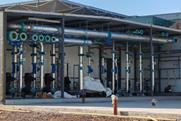
NewsBristol Airport installs low-carbon energy centre to accelerate net zero transition
Bristol Airport has reached a major sustainability milestone with the installation of a new renewable energy centre designed to decarbonise terminal heating and cooling.
 Article
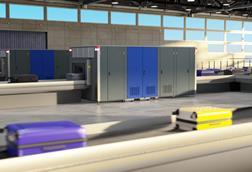
How cross-belt sorters remove the pain points from airport baggage handling
James Moody, Product Marketing Specialist at Leonardo explains how cross-belt technology is redefining baggage handling, combining proven reliability, compact design and operational flexibility.
 News
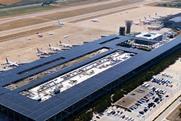
NewsDalaman Airport achieves global first with rooftop solar powered terminal
Dalaman Airport has become the first airport terminal worldwide to operate entirely on electricity generated by rooftop solar panels.
 News
NewsIATA alliance reaches 50 members to support aviation carbon markets
IATA’s alliance supporting aviation carbon markets has reached 50 participants as momentum builds behind CORSIA implementation.