


Digitisation, safety and people development top agenda at WCS
- Like
- Digg
- Del
- Tumblr
- VKontakte
- Buffer
- Love This
- Odnoklassniki
- Meneame
- Blogger
- Amazon
- Yahoo Mail
- Gmail
- AOL
- Newsvine
- HackerNews
- Evernote
- MySpace
- Mail.ru
- Viadeo
- Line
- Comments
- Yummly
- SMS
- Viber
- Telegram
- Subscribe
- Skype
- Facebook Messenger
- Kakao
- LiveJournal
- Yammer
- Edgar
- Fintel
- Mix
- Instapaper
- Copy Link
Posted: 14 March 2018 | International Airport Review | No comments yet
Speaking at the World Cargo Symposium taking place in Dallas, IATA’s Global Head of Cargo has outlined what the future holds for air freight.
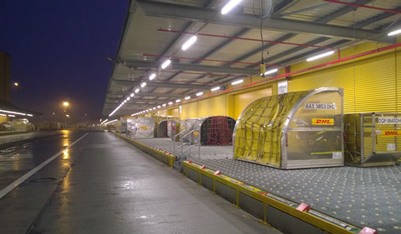
CARGO TO GO: Freight is on the up worldwide
The International Air Transport Association (IATA) highlighted four priorities for the future success of the air cargo industry: accelerating the digitisation of the supply chain, enforcing regulations for lithium batteries, more efficient trade facilitation and developing the next generation of air cargo leaders.
“Air cargo had an exceptional year in 2017 with 9 per cent growth. And we expect a very healthy 4.5 per cent expansion of demand in 2018.
“There are great opportunities in e-commerce and the movement of time-and-temperature sensitive goods such as pharmaceuticals.
“But we must accelerate the modernisation of processes, enforce regulations for the safe transport of lithium batteries and improve the efficiency of trade facilitation.
“Longer-term, we also need to inspire the next generation of talent. The air cargo industry has agreed to focus on these key areas and we must follow through,” said Glyn Hughes, IATA’s Global Head of Cargo.
Speaking at the World Cargo Symposium taking place in Dallas, 13-15 March, Hughes also called for “a strong collective voice against the building headwinds of protectionist measures.”
Accelerating the digitisation of the supply chain
The industry has been pursuing a digital process transformation known as e-freight for over a decade. A key element of e-freight is the market adoption of the e-air waybill (eAWB). Global penetration has nearly reached 53 per cent and the industry is targeting 68 per cent by year-end on enabled trade lanes.
IATA is facilitating and supporting the modernisation and transformation process through its industry transformation program, Simplifying the Business (StB) Cargo.
“The penetration of eAWB currently stands at 53 per cent. The implementation of e-AWB is slower than anybody—especially our customers—would like.
“But we are over the half-way mark. And the industry has agreed to amend a number of resolutions and recommended practices to make the eAWB the default standard on enabled trade lanes. We can be optimistic that these should spur eAWB efforts forward in 2018,” said Hughes.
Improving enforcement of safety regulations for lithium batteries
Safety is the industry’s main priority. Global standards and regulations are in place to ensure the safe transport of dangerous goods including lithium batteries. However, mis-declared or non-compliant dangerous good shipments, especially involving lithium battery consignments, continue.
“We see too many examples of abuse including mislabelling of lithium batteries. Governments must step up enforcement of dangerous goods regulations and take a tougher stance against rogue shippers.
“This includes using their power to impose significant fines and custodial sentences on those violating the regulations,” said Hughes.
Smarter and more efficient borders
It took an average of 1.41 days to clear goods through customs controls in 2017 (with significant regional variation), according to IATA’s Cargo IQ statistics. “This is too slow for businesses that compete on speed to meet their customer needs. We need to work together with governments to cut the red tape and facilitate faster, cheaper and easier trade,” said Hughes.
In particular IATA is pressing for governments to implement three important global standards:
The Montreal Convention 1999 (MC99) enables digital documentation in customs documentation—a key enabler of the e-AWB. To date, 131 countries have implemented MC99. But some key countries where air cargo has an important role still need to come on board—including Algeria, Angola, Bangladesh, Ghana, Iran, Nepal, Sri Lanka, Tunisia, Uzbekistan and Vietnam.
Revisions to the Kyoto Convention of the World Customs Organization will facilitate smart border solutions that reduce complexity and cost.
The World Trade Organization’s Trade Facilitation Agreement will make trade cheaper, faster and easier.
Attract, retain and develop talent
Air cargo is expected to grow at 4.9 per cent over the next five years. The ability of air cargo to reach its full potential will hinge upon the creation of a professional, skilled and sustainable workforce.
IATA’s Future Air Cargo Executives (FACE) program aims at attracting, retaining and developing a diverse pool of young professionals to prepare them to become the next generation of leaders in the Cargo Industry.
“To achieve the scale and sustainability required to meet the skills need for future growth of the air cargo industry a more collaborative and concerted effort towards developing a sustainable workforce is required across out industry,” said Hughes.
Related topics
Air freight and cargo, Airport development, Airside operations, Economy






 Chief Executive Officer
 CEO
CEO Chief Operating Officer
 Head of Operations, Safety and Emergency
 Chief Strategy Development Officer
 Head of Operations
 Airport General Manager
 CEO
CEO Chief Executive Officer