


Freight forwarders’ seek global solution on aviation emissions
- Like
- Digg
- Del
- Tumblr
- VKontakte
- Buffer
- Love This
- Odnoklassniki
- Meneame
- Blogger
- Amazon
- Yahoo Mail
- Gmail
- AOL
- Newsvine
- HackerNews
- Evernote
- MySpace
- Mail.ru
- Viadeo
- Line
- Comments
- Yummly
- SMS
- Viber
- Telegram
- Subscribe
- Skype
- Facebook Messenger
- Kakao
- LiveJournal
- Yammer
- Edgar
- Fintel
- Mix
- Instapaper
- Copy Link
Posted: 30 September 2013 | Fiata | No comments yet
““Our associations are hopeful that an overall agreement with the goal of carbonneutral growth from 2020 can be reached…”

The International and European freight forwarders’ associations, FIATA and CLECAT, with its collective membership representing over 164 countries, unite in advocating for a global emissions solution that allows the airfreight market to look forward to a more predictable and sustainable business environment in future. They are hopeful that ICAO’s 191 member countries will finally agree, in the coming week, on the details of a global market-based measure during the ICAO General Assembly, which opened in Montreal on September 24, 2013.
FIATA’s Past President Mr William Gottlieb, who is representing the freight forwarding industry in Montreal said: “We have good reason to be optimist as ICAO Secretary General Raymond Benjamin at the Assembly’s opening news conference assured us, that he is confident, when the session closes on October 4th, ICAO’s member countries will have reached a global accord.”
He continued: “We look to the ICAO Assembly to demonstrate the willingness of governments to progress on tackling aviation CO2 emissions. We are hopeful that this will bring to fruition a global agreement which has been discussed for several years in keeping with the global aspirational goal of carbon-neutral growth; including global market-based measures, to help reduce emissions.”
In line with this, Ms Veronique Corduant, Chairwoman of CLECAT’s working group on sustainable transport said: “Our associations are hopeful that an overall agreement with the goal of carbonneutral growth from 2020 can be reached. The environmental challenge of the airline industry is a global challenge. Global issues must be addressed globally and now is the time to do it!”
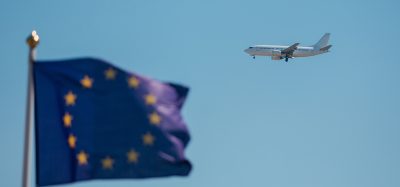
The EU’s recent attempt to include international aviation in its Emissions Trading System (ETS) has been placed on hold. Governments need to keep this in mind and seek to settle differences in order to avoid further regional legislation. Under the current EU one-year ‘stop-the-clock’ derogation, intercontinental flights to and from European airports are exempted from the EU ETS, but under the draft resolution, which is up for agreement by ICAO, the EU would be permitted to re-include intercontinental flights, including those to and from third countries, although the emissions covered would be restricted to those in EU airspace, rather than the whole flight, as directed under the original EU legislation. Despite the much lower environmental integrity of the reduced EU ETS scope, the European Commission has accepted the compromise under the draft ICAO resolution, in hopes of a final global deal.
The International Federation of Freight Forwarders Associations (FIATA) represents the global freight forwarding and logistics sector, which handles the vast majority of the world’s air cargo movements, and the European association for forwarding, transport, logistics and customs services (CLECAT) have been very active in the area of sustainable transport and long advocated the position that only global solutions can adequately address the area of transport related emissions, which are not contained by national or regional barriers.



 Chief Executive Officer
 CEO
CEO Chief Operating Officer
 Head of Operations, Safety and Emergency
 Chief Strategy Development Officer
 Head of Operations
 Airport General Manager
 CEO
CEO Chief Executive Officer