
The report outlines progress under AAHK’s Ascend strategy, including digital apron management, baggage tracking, artificial intelligence, waste recovery and marine conservation.
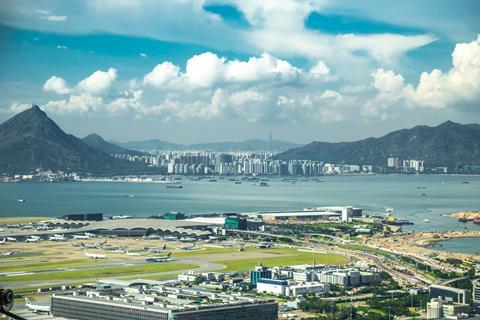
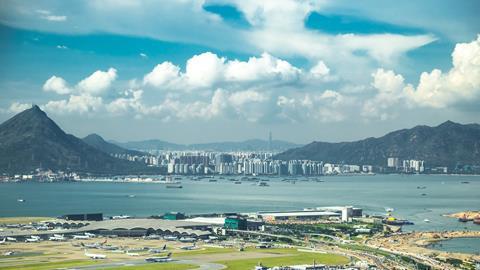
Airport Authority Hong Kong (AAHK) has released its Sustainability Report 2025/26, outlining progress at Hong Kong International Airport (HKG) across environmental, operational, economic and social priorities.
AAHK continues to implement its Ascend sustainability strategy, which is structured around 24 strategic goals across four pillars: Environmental Excellence, Operational Excellence, Thriving Economies and Societies, and Thriving People.
The report highlights the airport’s progress in strengthening environmental resilience and sustainability. HKIA’s Flood Resilience Studies received the highest Platinum award at the Airports Council International Asia-Pacific & Middle East Green Airports Recognition 2026.
For the first time, the report also includes a Nature-related Financial Disclosure Statement, making HKIA one of the first airports in Asia to adopt recommendations from the Taskforce on Nature-related Financial Disclosures.
AAHK has strengthened its double materiality assessment through reviews of the global risk environment, value chain mapping and megatrend analysis. The assessment is designed to identify sustainability-related impacts, risks and opportunities affecting stakeholders and the authority.
Environmental progress
AAHK achieved its target of increasing the airport’s recyclables recovery rate by 25 per cent by 2025 against a 2018 baseline. The authority also completed the deployment and monitoring of 500 additional artificial reef units in North Lantau waters, providing shelter and nursery areas for marine species.
Passenger infrastructure has also been developed. New departure facilities and the Coach Hall at the expanded Terminal 2 were commissioned, increasing capacity while supporting the passenger experience.
AAHK also launched Park & Fly and Park & Visit services. The initiatives use the Hong Kong-Zhuhai-Macao Bridge to provide passengers and visitors with parking facilities connected to HKIA and destinations across Hong Kong.
Digital and operational resilience
Operational resilience remains another focus, with AAHK conducting 36 drills and exercises, including a full-scale passenger departures trial at Terminal 2 and an aircraft crash and rescue exercise.
Phase 2 of the Digital Apron and Tower Management System was substantially completed, with eight additional cameras installed across the Three-runway System to strengthen real-time monitoring, situational awareness and operational planning.
The airport also implemented an Arrival Baggage Tracking System and introduced a real-time visualisation dashboard in Terminal 1 baggage halls to monitor baggage movements from aircraft stands.
AAHK completed the first phase of a human-like customer service avatar powered by generative artificial intelligence, designed to handle passenger enquiries in three languages.
The report also highlights investment in staff development, with more than 94,000 hours of in-person and online training delivered during the year, alongside an enhanced Staff Recognition Programme.
The Sustainability Report 2025/26 is available here.




No comments yet