


After delivering Pittsburgh International Airport’s new terminal, CEO Christina Cassotis says the biggest lessons have extended far beyond construction. From involving frontline staff in design to starting organisational readiness earlier, at Future Travel Experience Global in Dallas, she shared the lessons that could help other airports navigate major transformation programmes.

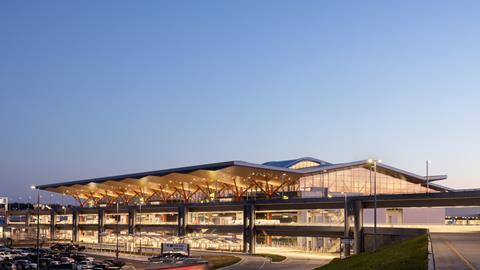
The opening of Pittsburgh International Airport’s new terminal in November 2025 marked a major milestone in the airport’s transformation. But for CEO Christina Cassotis, the most important lessons from the project have not simply been about designing and constructing a new building.
Speaking at the Future Travel Experience Global 2026 event in Dallas, Cassotis reflected on what Pittsburgh International learned from the process, including what worked, what did not, and what she would do differently if the airport were embarking on the project again.
Her reflections point to five lessons for airports undertaking major infrastructure and operational transformation: involve the people who will operate the building, start organisational readiness early, communicate relentlessly, test the operation before opening and, perhaps most importantly, treat the opening as a milestone rather than the end of the project.
1. Design with the people who will operate the building
Pittsburgh’s transformation was driven by a fundamental change in the airport’s business model.
The existing terminal had been designed around U.S. Airways as a major connecting hub. After the airline dismantled its hub, much of that connecting traffic disappeared, leaving Pittsburgh primarily as an origin-and-destination airport.
“We were left by our home carrier 10 years before I took the job,” Cassotis said. “The business model had changed. The airport was built to be the largest connecting hub for an airline that no longer exists.”
The infrastructure therefore needed to reflect the airport’s new role. Years of limited investment had also resulted in deferred maintenance and outdated technology.
But Cassotis says one of the most important decisions was not about the building itself. It was about who was involved in designing it.
Pittsburgh involved frontline employees from the beginning, asking them how an airport should work and what they needed to do their jobs.
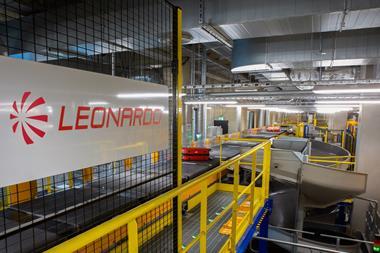
That resulted in practical changes that could easily have been overlooked in a conventional design process. The new baggage system, for example, uses magnetic motors, meaning baggage employees no longer need to wear hearing protection every day.
For Cassotis, those details are significant because improving the working environment can have a direct impact on employee experience and retention.
The same principle influenced the selection of architects and engineers.
“We were really not interviewing for who has a great design. Lots of people can architect a building,” she said. “We were looking for who could partner with us.”
The aim was to create a collaborative process involving the people responsible for plumbing, electrical systems, baggage and other operational functions, rather than treating design as something handed down to the airport.
“That was going to be a collaborative effort,” Cassotis said.
2. Start organisational readiness earlier
One of Cassotis’s clearest lessons is that Pittsburgh should have started preparing its organisation earlier.
The airport established an organisational readiness team around 18 months before opening. Looking back, however, feedback from its frontline teams was that the work should have begun sooner.
“We should have started organisational readiness back when we started operational readiness,” Cassotis said.
The purpose of the team was to identify conflicts and make the decisions required to ensure the organisation could operate effectively in the new environment.
A group of mid-level managers met every week to work through problems and resolve conflicts, rather than leaving every decision to senior leadership.
That was particularly important because Pittsburgh was constructing the new terminal while continuing to operate the existing airport.
The airport deliberately sought collaboration between operations and development, having seen examples elsewhere where the two functions were too disconnected.
But collaboration did not mean the absence of conflict as each team has competing priorities.
The challenge was to move beyond individual departmental priorities and establish what the organisation collectively needed to achieve.
3. Communicate more than you think is necessary
For Cassotis, major transformation requires an almost relentless level of communication.
“You feel exhausted because you feel like you’re saying the same things over and over again,” she said. “But there’s always somebody new who needs to hear it.”
Pittsburgh’s communication strategy extended well beyond employees and formal project partners.
The airport wanted wheelchair runners, taxi drivers, Uber and Lyft drivers and employees at local businesses to understand what was happening so that they could answer passengers’ questions.
“We wanted them to have an answer,” Cassotis said.
That communication was also designed to give the wider community a sense of ownership over the project.
Rather than simply telling Pittsburgh that its airport was changing, the airport wanted people to understand how they could be part of that transformation.
“It wasn’t just that, ‘Oh, the airport is going to change.’ It was, ‘I’m going to help build it,’” Cassotis said.
That sense of involvement was important because the new terminal was intended to represent the region rather than the airline around which the previous facility had been built.
Cassotis also stressed the importance of maintaining an ongoing dialogue with the architects and engineers.
The relationship was not simply a case of completing a design and handing it over for construction. Instead, the airport remained closely involved throughout the process.
4. Test the operation, not just the building
Pittsburgh’s approach to opening the terminal also demonstrated the importance of testing the complete operation before passengers arrived.
The airport conducted trials involving its own teams, airline partners, TSA and concessionaires before moving to public testing.
It then staged a major integrated trial that required 2,500 volunteers to act as passengers.
An open house attracted around 7,000 people, while around 18,000 members of the community expressed an interest in taking part.
The scale of the testing reflected the complexity of moving an entire airport operation into a new environment.
It also gave Pittsburgh an opportunity to identify problems before they became live passenger issues.
Cassotis’s objective was not simply to make sure the building worked. The airport wanted its people to understand how to work in it.
The organisational readiness programme therefore had a specific goal: ensuring that the first day of operations did not feel like the first day for employees.
The team called itself the “day one team” and set a target a year before opening that day one should not feel like day one to anybody working at the airport.
For passengers, the new terminal would inevitably be unfamiliar. For staff, it needed to feel familiar.
That meant answering practical questions ranging from where employees would park and how they would access the building, to how wheelchair runners would use new routes and how different teams would carry out their everyday responsibilities.
“Day one should not feel like day one to anybody who works at the airport,” Cassotis said.
5. Opening day is a milestone, not the finish line
Perhaps the most important lesson Cassotis would change is how the project itself was framed.
“We should never have positioned the opening as an ending,” she said. “We should have positioned it as a major milestone.”
Pittsburgh introduced 14 new operational technologies across the building and campus. Opening the terminal therefore marked the point at which a new phase of transformation began, rather than the completion of the work.
“We’ve got to actually get this all the way done so that everybody from the front office to the front line understands we’re operating differently,” Cassotis said.
The airport is now focused on making those technologies deliver operational value.
Data is a particular priority. Pittsburgh has significantly more data than it previously had, but Cassotis says the next challenge is making sense of it, establishing appropriate governance and deciding who should have access to it.
The airport is already becoming more predictive, but artificial intelligence is introducing another layer of questions around decision-making and its impact on employees.
“Who gets to make those decisions? How this impacts people’s jobs?” Cassotis said. “I think that in the context of AI is a whole new world.”
That means Pittsburgh’s transformation continues even though the most visible element of the programme is now open.
There are still operational adjustments to make. Cassotis acknowledged that the airport is continuing to refine elements including TSA queues and the kerb.
The experience reinforces her central point: the successful delivery of a major airport project cannot be measured by whether the building opens on time and passengers walk through the doors.
The real test comes afterwards, as the organisation adapts to new infrastructure, new technology and new ways of working.
For airports embarking on their own major transformation programmes, Pittsburgh’s experience offers a clear message. The building may be the most visible part of the project, but preparing the organisation to operate it can be just as important.
And, as Cassotis’s own reflection suggests, the day the doors open may be the end of construction, but it is only the beginning of transformation.




No comments yet