
Aeroporti di Roma (ADR) is planning €9 billion of investment over 20 years to expand Rome Fiumicino Airport’s capacity, strengthen its international hub status and deliver more sustainable growth.
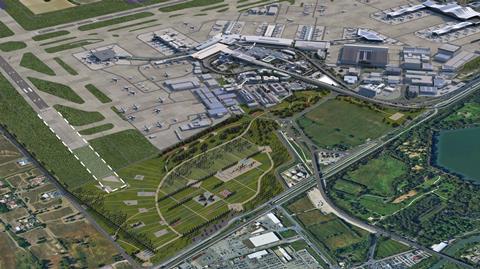
At the upcoming International Airport Summit 2026, Aeroporti di Roma CEO Marco Troncone will be sharing how Rome Fiumicino Airport is preparing for a major transformation, with a €9 billion Sustainable Development Plan designed to accommodate around 100 million passengers annually by 2046.
The 20-year programme, developed by ADR and the Italian Civil Aviation Authority (ENAC), aims to balance increasing capacity with service quality, environmental considerations and benefits for surrounding communities. The investment will be fully funded by ADR, without public funding.
The plan comes as Fiumicino continues to strengthen its position among Europe’s leading aviation hubs. The airport handled more than 51 million passengers in 2025, connecting travellers to over 240 destinations across 80 countries through approximately 100 airlines.
Its service performance has also received international recognition. In 2026, Fiumicino retained its five-star Skytrax rating and ranked seventh among the world’s best airports. ACI World recognised it as Europe’s best airport for service quality for the ninth consecutive year, while ACI EUROPE named it the Best Airport in the category for airports handling more than 40 million passengers annually for the eighth time since 2018.
The development plan seeks to build on this position while preparing the airport for projected long-term demand.
Expanding capacity while reducing environmental impact
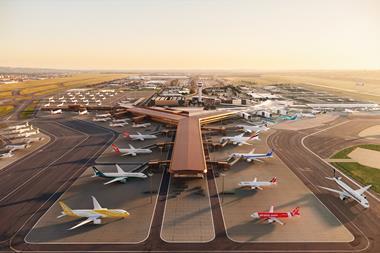
Of the €9 billion investment, €4 billion is earmarked for maintaining and upgrading existing infrastructure, while €5 billion will support new facilities, including an additional runway and a new terminal with 76 gates.
The proposals have been redesigned to bring together capacity expansion, service quality and sustainability. The new terminal will be developed within the existing airport boundary, while a planned four-runway configuration will change how the airport’s runways are used.
Under the proposals, Runway 1 will be shortened and will no longer handle departures, shifting the focus of flight operations eastwards. ADR estimates that this approach could reduce noise impacts on affected residential areas by up to 80%.
The plan also extends beyond the airport itself, recognising the importance of surface access and the relationship between major aviation infrastructure and its surrounding communities.
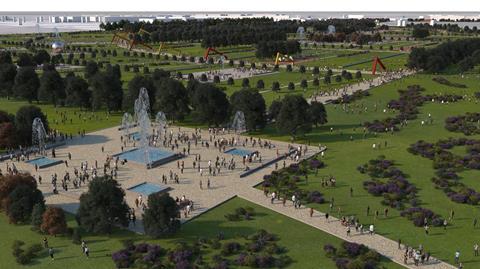
More than €300 million will be invested in projects in the surrounding area, including improvements to rail connectivity and public transport, expanded pedestrian and cycling infrastructure, and the creation of an 85-hectare archaeological park around the ancient Port of Claudius.
For areas of the Litorale Romano State Nature Reserve affected by the proposals, the plan includes a commitment to the principle of “no net loss”, through the incorporation and ecological enhancement of areas currently outside the reserve.
The public consultation process is currently underway with meetings takjing place over the bext few weeks. ENAC issued technical clearance in May, paving the way for the consultation, which will provide residents and other interested parties with an opportunity to review the proposals and provide feedback before subsequent ministerial approval procedures.
The economic case for long-term airport investment
ADR is positioning the plan as an investment in Italy’s wider economic development, as well as in the airport’s future capacity.
A study conducted by ADR with support from PTS found that Fiumicino and Ciampino airports together generated €31.3 billion in value added and supported more than 590,000 jobs across Italy in 2025, accounting for approximately 1.6% of national GDP and 1.9% of employment.
The potential contribution of the development plan is substantial. According to a study by Rome’s Luiss Guido Carli University, the investment could generate around €70 billion in value added nationwide and create approximately 300,000 new jobs by 2046.
The projected benefits for the Lazio region include around €18 billion in value added and 67,100 new permanent jobs. Within the Municipality of Fiumicino, the estimated gains amount to approximately €5 billion and 13,450 jobs.
These projections reflect the anticipated effects of construction investment, increased airport activity and the additional connectivity that expanded capacity could enable.
The proposals have also gained wider policy attention. Italy’s National Airports Plan for 2026–2035, presented by ENAC and the Ministry of Infrastructure and Transport, recognises the role of Fiumicino’s sustainable development in strengthening its position among the world’s major international hubs. Support for ADR’s project has also been voiced by Deputy Prime Minister and Transport Minister Matteo Salvini.
Marco Troncone to discuss Fiumicino’s next chapter at International Airport Summit
Delivering a development programme of this scale raises questions that extend beyond construction and capacity. Airport leaders must balance long-term demand forecasts with operational performance, passenger service, environmental responsibilities, stakeholder expectations and the need to maintain an airport’s day-to-day operations throughout its transformation.
These challenges will be central to the discussion with Marco Troncone, CEO of Aeroporti di Roma, at International Airport Summit 2026.
Troncone will open the summit on Wednesday, 11 November with a one-to-one interview with International AIrport Review Editor Holly Miles and will then join the Summit’s Leaders’ Spotlight session, ’Licence to operate, transform and grow’, from 09:00 to 09:55. The session will explore how airport leaders can secure the conditions for growth while delivering major transformation programmes and maintaining their licence to operate.
Fiumicino’s €9 billion development plan provides a timely case study in the decisions facing airport executives: how to plan for decades of growth, finance major infrastructure investment, manage environmental and community impacts, and ensure that expansion strengthens rather than compromises the airport experience.
International Airport Summit 2026 takes place from 10–12 November 2026. With the event now just two weeks away, register now to hear directly from airport leaders, exchange practical insights with industry peers and explore the strategies shaping the future of airport operations and development.


No comments yet