
International Airport Summit speaker, Brian Ryks, Executive Director and CEO of the Metropolitan Airports Commission, describes how his airport manages major construction works while fully operational.
Modernising an airport requires careful co-ordination across daily operations, passenger experience and tenant needs. At Minneapolis-St. Paul International Airport (MSP), every construction project is planned around the efficient movement of people and systems running the airport, while enabling future growth.
A familiar airport in motion
From 2016 to 2031, the Metropolitan Airports Commission (MAC) is investing more than $7 billion in capital improvements. Just over $3 billion of this is focused on expanding parking, larger terminal spaces and major modernisation projects at MSP – all while maintaining operations across an airport that is open around the clock. To successfully invest at this scale, construction must be carefully planned. Gate availability, passenger routes, tenant access, building systems and future demand all shape how the work is phased. Even a temporary wall or re-routed walkway can affect how people move through the airport and how well our teams and systems operate during construction.
As the 17th busiest airport in the U.S. that welcomes more than 36 million passengers annually, we understand the stakes are immeasurably high when it comes to maintaining the consistency travellers and airport employees expect and value. A backed-up queue or unclear path can add pressure for people who are travelling and working in a time-sensitive environment. In a place where so many systems and schedules are connected, small disruptions can build quickly.
We keep this at the forefront of every project plan, because MSP has built its reputation on on-time reliability, convenience and an exceptional passenger experience. Travellers consistently recognise MSP among the best airports, including the highest ranking among North America’s mega airports for customer satisfaction in the J.D. Power North American Airport Satisfaction Study in three of the past four years.
Maintaining that reputation during construction is a top priority for our team at the MAC. Success depends not only on the finished project, but also on the impact on passengers and revenue while improvements are underway.
The first decision
For the MAC team, every major construction project starts with a practical question: can the space close, or does it need to stay open?
Closing an area can speed up construction by providing crews with more room to work. Keeping it open often requires phased construction, temporary walls, adjusted routes, off-hour construction and close co-ordination with airlines, tenants, contractors and airport operations. All of this equates to more time and more cost.
However, in a live airport environment, the most expedited construction schedule is not always the best outcome. Passenger experience, airline operations, safety, revenue and long-term performance must be balanced.
There is no right answer. The decision depends on how the space is used, who depends on it and how much disruption the airport can reasonably absorb.
The work behind the scenes
Like most airports, MSP operates around the clock, which means construction planning extends far beyond peak travel periods. Early morning departures, late-night arrivals, international connections, employees reporting to work and passengers returning home all depend on spaces that are safe, clear and comfortable to navigate.
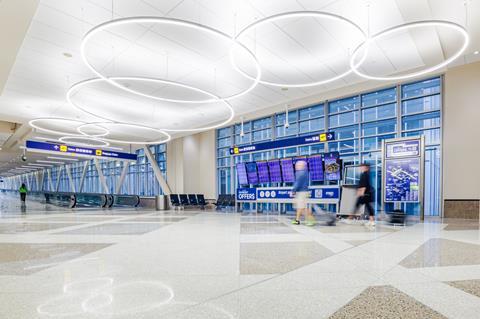
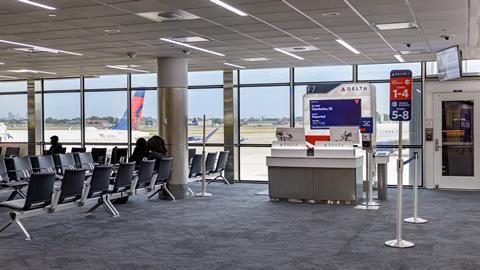
Major projects like our recently completed Airport Modernisation Programme at Terminal 1 are examples of how much planning goes on behind the scenes to minimise disruption. Launched in the autumn of 2023 and completed in December 2025, the MAC and Delta Air Lines’ $242 million renovation refreshed six of Terminal 1’s seven concourses and approximately 75 Delta gate hold rooms – all while the terminal remained open. The project introduced consistent finishes, new seating, updated lighting, dynamic gate information displays and other improvements to post-security areas.
Much of that work happened overnight. Corridors were renovated in phases, and utilities, building systems and access points remained operational throughout construction.
That’s often the sign of a successful airport project: passengers notice the improvements more than the disruption.
Working beside daily operations
Our current Concourse G expansion project faces similar challenges.
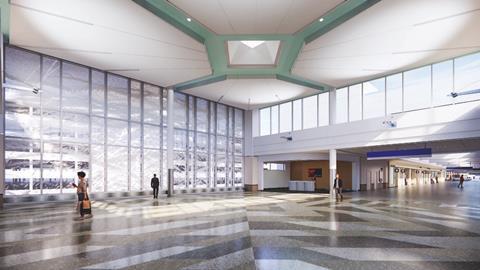
The most recent phase of this project is adding 157,000 square feet of public space between Gates G8 and G13, including a wider central corridor, a 52% increase in gate seating, additional restrooms and concessions, expanded international arrivals access, and other passenger amenities. The project is scheduled to be completed in 2029.
Constant co-ordination is required to keep the concourse in service. Passenger routes, security, utilities, technology, heating and cooling systems, emergency access, airline operations and tenant activities must all continue safely while work progresses nearby.
As an added layer of complexity, all projects at MSP must account for our well-known Minnesota winters. Construction continues year-round, but winter conditions can affect exterior work, equipment movement, airfield and roadway access, material staging, and the building systems that keep indoor terminal spaces comfortable during extreme weather conditions.
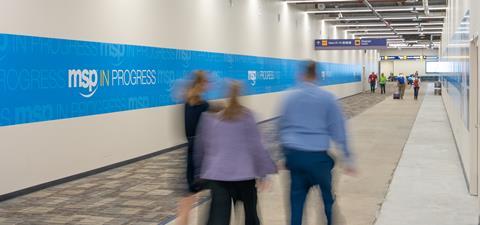
We also strive to avoid making passengers feel like they’re navigating an active construction zone. Walls are treated as part of the passenger environment, not simply a barrier. Where possible, MSP uses finished, floor-to-ceiling walls to separate construction from active terminal areas. This approach supports safety, helps minimise construction noise and maintains a more polished experience for travellers. Additionally, it creates space for intentional, strategic messaging that explains what is happening behind the wall and what improvements passengers can expect when work is complete. Clear communication helps passengers see construction as progress rather than disruption.
Building with a long view
Long before any equipment shows up or demolition begins, our MAC team has clearly strategised how each improvement project aligns with our long-term approach to managing and investing in our facilities.
We track the condition and expected life of our facilities so we can repair, refresh and replace them before they reach failure. That is a top priority, as waiting too long can limit options and create more costly inconveniences and disruptions.
It also affects the aesthetic choices people notice every day. Durable flooring, modern restroom facilities, efficient lighting and high-quality furnishings are not only design decisions, they help airports withstand heavy use and make it easier to maintain the experiences customers expect.
This long-term view continues to guide major investments, including an upcoming $488 million overhaul of Terminal 1’s Energy Management Centre (EMC) and a significant portion of Concourse C. While less visible than the concourse improvements, the EMC project will impact critical systems our tenants and airlines rely on to maintain operations and make passengers comfortable. It will also include terminal and gate modifications as we modernise our utility infrastructure. It’s not feasible to build a new energy centre offsite, so we must utilise a full arsenal of planning, project delivery and communications to complete the project successfully.
What construction reveals
Airport construction is complex because operations never stop. At MSP, our goal is to improve the airport while minimising disruption and providing a first-class experience for our customers and stakeholders who depend on MSP every day. That means keeping a business traveller moving to an early meeting, helping a family start a long-planned trip, and making sure someone coming home can pass through the airport with ease, despite major renovations.
Construction tests an airport’s planning, co-ordination and communication, but it also reflects its priorities. For the MAC, the focus is on connecting people, protecting the passenger experience and building a sustainable, memorable airport designed for decades to come.
I will be speaking on this very topic at the International Airport Summit taking place in Rome from 10-12 November. Make sure you register for your complimentary* ticket to join me in the room and ask me your questions.
* Complimentary aviation leader tickets are applicable to senior managers and above from airports, airlines, regulatory bodies and aviation authorities.



No comments yet