

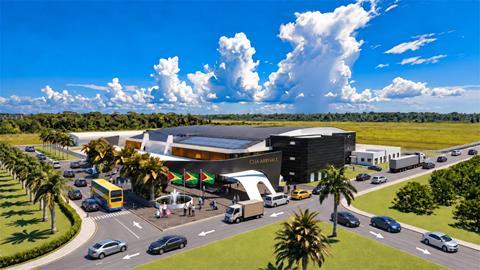

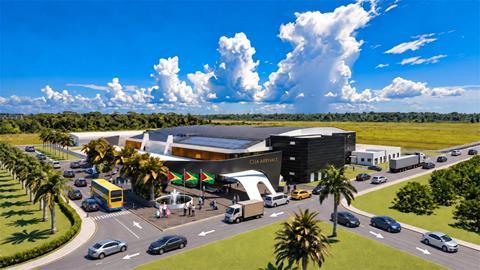
Driven by an unprecedented domestic economic surge and rapidly expanding international flight connections, Cheddi Jagan International Airport (CJIA) in Guyana is undertaking a comprehensive modernisation programme. Spearheaded by Ramesh Ghir, the airport’s Chief Executive Officer (CEO), the transformation centres on building a state-of-the-art arrivals terminal set for completion in 2028, integrating biometrics, expanding commercial space and implementing pioneering green energy infrastructure.
A double-digit surge driven by an economic boom
The primary catalyst for CJIA’s multi-year expansion programme is the staggering growth in passenger traffic over the past five years. Despite Guyana having a national population of under one million people, its commercial landscape has experienced exponential growth.
“We are a country of approximately 900,000 people. Over 63,000 new businesses were registered in the last five years,” explains Ghir. “This, coupled with the phenomenal passenger growth, gives you an idea of what is happening in the country and the imminent need for a second terminal. While we have adequate capacity now, we won’t have that in the next five years.”
This economic activity has translated into sustained, double-digit passenger growth. The airport expanded its roster from four to 16 airlines in just five years, adding four carriers in 2024 and three more in 2025. Traffic grew by 14 per cent last year and maintained a 12 per cent growth rate through early 2026.
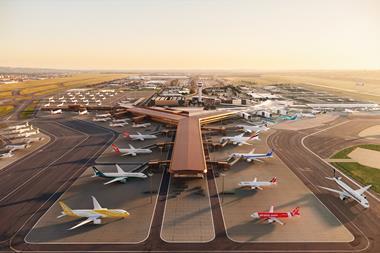
Mowlem Group and Manchester Airport Group (MAG) are teaming up to build Terminal 2. At the same time, Ghir confirmed that the Guyanese government is pushing hard to secure more flights, especially those connecting to South America, Africa and Asia. “Given our strategic geographical vantage point and the accelerated traffic generated by the expanding energy sector, establishing these key international air linkages is a logical and necessary progression.”
While we have adequate capacity now, we won’t have that in the next five years.”
Frictionless travel through biometrics and paperless processing
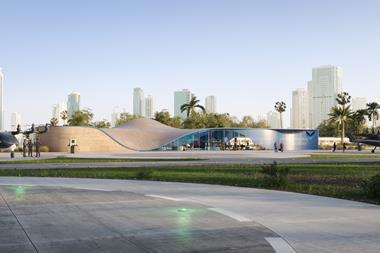
The new arrivals terminal is being constructed as a ‘green terminal’, featuring two large atriums designed to offer arriving guests an immediate view of Guyana’s natural environment. Operationally, CJIA is focusing heavily on paperless processing and digital touchpoints through a partnership with SITA.
The airport has already deployed electronic gates for arrivals and departures, eliminating paper immigration forms in favour of digital submissions. Looking forward, CJIA plans to introduce full biometric processing, self-service bag drop facilities and off-site baggage processing.
“Deploying off-site and self-service baggage infrastructure is critical to optimising passenger flow, easing peak-hour check-in congestion and transforming the overall terminal experience,” notes Ghir.
The airport is even working with SITA on technology that will allow passengers to tag their bags directly at their hotels prior to departing for the airport.
Collaboration and stakeholder alignment in a live environment
Building new infrastructure alongside the expansion of existing facilities requires close operational alignment to ensure the passenger experience remains uncompromised. Within the current terminal, CJIA is opening a brand-new commercial centre housing updated duty-free shops and restaurants.
To prevent construction friction, CJIA enforces a communication structure rarely seen at other facilities: weekly stakeholder meetings.
“Unlike standard industry practice, we bring all of our key stakeholders together every Friday,” Ghir says. “This regular forum allows us to gather direct feedback, address emerging concerns and align on upcoming projects and policy updates. By keeping these lines of communication open, every major initiative reflects a genuinely collaborative effort.”
This collaborative structure is paired with continuous customer feedback via daily passenger surveys and quarterly Airport Service Quality (ASQ) benchmarks.
By keeping these lines of communication open, every major initiative reflects a genuinely collaborative effort.”
A carbon-neutral vision for the ‘land of standing forests’
CJIA’s expansion is closely aligned with Guyana’s national Low Carbon Development Strategy. Approximately 85 per cent of Guyana is covered by standing rainforests, which store an estimated 19.5 billion tonnes of carbon, making the nation a significant contributor to global climate mitigation.
To match this national commitment, CJIA is transitioning its energy supply and ground operations:
- Solar energy: CJIA partnered with Oriana Power to install a massive solar panel array that covers 80 per cent of the airport’s total power consumption. Land space has already been reserved to expand solar capacity further in future contract phases.
- Electrification: CJIA and ground handling partners are actively transitioning airside ground support equipment (GSE) to electric vehicles (EVs).

Promoting Guyana’s eco-tourism identity
Ultimately, the airport serves as the primary gateway for international visitors eager to explore Guyana’s pristine eco-tourism offerings, including over 800 bird species and expansive wildlife reserves.
“Guyana is booming right now, but beyond the growth, our nature is truly unbelievable,” Ghir says. “We’re home to over 800 bird species and some of the world’s most impressive giants – like the jaguar, the giant river otter and the harpy eagle. It’s an experience you can’t get anywhere else. If you’re looking for an unforgettable adventure in pristine rainforest, you need to visit.”






No comments yet