


Chris Crist, Chief Information Officer shares Hartsfield-Jackson Atlanta International Airport’s computer vision journey, evaluating how to move from isolated pilots to enterprise-scale AI capabilities.
Across the aviation industry, airport leaders are exploring how artificial intelligence (AI) and computer vision can improve operational efficiency, strengthen security, and enhance the passenger experience.
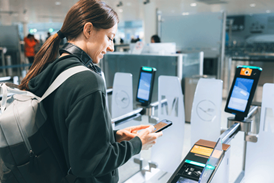
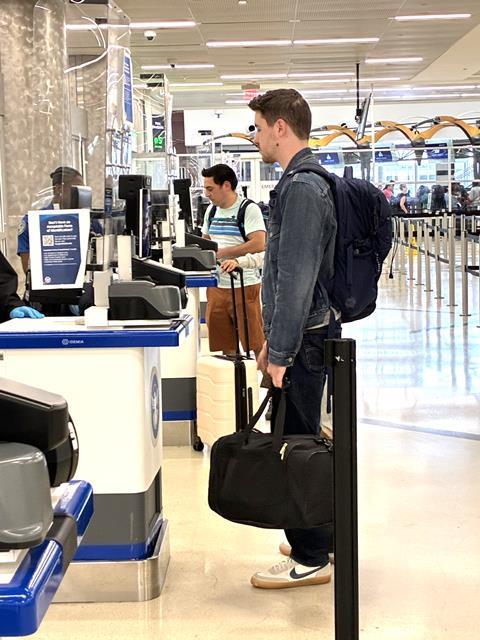
At Hartsfield-Jackson Atlanta International Airport (ATL), our journey has included expanding biometric passenger processing initiatives and deploying AI-enabled overlays across nearly 2,000 cameras throughout the airport environment. Along the way, we discovered that scaling these capabilities involves much more than the technology itself.
As our efforts matured, conversations increasingly centred on infrastructure, governance, cyber-security, operational processes, and organisational readiness. While every airport’s environment is unique, several lessons emerged that may be valuable for leaders evaluating how to move from isolated pilots to enterprise-scale AI capabilities.
Defining the outcome before deploying the technology
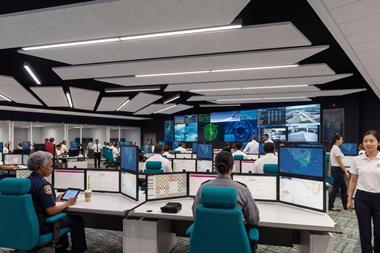
At ATL, our interest in computer vision was driven by a simple objective: improving situational awareness and supporting operational decision-making across one of the world’s most complex transportation environments. In practical terms, computer vision applies AI to video feeds, enabling organisations to search, analyse and generate insights from camera data more efficiently than traditional manual review processes.
However, our focus was never on deploying AI for its own sake. The goal was to help operational teams investigate incidents more quickly, identify patterns that might otherwise be missed, and make more informed decisions in support of safety, security and efficiency.
As new capabilities were introduced, some of the earliest value emerged through investigative workflows. In one early use case, a query that historically required approximately four hours of manual review was completed in roughly one hour using computer vision-assisted search capabilities. While still early in our deployment journey, the result demonstrated how these tools can help teams focus their efforts more effectively and respond more quickly when information is needed.
For our team, the lesson was straightforward: begin with the operational challenge and measure success against the outcome.
Building the foundation for real-time operations
One lesson that emerged quickly was that computer vision initiatives extend well beyond software and analytics. To support real-time operational use cases, we had to carefully evaluate the underlying infrastructure required to deliver reliable performance at scale.
For ATL, resiliency was a key consideration. Because many use cases involve operational awareness and alerting, we wanted to reduce dependencies that could be impacted by external connectivity disruptions. As a result, the solution was deployed within our airport environment rather than relying exclusively on cloud-based processing.
That decision introduced additional considerations. Computer vision workloads require significant computing power, and GPU-based infrastructure generates substantially more heat and consumes more power than traditional enterprise technology environments. Supporting these capabilities required thoughtful placement of hardware, upgrades to supporting infrastructure, and close attention to power, cooling, and facility readiness.
In many ways, computer vision deployment became another example of a broader lesson: AI capabilities are often enabled by years of foundational investments in resiliency, networking, facilities, cyber-security and operational discipline. The analytics may be visible to users, but the infrastructure supporting them is what makes enterprise-scale deployment possible.
Human expertise remains essential
While computer vision can accelerate analysis and surface information more quickly, human expertise remains at the centre of operational decision-making.
One of the most encouraging aspects of our deployment has been the growing adoption across multiple operational teams. Security personnel are using the platform to support investigations, while other groups are evaluating opportunities to enhance situational awareness and address specific operational challenges. As users become more familiar with the capabilities, new use cases continue to emerge.
This experience reinforced another important lesson: successful AI initiatives are not solely technology projects. They are organisational change initiatives. Building trust, demonstrating value, and incorporating user feedback are just as important as the underlying technology.
At ATL, our objective is not to replace human judgment. Rather, it is to provide operational teams with better information, reduce time spent on manual tasks, and allow personnel to focus their expertise where it delivers the greatest value.
Looking ahead
While our deployment remains an evolving journey, the experience has reinforced our belief that computer vision can play an increasingly important role in supporting airport operations.
Many of the opportunities we are exploring focus on helping operational teams identify and respond to events more quickly. Potential use cases include accelerating unattended baggage investigations, identifying unauthorised access to restricted areas, improving awareness of curbside activity, enhancing public safety operations, and providing earlier visibility into operational disruptions. In each case, the objective is not simply to generate more alerts, but to provide timely, actionable information that enables faster and more informed decision-making.
Beyond security and operational awareness, computer vision may also help airports better understand passenger movement patterns and behaviours. These insights can support future decisions related to facility design, passenger flow, concession placement, customer amenities, and overall airport experience.
For ATL, the long-term opportunity is not centred on any single use case. It is the ability to create a safer, more secure, and more efficient airport environment while reducing friction for passengers and empowering operational teams with better information. As the technology continues to mature, we believe the most impactful applications will be those that seamlessly combine human expertise with real-time intelligence to improve both security and the passenger experience.
Conclusion
As airports continue exploring artificial intelligence and computer vision, the technology itself is only part of the equation. Our experience at ATL has reinforced that successful adoption begins with a clear operational objective, is enabled through strong digital foundations, and ultimately depends on the people who use it every day.
While the specific use cases and technologies will continue to evolve, the underlying goal remains the same: providing operational teams with better information to support safer, more secure, and more efficient airport operations. For organisations beginning their own journey, the opportunity is not simply to deploy AI, but to thoughtfully integrate it into the processes, infrastructure and decision-making that drive mission success.




No comments yet