

As workforce shortages strain airport operations, autonomous vehicles are emerging as a transformative solution. Gabriel Higgins, Editorial Assistant at International Airport Review examines how major hubs are implementing driverless technology across airside operations and passenger.
At an airport, the only mode of transportation of concern to most passengers is, understandably, the aeroplane they are catching. However, underpinning both terminal and airside operations are a multitude of vehicles. From baggage tugs to utility carts, these vehicles are crucial components for an airport’s success.
Recent years have seen a huge drive in automating airports to enhance efficiency and safety. Vehicles are at the forefront of this change. Harnessing advancements in technology, airports around the world are adopting autonomous vehicles (AVs) to evolve operations.
Concisely, AVs are vehicles that safely navigate and operate with little to no human input or action. AVs are generally equipped with a combination of sensors, such as cameras and radars, along with software to complete driving tasks.
SAE International defines AVs across a spectrum of levels:
- Level 1 – Driver assistance: Single-function support such as cruise control.
- Level 2 – Partial automation: Combined systems like adaptive cruise control and lane-keeping assist.
- Level 2+ – Enhanced partial automation: More integrated ADAS functions working together.
- Level 3 – Conditional automation: The system manages driving in certain conditions, but the driver must be ready to take over.
- Level 4 – High automation: The vehicle can operate independently in most scenarios, with limited need for human input.
Airports driving productivity with autonomous vehicles
As airports expand, the strain of workforce shortages continues to be felt on operations. For airports like Hong Kong and Changi, implementing AVs has been an important step in addressing productivity levels and labour deficits.
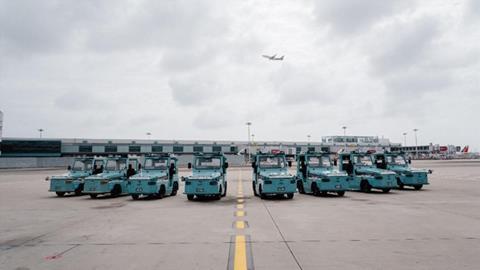
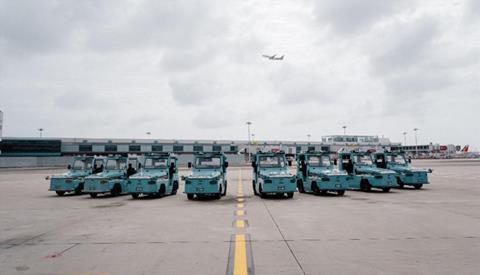
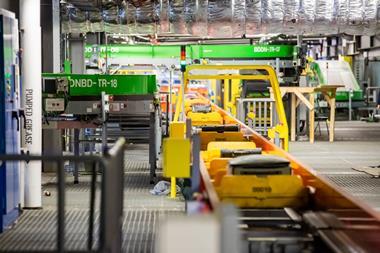
Speaking to International Airport Review, Steven Yiu, Executive Director of Airport Operations at Airport Authority Hong Kong recalls that they began projects for AVs in 2019, as it was difficult to find drivers. Autonomous tractors are used to tow baggage dollies along three defined routes. Using various smart devices, such as 32-Channel LiDAR, DGPS antenna, bumper sensor and dolly monitor cameras, the technology allows the tractors to avoid obstacles and travel along specified routes for fast and slow lanes.
Upon arrival in a safe position at the aircraft’s parking stand, the tractors release their towed dollies without manual intervention. Once a task is complete, they return to a designated handover area for their next assignment.
This makes Hong Kong Airport the first airport to implement Level 4 fully automated vehicles.
“We started with only one autonomous vehicle,” noted Steven. “Now we have already expanded to around 70. By the end of this year, we are talking about 100. A few years later, we are talking about 200.”
At Changi Airport, after a year of rigorous trials consisting of more than 5,000 test trips, they too have deployed the airport’s first fleet of AVs. Changi are implementing driverless autonomous tractors for airside operations to enhance safety, efficiency, and raise productivity within its workforce. Two autonomous tractors are now deployed in live operations in Changi’s airside to transfer passenger bags between Terminal 1 and Terminal 4’s baggage handling areas.
The most important thing for people with reduced mobility is independence.”
Each tractor uses over 10 sensors and cameras to navigate safely in all conditions. Operations are monitored from a control centre, where remote operators can intervene immediately if needed. Six more autonomous tractors will operate between Terminal 2 baggage areas and aircraft stands later this year. The fleet will grow to 24 by 2027, expanding into cargo and equipment towing.
The process of implementing AVs is not straightforward, however, and requires rigorous planning and execution.
“Technology takes time to find the right solution and to fine-tune it. The most difficult part, I would say, is the process change,” stated Steven. “Using AVs is not simply replacing one manual process with an autonomous vehicle. You must select the right processes to use autonomous vehicles.
“You may need to break one process into two. Some of the more complex jobs are still done manually, and then the more repetitive, boring jobs are left for the autonomous vehicles.”
For airports looking to implement AVs, one strategy is apparent: you need to review the whole process, considering each part and its suitability to the technology.
Automating the passenger journey
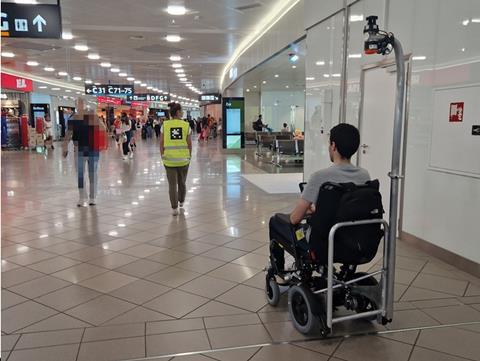
Away from airside operations, AVs can also play a crucial role within the terminal, particularly in smoothing the flow of passengers. Arguably, automation could realise its biggest impact in helping passengers with reduced mobility (PRMs). New autonomous wheelchairs for airports have been trialled with success at Vienna Airport.
Speaking exclusively to International Airport Review, Thomas Dworschak, Head of IT Digitalisation and Innovation at Vienna Airport, explained the reasoning behind adopting this technology:
“We know, from our disabled people’s union, that the most important thing for people with reduced mobility is independence.
“They want to decide for themselves, and this is not what they experience in airports at present.”
The limitations of current PRM services can be one-dimensional. A PRM service centre will help a passenger to get through security and then to the boarding gate. If an assistant has time, they can take a PRM to the retail section; however, it’s more the exception than normal procedure, due to time and workforce constraints.
Technology takes time to find the right solution and to fine-tune it. The most difficult part, I would say, is the process change,”
With autonomous wheelchairs, however, PRMs can gain more independence. Utilising advanced equipment, like developed sensor technology, the wheelchair navigates autonomously and safely through the airport. It can adapt dynamically, able to detect obstacles and its surroundings, brake automatically, and accelerate or swerve out of the way if necessary. Benefits could include more dwell time for PRMs to spend in retail, and PRM assistant agents could serve a higher number of passengers at once, with tools that track the AVs.
“Instead of needing around 20 agents for long-haul flights, you might only need two or three,” said Thomas.
For airports looking to advance productivity while keeping labour costs down, autonomous vehicles are a clear investment choice. In airside operations where safety is paramount, incidents like that recently seen in LaGuardia Airport in March 2026, where two pilots were killed when an Air Canada plane hit a fire engine on the runway, could be avoided. Potentially achieving higher productivity levels, staff would be able to focus on tasks that require human interaction, providing higher overall levels of service, while simultaneously handling larger numbers of passengers.







No comments yet