


Enabling checkpoint flexibility with responsible open architecture

Watch this virtual panel to learn how airport security leaders successfully overcame the challenge of delivering faster, more accurate screening while managing limited resources and mixed-vendor technologies.
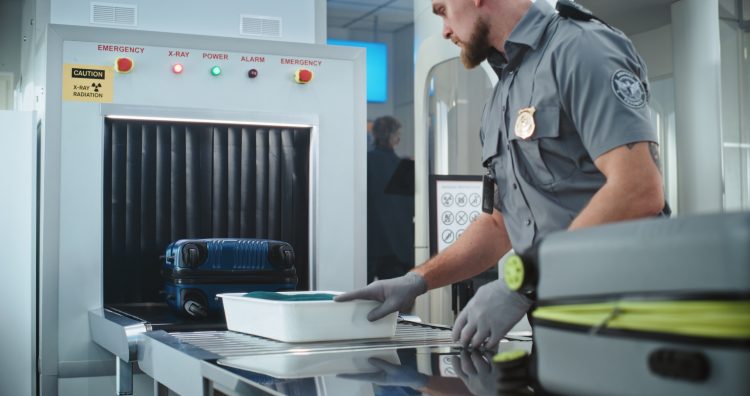
This discussion focused on how open architecture, the ability to connect and manage different screening systems centrally, helped airports:
- Improved throughput and reduced queue times.
- Adapted to changing threats quickly.
- Introduced new capabilities without overhauling existing infrastructure.
Panellists shared lessons from real deployments, illustrating how centralised image processing and flexible algorithm integration successfully unlocked capacity and improved detection across mixed estates. The session also covered practical considerations around system compatibility, operational resilience, and maintaining performance.
While cybersecurity and compliance were addressed, the emphasis was firmly placed on operational flexibility, performance, and future-readiness.
Key takeaways from this on-demand panel:
- You will learn how to make mixed-vendor screening systems work together effectively to improve checkpoint performance and reduce costs.
- You will hear how centralised image review and flexible algorithm use can help you get more value from the technology you already own.
- The panel will explain what questions to ask during procurement to ensure long-term flexibility and avoid vendor lock-in.
- Attendees saw examples of collaborative deployments and what they enabled for risk-based screening and operational agility.
Watch now to gain instant access to these valuable industry insights.
Watch now >>
PANELLISTS
Sander Oliver, Coordinator Policy Development Unit, Dutch Ministry of Justice and Security.

Sander Olivier has been working on many key aviation security developments during his career within the Dutch counter terrorism department. Amongst others Sander has been involved in the deployment of the first security scanners in 2009. Afterwards he led the world’s first regulatory implementation of CT cabin baggage equipment in 2014 and recently, he managed the development and roll out of Automated Prohibited Item Detection (APIDS) by setting standards, initiating pilots, fostering research and drafting regulation. Nowadays Sander is coordinating the Policy Development Unit of the Dutch Aviation Security Department where he is responsible for translating emerging threats into short, medium and long term aviation security solutions, which ideally benefit both passengers, airports and airlines.
Aura Moore, Deputy Executive Director / Chief Information Officer, Los Angeles World Airports

Aura Moore was appointed Deputy Executive Director and Chief Information Officer (CIO) for Los Angeles World Airports (LAWA) in July 2016. She leads the development of information technology strategy at LAWA and oversees all information technology day-to-day operations. She serves as the top technology infrastructure and systems leader for LAWA’s two airports – Los Angeles International (LAX) and Van Nuys General Aviation (VNY). She is responsible for keeping LAWA at the global frontier of information technology and service excellence.
Ms. Moore’s focus on maintaining LAWA’s leading technology position has resulted in improvements in the airport’s operations, security, service quality, and guest experience. As part of LAWA’s COVID recovery effort, she is collaborating with federal partners, airlines, and vendors to implement technologies to create a touchless passenger journey. She is leading the implementation of biometric self-boarding at LAX as well as common use self-service passenger systems. She oversees a multimillion-dollar security & technology enhancement program bringing new technologies to LAWA and upgrading LAWA’s integrated security systems, IT infrastructure, and airport operational systems.
Ms. Moore has 29 years of experience with the City of Los Angeles, including 15 years of aviation related experience. Her previous positions with LAWA included Network Infrastructure Program Manager, IT Project Management Director and Deputy CIO. She also served as Interim CIO prior to her current role. Ms. Moore earned a Master of Science in Electrical Engineering from the University of Southern California and a Bachelor of Science in Electrical Engineering from California State University, Long Beach.
John Pistole, Member of Board of Directors, Smiths Detection

Mr Pistole brings more than thirty years of public service and national security leadership. He previously served as Deputy Director of the FBI and later led the Transportation Security Administration. His background covers large scale security operations, intelligence driven risk management and regulatory engagement. He now serves as an Outside Director on the Smiths Detection Board where he advises on global security risk, screening innovation and infrastructure protection. He holds degrees from Anderson University and the Indiana University Robert H McKinney School of Law and has led organisations ranging from frontline federal security teams to higher education.
Cymoril Métivier, Global Digital Portfolio Director at Smiths Detection

As Global Digital Portfolio Director at Smiths Detection, Cymoril Métivier leads the strategic development and delivery of digital solutions across the security screening landscape. With a focus on innovation, integration and operational impact, she drives initiatives that enhance threat detection, system performance and long-term flexibility for customers worldwide.
[MODERATOR] Ian Betteridge, Head of Content at Russell Publishing (International Airport Review)

FAQs
Is the webinar free?
Yes – there is no charge to watch the webinar, either live or on-demand.
When will the webinar take place?
The webinar will be taking place on 25 November 2025, at 14:00 GMT, UK time.
Can I watch the webinar later?
The webinar will be available to watch on-demand shortly after the live broadcast takes place.
What are the benefits of attending live?
During the live webinar, you will be able to pose questions to the speakers, which will then be answered during the live Q&A session at the end of the webinar.
How long will the webinar be?
The live webinar will last for up to sixty minutes
What do I need to watch this webinar?
All you need is a computer with an internet connection. It is advised to use headphones where possible for your own comfort.

 Chief Executive Officer
 CEO
CEO Airport General Manager
 Head of Operations
 Chief Strategy Development Officer
 Head of Operations, Safety and Emergency
 Chief Operating Officer
 CEO
CEO Chief Executive Officer