


Lima’s new airport city is bringing aviation, logistics, property and hospitality together, while its location in Callao and proximity to the Port of Chancay could turn the airport into a wider economic and logistics hub. Raúl Valencia, aviation commentator explores.
Airports have traditionally been measured by passengers, aircraft movements and capacity. But as infrastructure requirements grow, a different question is emerging: how much economic value can be created from the connectivity an airport already provides?
Lima’s Jorge Chávez International Airport (LIM) offers a compelling case study.
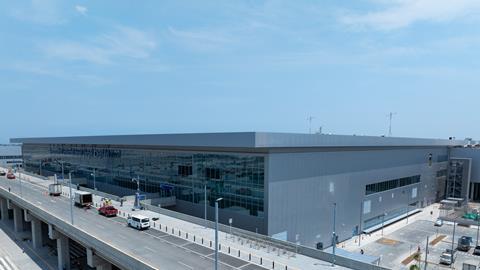
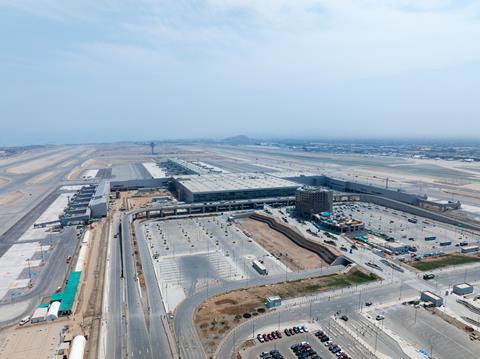
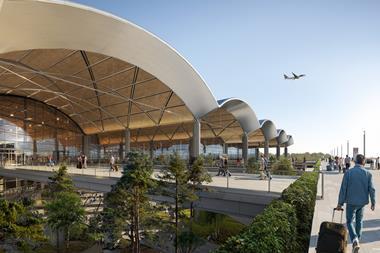
The airport is undergoing one of the largest infrastructure transformations in its history. A new passenger terminal, a second runway and a new control tower are changing its physical capacity, while a much broader development is taking shape around them.
The next stage is not simply about accommodating more aircraft and passengers. Lima Airport Partners (LAP) is also developing the area around Jorge Chávez into a 1.1 million square metre airport city, bringing together logistics, offices, hospitality, commercial and aviation-related uses.
The ambition is to turn the airport from a transport facility into a platform for wider economic activity. But achieving that will depend on more than construction. It will require investment, transport integration and co-ordination between the airport, government agencies, logistics operators and the wider city.
A new infrastructure platform
The new Jorge Chávez represents an investment of more than US$2.4 billion and has passenger capacity of up to 40 million annually. The terminal is three times larger than its predecessor, while the second runway and new control tower have been operational since 2023.
In 2025, Jorge Chávez handled 25.5 million passengers, up 4.1% from the previous year. International traffic exceeded 10.27 million passengers, while connecting traffic surpassed 1.6 million.
Cargo is also becoming increasingly important. The airport handled 267,156 tonnes of air cargo in 2025, a 16.6% increase year-on-year, according to Peru’s air navigation authority CORPAC.
This creates the foundation for a larger proposition. More passenger capacity can support hotels, retail and business services, while growing cargo activity can support logistics and trade-related development.
That is where the airport city comes in.
From airport infrastructure to airport city
The airport city provides more than 1.1 million square metres of potential development around Jorge Chávez. LAP describes it as a commercial platform designed to support Lima and Callao’s wider economic activity.
Its location is central to the proposition. Jorge Chávez sits in Callao, Peru’s principal port city and an established maritime and logistics hub. This places the airport within a network connecting air transport with cargo, trade, distribution and maritime activity.
The planned development includes logistics and cargo facilities, offices and professional services, hotels and restaurants, retail and parking, as well as aviation-related infrastructure.
The rationale is not simply to place different businesses next to each other. It is to allow them to benefit from the same underlying asset: connectivity.
A logistics operator gains access to air cargo and other transport networks. An office tenant gains international connectivity. Hotels can serve passengers, business travellers and airport employees. Retail and services can draw customers from the airport and surrounding businesses.
If the sea-land-air corridor works effectively, Jorge Chávez could strengthen Peru’s role as a gateway between Asian trade and South American markets.
But proximity alone does not create an economic ecosystem. The projects must generate demand for one another, connect efficiently to the surrounding city and offer companies a commercially attractive location.
That is the real test of an airport city.
From masterplan to investment
The concept is already moving into individual projects.
In July 2026, LAP awarded Inmobiliaria Koricancha the development of the first office building. The US$21 million project will provide 17,353 square metres of built space, including around 14,000 square metres of leasable offices, coworking and commercial areas, with operations expected to begin in early 2028.
Logistics is developing alongside the commercial offer. In February 2026, LAP awarded COSCO SHIPPING and Anjun Logistics the operation of a first-line cargo warehouse at Jorge Chávez. The project involves approximately US$20 million in investment over the contract period and is intended to support a sea-land-air logistics corridor linking the airport with the Port of Chancay.
This provides a more concrete example of how the airport city could connect with Peru’s wider economy.
Chancay handled more than three million tonnes of cargo between June and December 2025, according to Peru’s National Port Authority. Its development creates the possibility of closer integration between maritime and air logistics.
If those links develop effectively, Jorge Chávez could become part of supply chain decisions made by manufacturers, retailers, e-commerce companies and logistics operators beyond the airport itself.
Cargo therefore becomes more than another traffic segment. It becomes a mechanism through which the airport can participate in wider trade activity.
The proposition begins to evolve from ‘fly from here’ to ‘do business here’.
Why diversification matters
For airport executives, the significance of an airport city goes beyond real estate. It also contributes to the resilience of the airport business.
Passenger traffic remains the foundation of airport economics, but passenger growth alone does not guarantee stronger financial performance. ACI World’s latest analysis shows that non-aeronautical revenues accounted for 36.7% of global airport income in 2024, rising to 38.1% in Europe. These revenues offset 48% of airport costs globally.
For operators, diversification can provide property income, logistics and cargo revenues, retail and hospitality income, and new investment partnerships.
The objective is not to replace aeronautical revenues, but to reduce dependence on aircraft movements and make better use of the airport’s wider land and infrastructure assets.
For Jorge Chávez, the opportunity is therefore to turn connectivity into a broader commercial proposition.
The infrastructure beyond the airport
That proposition also depends on something LAP cannot control alone: the city around it.
An airport city requires workers, customers, visitors and freight to move efficiently between the airport, Callao, Lima and the wider logistics network.
This makes ground connectivity a strategic issue, not simply a passenger experience concern. Road congestion, public transport limitations or weak connections with other logistics infrastructure could reduce the attractiveness of offices, hotels and commercial facilities around the airport.
Lima has been expanding dedicated bus connections to Jorge Chávez through AeroDirecto, while longer-term plans seek greater integration with the city’s mass-transit network.
The challenge is institutional as much as infrastructural. LAP can develop the airport and its commercial footprint, but the wider transport system depends on co-ordination among national and local authorities and transport agencies.
The same applies to private investment. The first office and logistics projects are important signals, but the long-term airport city proposition will require sustained demand from companies willing to locate there.
A masterplan can create supply. It cannot guarantee tenants, customers or returns.
A regional proposition
The stakes become clearer when Jorge Chávez is viewed against South America’s other major hubs.
In 2025, Jorge Chávez handled around 25.5 million passengers. Bogotá’s El Dorado handled approximately 45.5 million, while Santiago’s Arturo Merino Benítez handled around 25.9 million.
The comparison is particularly relevant in cargo. El Dorado remains South America’s largest air-cargo airport, handling more than 806,000 tonnes in 2025. Jorge Chávez handled roughly 267,000 tonnes, although its cargo volume increased 16.6% year-on-year. Lima therefore does not have Bogotá’s scale or Santiago’s established position. Its opportunity lies elsewhere: combining air connectivity with Peru’s maritime infrastructure and the emerging Port of Chancay.
If the sea-land-air corridor works effectively, Jorge Chávez could strengthen Peru’s role as a gateway between Asian trade and South American markets.
But that outcome is not guaranteed. Lima is competing with established hubs that already have scale, airline networks, cargo infrastructure and mature logistics ecosystems. For Jorge Chávez, connectivity must therefore translate into a clear commercial advantage.
A different kind of airport resilience
This is ultimately where the transformation becomes relevant beyond Lima.
Operational resilience will always depend on safe, efficient and reliable aviation infrastructure. But economic resilience can also depend on the ability to generate value from multiple sources.
For Jorge Chávez, that means combining passenger capacity with cargo, logistics, property, hospitality, retail and connections to maritime and ground transport.
The objective is not simply to place these activities around the airport. It is to make them reinforce one another.
A logistics operator benefits from cargo infrastructure and access to maritime networks. An office tenant benefits from international connectivity. Hotels benefit from passenger and business flows. Companies benefit from proximity to suppliers, customers and transport networks.
The airport, in turn, gains a broader economic base. That is the real test for an airport city.
Its success will not ultimately be measured by how many square metres are developed or how many individual projects are delivered. It will be measured by whether companies actually choose to locate there, whether the different infrastructure systems work together and whether connectivity generates economic activity beyond the terminal.
Beyond the runway
Jorge Chávez is testing a broader proposition for the airport industry.
The next stage of airport development may not be defined only by how much passenger capacity can be added. It may also depend on how effectively airports use their land, infrastructure and connectivity to support economic activity beyond the terminal.
For Lima, that means connecting aviation with property, logistics, hospitality and commerce, while integrating the airport more effectively with Callao, the wider transport network and the Port of Chancay.
For other airport operators, the lesson is not to copy the airport city model wholesale. It is to ask a more fundamental question: what economic value can our connectivity enable, and how can the airport become part of that value creation?
If Jorge Chávez can answer that question successfully, its transformation will represent more than an expansion of airport capacity. It will demonstrate how an airport can evolve from a place people pass through into a platform around which economic activity takes place.








No comments yet