

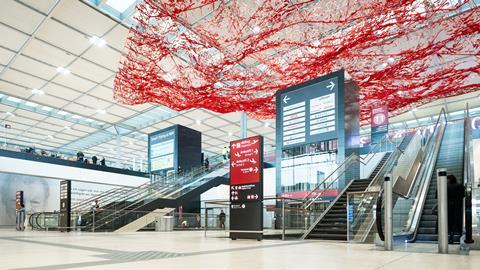

International Airport Summit speaker, Ralph Struck from Berlin Brandenburg Airport (BER), shares how IoT connectivity is allowing data insights to be translated into proactive maintenance action.
What does it take to keep a complex operational environment and infrastructure running without disruption? How can organisations anticipate failures before they occur and what happens when maintenance itself becomes invisible?
Berlin Brandenburg Airport (BER) has responded to these challenges with a fundamental shift in its maintenance philosophy. It is redefining reliability in an increasingly demanding operational landscape. Their goal is to move ahead of the failure curve by building a fully connected, data-driven maintenance ecosystem that integrates predictive technologies, scalable sensor networks and digital workflows into daily operations.
Airports are, by their very nature, systems of systems. Beneath the visible flow of passengers lies an intricate web of technical infrastructure: baggage handling systems stretching for kilometres, complex heating, ventilation and air conditioning (HVAC) networks regulating vast terminal spaces, lighting systems ensuring safe operations on airfields, and countless other assets working in synchrony. Each component plays a critical role, and the failure of even a single subsystem can ripple across the entire operation, leading to delays, inefficiencies and a diminished passenger experience.
At the same time, the challenges facing airport operators are intensifying. Passenger numbers continue to rise, infrastructure is becoming more interconnected and technologically sophisticated, and cost pressures are growing. Compounding this is a shortage of skilled technical personnel, making it increasingly difficult to maintain traditional maintenance regimes. In this context, approaches based purely on fixed schedules or reactive interventions are no longer sufficient. The question is no longer whether maintenance needs to change, but how quickly organisations can adapt.
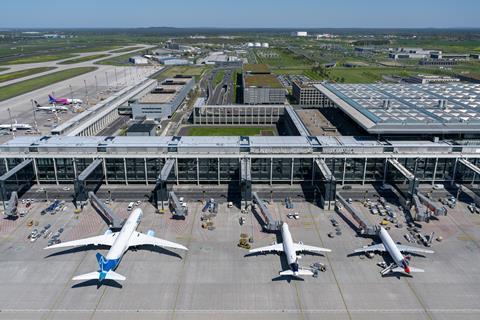
From time-based maintenance to predictive operations
At Berlin Brandenburg Airport, the shift from time-based maintenance to predictive operations is already happening. The airport has embarked on a journey to move “ahead of the failure curve,” fundamentally rethinking how maintenance is planned, executed and integrated into daily operations. Rather than relying on predefined inspection intervals, decisions are increasingly based on real-time data and the actual condition of assets. This transition from time-based to condition-based and ultimately predictive maintenance marks a profound change, not just in technology, but in mindset.
Imagine a baggage handling system processing tens of thousands of items per hour across several kilometres of conveyor belts. In such a high-throughput environment, even minor inefficiencies can accumulate into significant disruptions. Traditionally, maintenance teams would intervene at regular intervals or in response to visible failures. Today, however, sensor data can reveal subtle patterns, changes in vibration, temperature fluctuations, or unusual load distributions that indicate wear long before a breakdown occurs. Maintenance becomes proactive rather than reactive, allowing teams to intervene at precisely the right moment.
This ability to detect and address issues early has far-reaching implications. Unplanned downtime is reduced, asset lifecycles are extended, and operational disruptions are minimised. Perhaps most importantly, many issues are resolved before they ever become visible to passengers or operational staff. Maintenance, in this sense, begins to disappear into the background, quietly ensuring that everything functions as expected.
Long range wide area network (LoRaWAN) and Internet of Things (IoT): Making infrastructure data-capable
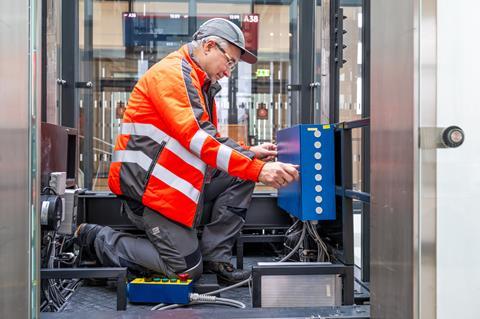
A key enabler of this transformation is the rise of IoT connectivity. At BER, the deployment of technologies such as LoRaWAN has made it possible to connect a vast number of previously unmonitored assets. What makes this particularly powerful is its scalability and flexibility. Sensors can be retrofitted to existing infrastructure without extensive cabling or power requirements, allowing even older systems to become part of a connected ecosystem.
This connectivity opens up new possibilities. Systems that were once isolated can now communicate, providing a continuous stream of data that enhances transparency and control. Equipment located in hard-to-reach or decentralised areas can report its status automatically, enabling faster responses to emerging issues. Even seemingly simple applications, such as occupancy-based lighting control, contribute to both efficiency and sustainability by aligning resource usage with actual demand.
Mobile maintenance: speed, transparency and efficiency
Yet data alone does not create value. The real impact emerges when insights are translated into action, and this is where digital workflows and mobile technologies come into play. At Berlin Brandenburg Airport, technicians are equipped with mobile devices that provide immediate access to relevant information. Alerts are delivered in real time, complete with precise location data and prioritisation, allowing teams to respond quickly and effectively.
The difference is tangible. Where once information had to be gathered manually – often across multiple systems – technicians can now access schematics, maintenance histories and technical documentation directly on-site. This reduces delays, minimises errors, and streamlines the entire maintenance process. From the initial detection of an anomaly to its resolution and documentation, every step is integrated into a seamless digital workflow.
Digital collaboration: from communication to real-time support
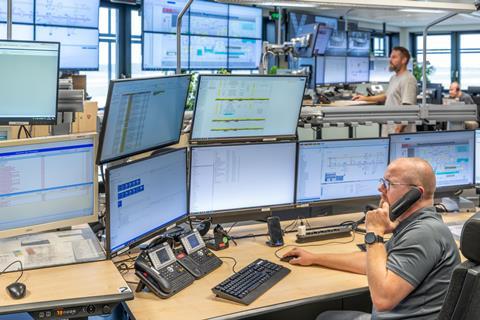
Equally important is the transformation of collaboration. Maintenance is no longer a purely local activity confined to individual teams. Instead, it becomes a connected, collaborative process that spans locations and expertise levels. With the help of real-time communication tools, field technicians can connect instantly with specialists, sharing live video feeds, annotated images, and contextual data. Problems that once required multiple site visits or specialist travel can now be resolved more efficiently, often in a single intervention.
This shift has a direct impact on operational resilience. Faster response times, higher first-time fix rates, and reduced dependency on physical presence all contribute to a more robust system. In an environment where time is critical and disruptions can have cascading effects, these improvements are not merely incremental, they are transformative.
Extending the ecosystem: drones and autonomous operations
Looking ahead, the evolution of maintenance does not stop with connectivity and digital workflows. Emerging technologies are beginning to extend the boundaries even further. Drones, at airports, primarily ground-based drones for example, are increasingly being used for infrastructure inspections, offering a safer and more efficient alternative to manual access. Equipped with high-resolution cameras and advanced sensors, they can capture detailed data on structures that would otherwise be difficult or time-consuming to inspect.
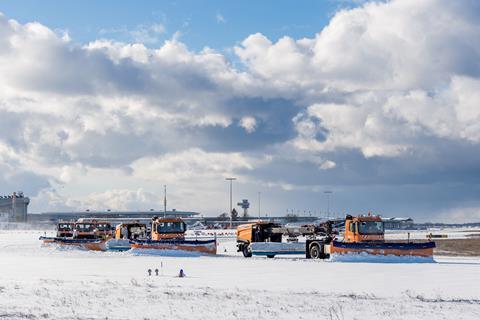
At the same time, concepts such as autonomous operations are gaining traction. In the context of airport operations, this includes the potential use of self-driving vehicles for tasks such as winter service. Snow clearance, which is both resource-intensive and time-critical, could be partially automated, reducing reliance on manual labour while improving consistency and response times. These developments highlight a broader trend: maintenance is becoming part of an intelligent, interconnected ecosystem that extends beyond individual assets to encompass entire operational processes.
Integration as the critical success factor
However, technology alone does not guarantee success. One of the most important lessons from Berlin Brandenburg Airport is the critical role of integration. Sensors, analytics platforms, mobile applications, and collaboration tools each offer distinct capabilities, but their true value is realised only when they are seamlessly connected. The result is a closed-loop system in which data is continuously captured, analysed, and translated into action, with outcomes feeding back into the system to refine future predictions.
This integrated approach transforms maintenance into a strategic function that supports overall operational performance. It enables organisations to move from reacting to problems toward anticipating them, from isolated interventions to coordinated processes, and from fragmented data to holistic insights.
Organisational impact: building a data-driven culture
Equally significant is the organisational dimension of this transformation. Adopting predictive maintenance requires more than new technologies, it demands a cultural shift. Teams must learn to trust data-driven insights and incorporate them into their daily decision-making. This often involves rethinking established practices and embracing new ways of working.
At BER, this transition has been supported by a focus on transparency, training and continuous improvement. Early successes have played a crucial role in building confidence, demonstrating the tangible benefits of predictive approaches. Over time, the combination of human expertise and advanced analytics creates a powerful synergy, enhancing both efficiency and effectiveness.
Conclusion: from maintenance to operational excellence
Berlin Brandenburg Airport’s approach to predictive maintenance illustrates a broader trend within the aviation industry. As airports become more complex and operational demands increase, the ability to anticipate and prevent failures becomes a critical success factor.
By combining predictive analytics, IoT connectivity, mobile workflows and digital collaboration, BER has created a maintenance ecosystem that goes beyond traditional approaches. It enables higher reliability, improved efficiency and greater operational resilience.
Ultimately, the goal of this transformation is to make maintenance invisible to ensure that systems function seamlessly in the background, without disruption. Achieving this requires not only advanced technology but also a clear strategic vision and a commitment to integration.
For airports worldwide the transition to predictive, data-driven maintenance is no longer optional. Those who succeed in building connected maintenance ecosystems will not only stay ahead of the failure curve, but also define the future of airport operations.
Ralph is speaking on the ‘Ahead of the failure curve: building a predictive maintenance ecosystem’ panel at International Airport Summit 2026 in Rome. To be in the room when he is on stage and to ask him your questions, make sure you register for your free* pass for the summit today.
*Free aviation leader tickets are applicable to senior managers and above from airports, airlines, regulatory bodies and aviation authorities.







No comments yet