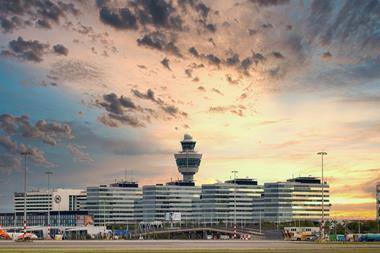

A modern airport is far more than a passenger terminal and runways. This is the approach being taken in the development of Poland’s new national airport and Port Polska, the country’s largest infrastructure project.
Major airports are complex economic ecosystems in which passenger transport, air cargo, logistics, aircraft maintenance, ground transportation, retail, food and beverage, and a wide range of passenger-oriented services and terminal amenities are closely interdependent. The key advantage of a greenfield airport project does not lie simply in the ability to build state-of-the-art infrastructure. Far more important is the opportunity to design the infrastructure from the outset around the target operating model, rather than adapting processes to the constraints of infrastructure developed over decades. For an airline, what ultimately matters is how the airport supports its operations: the size and characteristics of the catchment area, transport connectivity, infrastructure capacity and availability, operational predictability, aircraft turnaround times, and the ability to maximise fleet utilisation, which is particularly important for hub carriers and airlines basing aircraft at the airport. An aircraft generates revenue when it is flying with passengers and cargo. Every unplanned minute on the ground can affect not only an individual flight, but also subsequent rotations, crew utilisation, slot availability, and connecting passenger flows. The competitive advantage of a new airport will therefore lie in an efficient turnaround process that is predictable and consistently deliverable on a 24/7 basis.
Integrated operations, predictable performance
An integrated airport operations control center, collaborative operational planning across the airport, airlines, ground handling providers and air traffic control, process automation, and accurate determination of aircraft readiness for departure will help minimise delays and better coordinate the allocation and utilisation of stands, personnel and equipment.
Two independent 3,800-metre runways, a properly designed taxiway system and high operational efficiency – including under low-visibility conditions, during winter operations and at peak operating periods – will serve the same objective: enhancing the resilience and predictability of the entire airport system.
For airlines, this will enable the development of more efficient schedules, improved fleet utilisation and the gradual scaling of their network from the airport. For the airport, it will create the capacity to scale up operations, particularly in the long-haul segment.
Cargo and MRO as competitive advantages
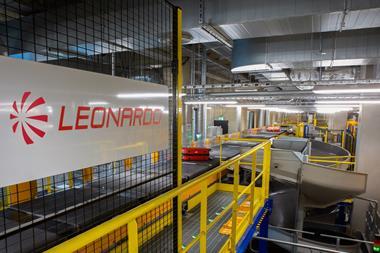
The greatest benefits, however, will emerge when the airport’s individual functions begin to reinforce one another, both operationally and commercially. A modern cargo zone will serve a role extending well beyond supporting freighter operations. Adequate cargo handling capacity, dedicated infrastructure for heavy goods vehicles and process automation, supported by a Cargo Management System (CMS), will improve the efficiency of cargo handling for passenger aircraft as well. Greater belly cargo revenue potential will improve the economics of long-haul routes, thereby strengthening their business case and supporting further network development.
In addition, multimodal infrastructure and road and rail connectivity, including links to seaports, will create an opportunity to develop a strong logistics hub, with the cargo zone serving as its central and integral component.
Aircraft maintenance facilities will play a similar role. Rather than being viewed simply as another commercial activity at the airport, they should be seen as an integral operational capability, enhancing the resilience and efficiency of airline operations.
The availability of line maintenance, hangar maintenance and specialised technical support at the aircraft’s base will reduce the need to ferry aircraft to external maintenance facilities. This will minimise ferry flights, facilitate the scheduling of maintenance during planned aircraft ground time, and shorten access to technical support in the event of unplanned technical events. In addition, the new airport will provide infrastructure capable of accommodating the largest aircraft, further supporting the development of the airport’s route network.
Cargo and MRO will therefore be more than ancillary airport functions; they will become integral components of its competitive advantage.
A passenger terminal designed around connectivity
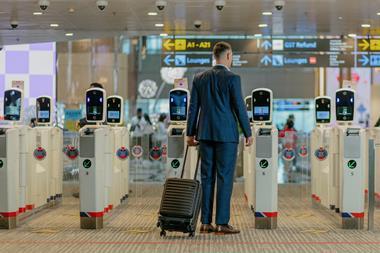
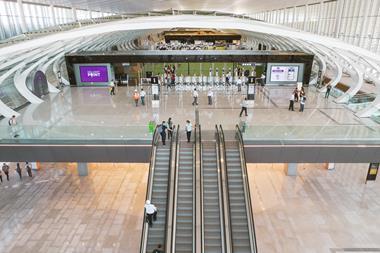
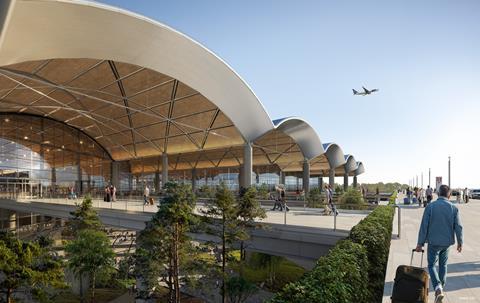
The same logic applies to the passenger terminal. A high number of contact stands, automated check-in and bag-drop processes, biometric solutions, state-of-the-art security screening, active queue management and intuitive wayfinding will all serve one fundamental purpose: to make the passenger journey through the airport as fast and predictable as possible.
For the new airport, the transfer process is of particular importance. Efficient connections are not merely a matter of passenger comfort. Shorter and more predictable transfer times will increase the number of connecting itineraries that an airline can offer its passengers. As a result, the way the terminal is designed will have a direct impact on the competitiveness of the route network.
At the same time, the new airport will be designed to accommodate the diverse needs of its users, from connecting and premium passengers to passengers with reduced mobility, passengers with specific sensory needs, and those travelling with pets. Retail, food and beverage, hotel and lounge facilities will complement this system without compromising its core function: enabling passengers to move through the airport efficiently.
An ecosystem that reinforces itself
Importantly, the new airport has been designed so that its individual functions are mutually reinforcing, supporting the growth and development of the airport as a whole. New long-haul routes will support the expansion of the short-haul network. As the number of aircraft movements grows, so too will demand for services across the passenger terminal, cargo operations, MRO and wider operational support facilities. This will create a self-reinforcing cycle in which the development of the route network – particularly long-haul – drives activity across the wider airport ecosystem and improves the economics of its individual components.
The new airport is therefore not being designed as a collection of standalone facilities. The passenger terminal, Cargo City, MRO, integrator facilities, GA/VIP facilities, fuel infrastructure, logistics operations, and rail and road connectivity are intended to function as a single integrated ecosystem, with each component enhancing the efficiency and performance of the others. This is the true advantage of a greenfield airport project: the ability to design the entire airport as an integrated system from the outset, aligned with the needs of airlines and passengers and with sufficient flexibility to evolve and expand over the coming decades.
Beyond the airport: an economic engine
The impact of this approach will extend far beyond the airport itself. Port Polska has also created the conditions for the development of logistics companies, distribution centres, technical facilities, high-value manufacturing, hotels and a wide range of other businesses and services.
The airport will therefore become a hub for specialised skills and expertise, while driving the development of a diverse and highly skilled labour market – ranging from highly specialised aviation professions to logistics, high-value manufacturing, R&D, retail and services.
In this way, Port Polska’s new national airport will be more than a component of the transport infrastructure. It will become a hub for connectivity, business, expertise and capital, with an economic and social impact extending far beyond the provision of air transport services.