

Set to open with a targeted soft transition in Q1 of 2028, Dominica’s new greenfield international airport represents a pivotal catalyst for the island nation’s economic and tourism evolution. Designed to remove long-standing technical constraints on larger long-haul aircraft, the $3 million infrastructure project aims to elevate the ‘nature island’ into a premier eco-tourism destination and a strategic transit hub for the Eastern Caribbean.
Samuel Johnson, the CEO of International Airport Development Company (IADC) Dominica, who are leading the airport’s development vision, details how the project balances cutting-edge passenger processing with environmental resilience and an authentic ‘eco-luxe’ identity.
Unlocking a “sea of opportunity” for tourism and transit
Historically, air access to Dominica has been constrained by physical runway limitations at existing facilities, restricting the size of aircraft and direct long-haul routes. The new airport is built to eliminate these technical encumbrances, unlocking direct connectivity with key source markets in North America and Europe. “This allows us to focus entirely on selling Dominica as a destination rather than discussing operational limitations,” Johnson says.
“Dominica sits in a sea of opportunity, both literally and figuratively,” explains Johnson. “The goal of the government is to get to half a million stayover visitors. We hope to get between 500,000 to 650,000 and grow to that capacity.”
The Caribbean as a region receives over 34 million visitors per year, and Dominica has been capturing a sliver of that, but envisages the new airport being able to harness a bigger portion of this in the future.
Beyond point-to-point tourism, the airport’s master plan leverages Dominica’s central geographic location to capture regional in-transit traffic. Positioned “smack in the middle of the Eastern Caribbean,” the facility is engineered to support hub-and-spoke operations and airline ‘tag flights’ (such as transatlantic carriers connecting multiple island destinations).
Rather than competing aggressively with neighbouring hubs like Barbados or St. Lucia, Dominica views regional aviation as a collaborative ecosystem, strengthening ferry and inter-island connections.
“We see ourselves as collaborators rather than competitors, because we offer a very different tourism product. The tourism authorities are exploring multi-destination marketing opportunities. A recent agreement was signed with Barbados, and we’re also looking to strengthen links with Saint Lucia, where we share strong cultural ties.”
Seamless technology and human-centred passenger experience
While the facility will dramatically increase capacity, airport leadership emphasises that scale is secondary to the quality of the traveller journey. “We’re not going to be the biggest airport by virtue of where we are in traffic, but we are focused on the passenger experience and how can we facilitate not just seamless passage, but also give you a reason to dwell,” notes Johnson.
To streamline processing and reduce friction, the terminal technology stack incorporates:
- Biometrics and facial recognition: Automated e-gates for both arrival and departure border control.
- Flexible common-use terminals: Adaptable check-in counters and digital kiosks designed to support airlines operating low-frequency schedules (e.g. 1–2 flights per week) without tying up dedicated real estate.
- Upgraded commercial and lounge spaces: Expanded duty-free shopping and executive lounge amenities designed to showcase local products.
We have the benefit of hindsight. Many airports in the region were built decades ago, while we have been able to look at what works, what doesn’t, and design accordingly. Our focus on passenger experience and our ability to integrate newer technologies will be major differentiators
Reflecting the ‘Hawaii of the Caribbean’ and eco-luxe identity
Dominica’s tourism brand is built around unspoiled natural landscapes, boasting rainforests, waterfalls, volcanic sulphur springs, and world-class whale watching. Johnson coined the term ‘eco-luxe’ to describe the island’s unique market positioning, where high-end hospitality meets environmental consciousness.
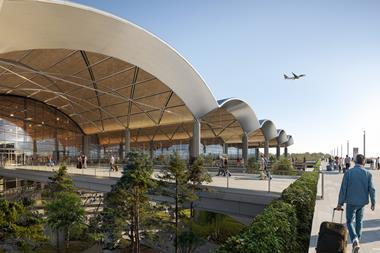
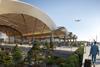
“I describe Dominica as the Hawaii of the Caribbean in terms of terrain, whale watching, diving, waterfalls and nature trails. It’s not a typical sun-and-beach destination,” Johnson says. “We’ve incorporated that identity into the airport design through green spaces, water features and extensive natural light. Large windows and open spaces create visual connections with the surrounding landscape. Sustainability and resilience have also been key design principles.”
The architectural design maximises natural lighting using energy-efficient LED systems and expansive glass envelopes to give passengers an immediate connection to the surrounding landscape upon arrival.
Climate resilience: built to withstand hurricanes and seismic activity
Operating in the Caribbean requires infrastructure that can withstand extreme environmental shocks. The new airport has been engineered from the ground up to endure Category 4 hurricanes. Furthermore, given Dominica’s volcanic geology, the structural frame is rated for high seismic tolerance. “For seismic activity, we’ve designed for seven on the Richter scale, which is as high up as you can get,” highlights Johnson.
Operational Readiness (ORAT) and airport network strategy
Because the airport is a brand-new greenfield development, the transition will not disrupt ongoing flights. All commercial traffic from the current nearby Douglas-Charles Airport (located 15 minutes away) will transfer smoothly to the new international gateway upon completion. Meanwhile, the smaller Canefield Airport near the capital will remain open as a critical emergency lifeline for disaster response and for potential domestic ‘skybridge’ operations.
To guarantee flawless day-one operations in September 2027, the development team is conducting an extensive Operational Readiness Assessment and Testing (ORAT) programme. By carrying out dry runs and pressure tests with existing airline partners well ahead of launch, Dominica aims to ensure a seamless opening for visitors and airlines alike.
When asked what will make Dominica’s airport stand out from others in the region, Johnson replies, “We have the benefit of hindsight. Many airports in the region were built decades ago, while we have been able to look at what works, what doesn’t, and design accordingly.
Our focus on passenger experience and our ability to integrate newer technologies will be major differentiators.”
Johnson’s philosophy is that airports are gateways and they provide the first and last impression of a destination. For a small island like Dominica, the airport experience must be integrated into the wider visitor journey. They intend to think beyond the building itself and consider the entire customer experience, from the moment someone starts planning their trip to the moment they leave.
Johnson concludes: “Our goal is to make the airport a seamless part of the destination experience so that visitors remain connected to Dominica throughout their journey – and dream of coming back afterwards.”




No comments yet