In an exclusive interview for International Airport Review, Michele Parietti, Head of PRM Assistance at Malpensa SEA Milan Airports, explains how integrating innovative technologies will enhance autonomy and the passenger experience at Malpensa and Linate.

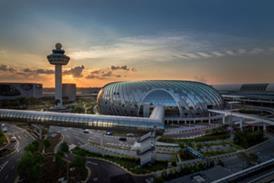
Michele Parietti brings a diverse background in consultancy and retail to one of Italy’s busiest airport groups, managing the twin hubs of Malpensa (MXP) and Linate (LIN) airports.
Parietti explains that his journey from consulting and retail sectors to airport operations was guided by the notion that airports are fundamentally service‑organisations.
We start with a trial, so we show how the solution works.”
“Airports are similar in terms of providing the highest level services possible,” he shares.
“We have to manage people, engage people to be the best server they can for our customers, which are the passengers of course.”
He emphasises the added complexity in airport operations: “The contribution of technology within airports, is not to be underestimated. One of my key points is trying to integrate new technologies with current operating processes.”
Accessibility for passengers with reduced mobility
Addressing the challenge of assisting passengers with reduced mobility (PRMs), Parietti points out that demand for assistance is rising faster than passenger traffic. At SEA, a project is under way with an Italian start‑up to trial a self‑driving assist vehicle which will carry disabled passengers from point A to point B within the terminal.
“This is so our passengers with reduced mobility don’t have to worry about getting to where they need to be.”
Beyond that, the innovation team is scoping solutions for visually impaired and deaf travellers, exploring indoor‑navigation aids, sign‑language integration, and AI‑driven assistance. The aim is to move beyond traditional escorted services (an agent picking up the traveller and bringing them to the gate) towards systems that promote autonomy.
Parietti describes how SEA’s innovation unit scouts technology through events and specialised research engines, then engages stakeholders by offering trial site visits at their airports.
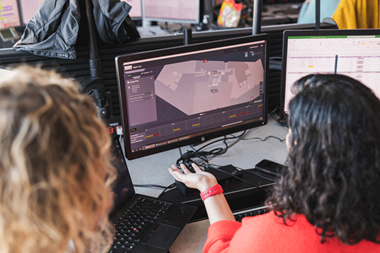
“We start with a trial, so we show how the solution works,” Parietti explains. Procurement and implementation are aligned with management review to ensure it fits seamlessly with strategy. This reflects a broader digital strategy: SEA has awarded a contract to Thales Group to deploy a digital platform at Malpensa and Linate that will gather operational data from airfield, terminal and accessibility systems and provide real‑time situational awareness and workflow automation.
Sustainability objectives
Parietti emphasises that sustainability at SEA goes beyond electric vehicles or ground power units; it is a multifaceted concept. He cites recent investment in electric apron vehicles and electric ground
As SEA advances sustainability, digitalisation and passenger‑centric reforms, its model provides a blueprint for other airports navigating the complexity of modern aviation."
service equipment, as well as new sustainable buildings and energy infrastructure. Supporting this, SEA’s 2023 Sustainability Report shows a 37.4% year‑on‑year reduction in the direct CO2 footprint and a renewable energy share exceeding 12% of total energy consumption. The Report (SEA Corporate) outlines a plan to deploy 84 aircraft ground power units (AGPUs), more than 100 smart chargers, and to procure sustainable aviation fuel (SAF) and hydrogen‑based systems.
Digitalisation and passenger experience
SEA’s digital strategy reinforces Parietti’s emphasis on integrating technology and process. For example, SEA implemented AirportLabs’ “Pocket Flights” mobile solution at Malpensa and Linate, enabling passengers to scan a QR code and access real‑time flight data without downloading an app. In the service‑desk realm, an AI‑based CRM and ticket‑management system deployed in 2025 reduced response times by 24%, according to local media. These advances reflect his belief that technology should serve operations and people.
SEA’s innovation agenda is supported by its “Innovation, Quality and Continuous Improvement” department launched in June 2023. More than 170 ideas were submitted by staff, of which eight have been funded and will be implemented within 12 months. Meanwhile, SEA is advancing advanced air mobility (AAM) projects in Lombardy, partnering with Lilium NV and Skyports to launch a regional eVTOL network connecting Malpensa and Milan city centre.
Process, people and performance
Parietti reiterates that success in airports hinges on aligning process, technology and people. For SEA, this means launching high‑value pilots, ensuring stakeholder buy‑in, integrating systems and designing for autonomy and accessibility. As SEA advances sustainability, digitalisation and passenger‑centric reforms, its model provides a blueprint for other airports navigating the complexity of modern aviation.
About the Interviewee

Michele Parietti, EMBA, has a robust background in organisational management and business strategy, currently serving as Head of PRM Assistance Malpensa and Organisation Manager at SEA Milan Airports since December 2018. Prior experience includes roles as a Senior Organisation Specialist at Esselunga and a Business Analytics and Optimisation Strategy Consultant at IBM Global Business Services. Michele's early career featured positions as a Business Analyst at Strategic Management Partners and a contractor at IBM, focusing on competition analysis for technology products. Michele holds an MBA from MIP Politecnico di Milano and a Master of Science in Economics and Management of International Markets and Technological Innovation from Università Bocconi, complemented by a Bachelor’s degree in Economics from the same institution.