

International Airport Summit 2026 speaker, Masaki Takeuchi from Narita International Airport Corporation, writes how data‑driven passenger flow management, automation and total airport management can boost capacity, experience and commercial value without physical expansion.
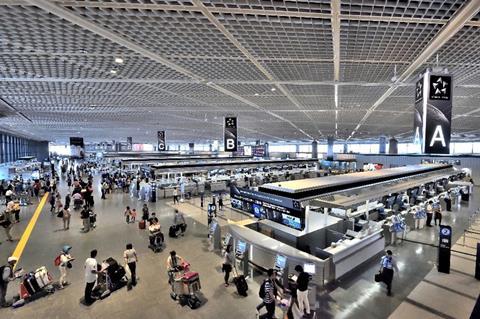
As airports face growing spatial constraints, improving passenger flow is becoming the key to competitiveness. Narita Airport demonstrates how operational excellence and data-driven approaches can transform constraints into advantage while enhancing both capacity and passenger experience.
The challenge of constrained terminals
Airports worldwide are facing a structural dilemma between limited terminal space and growing, increasingly dynamic passenger demand. In constrained environments, congestion is rarely caused by a single bottleneck; instead, it emerges from the accumulation of inefficiencies across multiple processes, including check-in, security, immigration and boarding, as well as misalignment across the overall passenger journey.
As passenger profiles evolve and regulatory requirements change, the challenge is shifting from how to expand capacity to how to maximise existing capacity while adapting to changing conditions. This requires a more holistic view of passenger flow across the entire airport system.
Narita Airport represents a compelling example of how this challenge can be addressed. Despite being originally planned decades ago, the airport continues to compete with leading global hubs. Its sustained SKYTRAX 5-Star Airport rating and strong non-aeronautical revenue performance reflect a long-standing “kaizen” approach – continuously identifying operational issues, optimising existing assets, and implementing new technologies through stakeholder collaboration.
At the same time, operational improvements alone are not sufficient to respond to long-term demand growth, labour shortages, and emerging technologies. To address this, Narita is advancing the New Narita Airport Project, combining infrastructure development with ongoing operational innovation. This dual strategy – enhancing both capacity and efficiency – forms the foundation of its future competitiveness.
Moving beyond static flow design
Traditional terminal planning has been based on relatively stable assumptions of passenger flow. However, in reality, airport operations are highly dynamic. Demand fluctuates throughout the day, airline schedules vary, and disruptions can rapidly reshape congestion patterns.
To respond to these realities, airports are increasingly shifting toward more adaptive approaches, including:
- Dynamic queue management
- Real-time flow monitoring
- Flexible allocation of processing capacity.
These measures allow operators to respond in real time, reducing congestion without requiring additional physical expansion.
Leveraging technology and automation
Technological innovation is a key enabler in this transition.
Digital tools such as virtual queuing and self-service facilities are reshaping traditionally rigid processes, allowing airports to redesign passenger journeys with greater flexibility. Integrated operational platforms further support this by providing real-time visibility across stakeholders, enabling co-ordinated decision-making.
Advanced sensing technologies, including 3D LiDAR and camera analytics, enable real-time tracking of passenger movement. This supports a shift from reactive congestion management to predictive, data-driven control. Proof-of-concept (PoC) validation conducted at Narita Airport has already demonstrated high accuracy, and the results are being leveraged in discussions with railway operators to address congestion at airport railway stations.
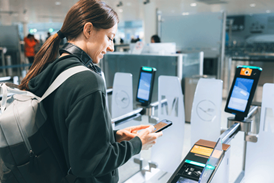
Biometric identity solutions such as One ID (Face Express in Japan) further enhance this transformation. By linking passenger identity across touchpoints like check-in and boarding, they enable seamless, document-free journeys while reducing repeated verification. More fundamentally, they redefine passenger flow by removing traditional process boundaries.
However, further advancing such biometric-driven journeys requires overcoming a critical challenge: data integration between airports and government authorities. While solutions like Face Express have already been implemented, key processes such as immigration remain under separate jurisdiction and operate on independent systems. This limits the ability to fully integrate identity and passenger flow across the end-to-end journey.
To move forward, new frameworks for secure data sharing and governance across public and private stakeholders will be essential. The next phase of airport evolution will depend not only on technology, but on the integration of systems, institutions and operational responsibilities.

From flow optimisation to value creation
Passenger flow is not just an operational issue, it directly impacts customer experience and commercial performance.
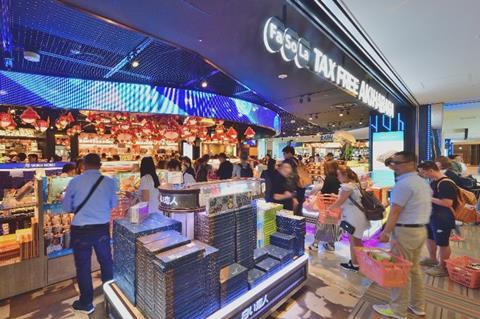
At Narita Airport, analysis shows that the relationship between dwell time and retail revenue is not linear. While very short dwell times limit spending opportunities, excessively long dwell times do not necessarily increase revenue. Instead, an optimal range, typically around 100 to 120 minutes, maximises engagement.
The first 30 minutes after entering the airside area is particularly influential. This highlights the importance of creating not just more time, but meaningful and usable time.
Looking ahead, further promoting Face Express usage, particularly by encouraging early check-in passengers to utilise dedicated biometric lanes, along with minimising non-value-added time in landside areas through technologies such as LiDAR, may help increase effective dwell time in the airside zone and ultimately enhance commercial performance.
A collaborative approach: Total Airport Management
At Narita, passenger flow optimisation has evolved into an integrated approach combining data, technology and stakeholder collaboration.
At the core is Total Airport Management (TAM), a framework that integrates operations across flight management, passenger flow, baggage handling, and facilities. It enables data sharing and co-ordinated decision-making among stakeholders.
Passenger Flow Management (PFM) is a key component, focusing on visualising and optimising movement across the terminal.
Because passenger journeys are seamless while operational responsibilities are fragmented across airlines, security operators, and government agencies, integrated management is essential.
Key initiatives include:
- Real-time visualisation of congestion
- Providing waiting time information
- Co-ordinated operations through shared data.
Together, these efforts shift airport operations from siloed optimisation to system-wide orchestration.
Designing for flow, not just space
As spatial constraints become a defining condition, airport competitiveness will depend less on physical expansion and more on the ability to manage flow effectively.
Narita’s experience demonstrates that even within constrained environments, high performance can be achieved through continuous improvement, data-driven decision-making, and collaboration.
The goal is no longer simply to move passengers efficiently, but to design and orchestrate the entire journey – leveraging time, space and information to create value.
Looking ahead, airports must move beyond traditional planning approaches. By embracing global best practices, open innovation, and cross-stakeholder collaboration, they can transform constraints into opportunities – and redefine the role of the terminal itself.
Masaki Takeuchi will be speaking on the above topic at the International Airport Summit 2026 in Rome. To be in the room when he is on stage and ask him your questions, make sure you register for your free* ticket today.
*Free aviation leader tickets are applicable to senior managers and above from airports, airlines, regulatory bodies and aviation authorities.




No comments yet