
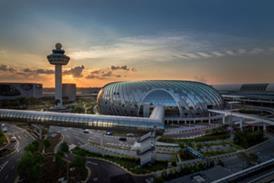
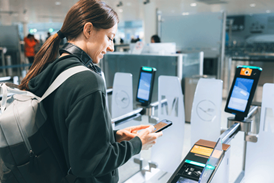
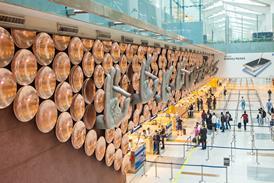

Federico Cabrera, Airport Operations and Customer Experience Manager, Aeropuertos Uruguay, operator of eight international airports including Carrasco Airport, spoke to International Airport Review about how they strive to evoke emotion in their guests, including how they are leveraging data and technology to put the passenger at the heart of the experience.
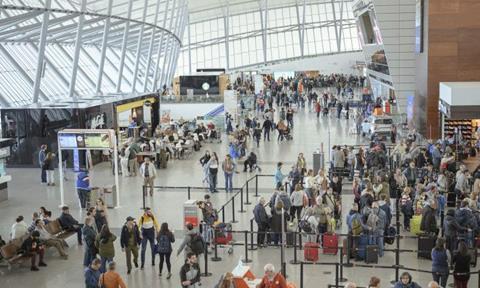
What are your top three operational challenges that your airports are facing?
Our top three operational challenges are:
1. Managing variability. Passenger demand is not evenly distributed, and peaks can be very concentrated. The challenge is not only total volume, but how to absorb sharp peaks without creating friction in security, border control, baggage, or curbside access.
2. Integrating multiple stakeholders into one operational logic. An airport is a very complex ecosystem. Airlines, handlers, security, immigration, customs, retailers and the airport operator all affect the passenger journey. The real challenge is aligning all those actors around a shared service standard and a shared operational picture.
3. Innovate while continuing to operate at a high level every day. Airports cannot stop to redesign themselves. We must invest in digital tools, process redesign, sustainability, and infrastructure upgrades while maintaining punctuality, safety and a strong customer experience in real time.
If I had to summarise it in one sentence, I would say the challenge today is to become more intelligent and more seamless without becoming more complicated.
When you think about your airport’s ‘signature’ passenger experience, what emotions are you deliberately trying to evoke at key moments of the journey?
The first emotion is calm. Air travel can create stress very early in the journey, sometimes even before the passenger enters the terminal. So, one of our main goals is to make the airport feel understandable, fluid and under control.
The second is confidence. Passengers should feel that the airport is working for them; that information is clear, processes are efficient, and staff are available when needed. Confidence comes from predictability.
The third is happiness. We want the airport to feel human, not mechanical. Efficiency is essential, but people also remember whether they felt looked after. That is especially important in a gateway airport, because the terminal is often the first and last physical experience of the country.
So, if we do our job well, the passenger should feel: “This was easy, this was smooth, and I felt respected.”
How do you bring human-centred design into technology decisions, so that solutions are shaped by real passenger needs rather than by what the technology can do?
We start with the passenger problem, not the technology. That sounds simple, but it is one of the most important disciplines in airport innovation.
Before adopting any technology, we ask very basic questions: What friction are we trying to remove? For whom? At what point in the journey? And how do we know the solution will actually make things better?
Human-centred design means observing how people behave in real environments, not how we imagine they behave.
It means paying attention to first-time travellers, elderly passengers, families, international passengers, people with reduced mobility, and also staff who interact with the process every day.
Another important principle is that we do not evaluate technology only by technical performance. We also evaluate it by clarity, trust and usability. A tool may be efficient, but if the passenger does not understand it or does not trust it, then it is not truly successful.
For us, human-centred design means that technology must adapt to the journey, not the other way around.
Can you share a recent project where combining service design and digital tools measurably improved satisfaction, revenues or operational performance?
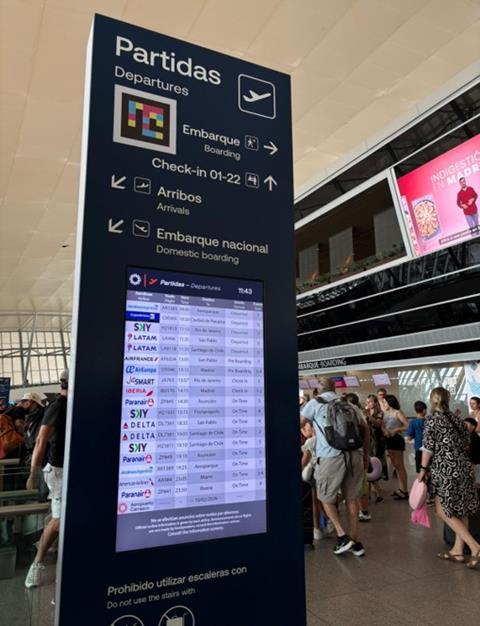
A very strong example is our recent partnership with Navilens, a digital wayfinding tool for passengers with visual impairments. But in fact, it is not only a wayfinding tool, it is integrated with our airport operational database (AODB), giving passengers real-time information about all of the airport processes.
The result was a much more seamless and independent experience for our passengers, with significant reductions in processing time and less need for on-site assistance. Operationally, that improves throughput and allows teams to focus more on exceptions and service rather than repetitive validation.
At the same time, it has a positive effect on perception. Passengers feel that the airport is modern, efficient and easy to navigate. And when the journey is smoother, people are generally more likely to spend time in commercial areas, so there is also a positive indirect impact on non-aeronautical performance.
What data sources do you rely on to understand different passenger personas and to personalise experiences at scale, without making the journey feel intrusive or ‘creepy’?
We rely on a combination of operational data, behavioural data, and direct feedback.
Operationally, we use passenger flow data, queue time data, security throughput, flight schedule data, baggage performance, and terminal occupancy patterns. Those sources help us understand how different passenger groups use the airport at different times.
We also use feedback-based sources, such as ASQ surveys, service observations, complaints, compliments, and direct engagement with passengers and stakeholders.
The key is not to think of personalisation as hyper-individual targeting. In an airport environment, the goal is usually contextual relevance, not intrusive personal profiling. For example, understanding that morning business passengers behave differently from leisure families or transfer passengers allows us to design better environments and communications without crossing privacy boundaries.
Our approach is to use data to make the journey more intuitive and responsive, but always in a way that preserves trust, transparency and dignity.
Where have you seen human-centred design and technology clash, and what did you change in your governance or delivery approach to resolve that tension?
A common point of tension is when a technology project is initially framed as an efficiency project, but the real passenger experience implications are broader. For example, a system may reduce processing time in theory, but in practice create confusion, anxiety, or exclusion for some users if communication, signage, or staff support are not considered.
What we have learned is that technology decisions cannot be owned only by IT or only by operations; they need cross-functional governance.
One of the most important changes is bringing together operations, customer experience, technology, infrastructure, communications, and frontline teams much earlier in the process.
We also try to pilot, observe and refine before scaling. That sounds obvious, but it is critical. Real users often reveal issues that are invisible in a technical design meeting. So, the lesson is that governance must reflect the passenger journey, not the internal organogram.
Looking ahead 5 to 10 years, what is one human-centred innovation you are prioritising that you believe will fundamentally reshape how passengers feel in your terminal?
I believe the most important innovation will be the move toward truly adaptive passenger journeys.
What I mean by that is an airport that increasingly understands the context of the journey in real time and adjusts proactively: information, staffing, routing, support and ambience. Not in a way that feels invasive, but in a way that feels intuitive.
Today, many airports are still designed as one standard process for everyone. But the future is a journey that responds better to different needs; families, elderly passengers, premium travellers, international visitors, passengers with disabilities, or travellers under disruption.
If we do this well, the emotional shift will be very important. Passengers will feel less like they are navigating a system and more like the system is quietly helping them succeed.
We will be discussing how airports leverage data to better understand their passengers, design smoother journeys and build predictive operations at the International Airport Summit taking place in Rome this November. Senior airport leaders can attend for free so do not miss out on this opportunity to connect, network and knowledge-share with your international colleagues in Rome.






No comments yet