

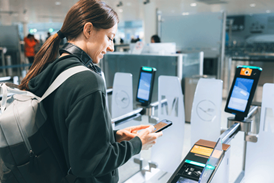
Aviation groups including A4E, ACI Europe and IATA call for urgent flexibility on EES as border delays surge, warning of mounting disruption to passengers, airport operations and Europe’s global competitiveness.
Europe’s leading aviation bodies have issued an open letter to Ursula von der Leyen, warning that the rollout of the Schengen Entry/Exit System (EES) is causing severe operational disruption at airports, with border waiting times reaching up to five hours during peak periods. The signatories urge the European Commission to introduce immediate flexibility measures, including the temporary suspension of EES where passenger volumes exceed border control capacity, as the summer travel season intensifies.
Dear President von der Leyen,
Europe’s airports and airlines fully recognise the vital role of the Schengen Entry/Exit System (EES) in strengthening the security of the European Union’s external borders. For years, our sectors have worked closely with the European Commission and Member States to support its successful deployment. This has required significant investments, extensive operational adaptations and the mobilisation of considerable financial and human resources across Europe’s airports and airlines.
Today we have reached a critical point.
The current implementation of the EES is creating severe operational consequences disrupting passengers and putting border authorities, airports and airlines under unsustainable pressure. We therefore urge your immediate intervention before the situation deteriorates further during the peak summer travel season.
Since the full rollout of the EES in April, waiting times at border control have increased significantly, now reaching up to 5 hours during peak traffic periods. These delays are impacting millions of passengers entering the Schengen Area, including families travelling with young children, elderly passengers and persons with reduced mobility. At the same time, airports and airlines are experiencing growing operational disruption, including flight delays and missed connections and increasing pressure on frontline staff.
This situation has arisen despite Member States making extensive use of the temporary flexibility allowing Border Control Authorities to suspend the collection of biometric data until the beginning of September. While this measure has provided some relief, it has not prevented excessive queues for passengers nor preserved airport and airline operations.
We are now entering the busiest period of the year. During July and August alone, European airports are expected to handle approximately 40 million more passengers than during the previous two months. The Commission and Member States must take stock of the reality of the current situation and of what our air transport system will face over the coming weeks. Without additional flexibility, existing challenges will inevitably intensify. As representatives of Europe’s aviation sector, we have a responsibility to warn that this would result in a significant worsening of an already very difficult situation for passengers.
This is not an issue confined to Europe’s largest hubs. Smaller airports serving major tourism destinations are equally affected. Passengers have already been forced to queue for extended periods outside terminal buildings and on exposed aprons because border control facilities cannot process arrivals quickly enough. Airlines face half-empty planes at gate closing time, while passengers are stuck in border control queues.
Beyond the immediate operational consequences, the reputation of the European Union and the confidence in the regulatory framework are also at stake. Europe must remain a destination that is not only secure but also efficient, welcoming and competitive. Reports already suggest that some international travellers are reconsidering trips to Europe because of the prospect of excessive border delays. This is undermining Europe’s reputation, European tourism and connectivity, in particular.
Against this backdrop, we are deeply concerned by the European Commission’s continued position that implementation is successful, including comments reported by the Financial Times on 25 June, attributing long waiting times to demand-driven airline scheduling:
“A spokesperson for the European Commission said the EES was fully operational and working well [and that] most often long waiting times are not related to the operation of the EES but to pre-existing factors such as concentration of flights in specific slots”
Flight schedules are known a year in advance and respond to passengers’ connectivity needs. The roll-out of EES was meant to be adapted to the realities of passenger numbers, peak season and peak hours of travel – all of which are known well in advance and are in no way a surprise. The success of EES cannot be measured solely by its technical deployment. It must also be judged by its ability to function effectively within the operational environment for which it was designed. At present, the system is failing to deliver one of its core objectives: facilitating efficient border crossings while maintaining the smooth functioning of Europe’s transport network.
We therefore respectfully urge the European Commission to act now and take the following actions without delay:
Immediately provide Member States with all the flexibility needed to completely suspend EES, preventively whenever passenger volumes exceed the operational capacity of border control facilities, at least throughout July and August.
In close cooperation with Member States and industry, establish by September a permanent operational flexibility mechanism allowing Border Control Authorities to suspend EES procedures under clearly defined exceptional circumstances in order to ensure efficient and passenger-focused border management.
Such flexibility measures should remain available until the structural challenges repeatedly highlighted by industry have been fully addressed, including:
Adequate staffing levels at airport border crossing points.
Full stability and reliability of both the central EES platform and national interfaces.
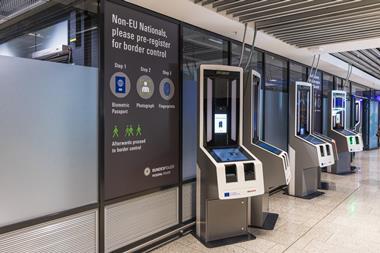
Complete operational and fully functional deployment of Self-Service Kiosks and ABC gates across Member States.
Full functionality and deployment across all Member States of a pre-registration app.
Of course, the above requests do not amount to mean the absence of border control, but simply temporarily pausing the EES whenever needed and justified and reverting to standard Schengen border code checks – including passport stamping.
We fully support the objectives of the Entry/Exit System. Security and efficient border management are complementary goals – not competing ones. Achieving both requires recognising operational realities and responding with pragmatism and a roll-out plan that acknowledges and adapts to these realities.
We therefore call on the European Commission to demonstrate the leadership and flexibility needed to protect both the integrity of the Schengen Area and the millions of passengers who rely on Europe’s air transport system every day.
We thank you for your attention and trust that you will address this matter with the urgency it now demands.
Yours sincerely,
Ourania Georgoutsakou, Managing Director, A4E
Olivier Jankovec, Director General, ACI EUROPE
Thomas Reynaert, Senior VP External Affairs, IATA









No comments yet