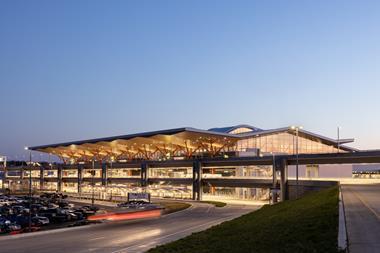

Simon Gorrighan, Aviation Director, shares exclusively to International Airport Review how London Stansted Airport’s £1.1 billion investment programme is set to transform the airport.
London Stansted is currently undergoing an extensive five-year programme to develop the airport, with the project consisting of a significant terminal expansion and the installation of new security technology, among other elements.
The preliminary steps, however, were taken before this programme officially began in 2024, Simon Gorrighan, London Stansted Airport’s Aviation Director, explains. Starting in 2019, the airport filed for an increase in the passenger cap and now has permission to serve up to 51 million passengers a year.
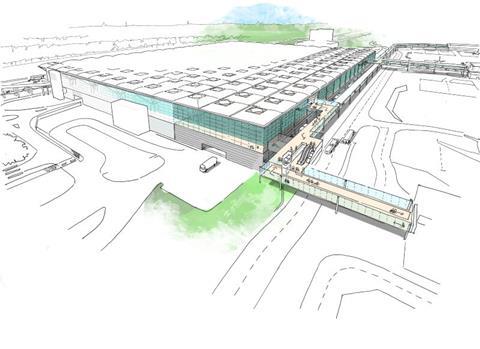
The centrepiece of the £1.1 billion programme will be the terminal expansion, which will see all passenger touchpoints from check-in, security, departure lounges, and retail being enhanced. The terminal itself will expand by 33%, towards the back end of the current terminal. This will be the most significant upgrade London Stansted Airport has undergone since its construction in 1991.
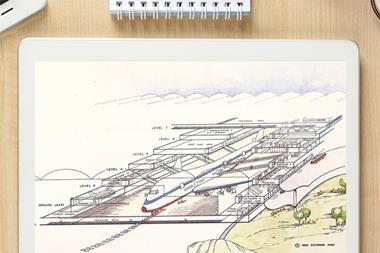
Currently, the airport has a track transit system that connects passengers from the terminal to the satellite departure gates 1 and 2. Part of the expansion will see the construction of Sky Links, walkways to replace the transit system, over the next 18 months. This will provide more efficient connectivity between the main terminal and the satellite gates. Significantly, the Sky Link walkways will give space for the terminal extension.
This installation of next generation security equipment, within an enlarged security hall, will enhance efficiency and enable a smoother passenger experience.”
Pre-construction design work is underway ahead of a decision on the delivery timescales for the extension in 2026.
The programme also includes security improvements, including the installation of next-generation security equipment, as mandated by the UK government.
“We’re carefully sequencing the works so that the airport can remain fully operational with the construction done in phases,” explains Gorrighan.
The full expansion is expected to take three to four years.
A thought-out sequence of works to maintain operational continuity
Regarding whom will develop the airport and what amenities passengers can expect, Gorrighan states that:
“We’re finalising the principal contractor for the big expansion. Enabling works, like relocating pipes and cables, are well underway.
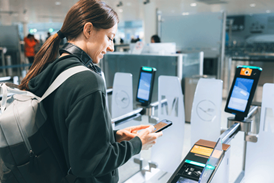
“Passenger flow improvements are key, especially new CTX scanners at security that now allow passengers to leave laptops and liquids in their bags. This installation of next generation security equipment, within an enlarged security hall, will enhance efficiency and enable a smoother passenger experience.”
The programme will also include upgrading the airfield taxiway.
Keeping the passenger front of mind
Enhancing the passenger journey is a central focus. The expansion will improve flow from check-in through security to the departure lounges, while reducing stress points for families and business travellers alike.
Passengers can expect more shops, bars and restaurants, offering a wider selection of food, beverage and retail options. There will be new lounges, in addition to the existing escape and Emirates lounges. Improved wayfinding and signage will also simplify navigation throughout the terminal.
The expanded terminal will benefit from new and additional gate area seating, as well as new wayfinding kiosks. Gate room reconfiguration will create more space for passengers pre-boarding their aircraft.
Passengers will also note flooring and seating upgrades across satellite departure gate two, plus a new bar area. In addition, terminal toilet facilities will undergo a full refurbishment.
Gorrighan highlights that this is all being done with passenger comfort in mind. “We’re designing a brighter, more spacious environment that balances functionality with comfort. Better signage, expanded seating and enhanced retail options will make the passenger journey smoother and more enjoyable.”
Incremental implementation will ensure minimal disruption to daily operations, explains Gorrighan, who notes the importance of maintaining London Stansted’s high levels of operation and passenger care day-to-day, while building the experience of tomorrow.
Aligning sustainability with growth
The programme demonstrates Stansted’s strong commitment to sustainability. The airport aims to achieve net zero by 2038 and is constructing a 14.3 MW on-site solar farm to supply both current and future electricity needs.
“We’re a founding member of the Jet Zero Taskforce and are actively supporting industry-wide decarbonisation,” Gorrighan explains. “It’s important not just for our operations but also to encourage airlines to reduce emissions.”
New facilities and services will require additional staff, benefiting the East of England and north-east London communities.”
Other initiatives include energy-efficient terminal systems and airfield infrastructure upgrades, ensuring the airport’s growth aligns with its climate commitments.
Economic contribution
The expansion is expected to create up to 5,000 new on-site jobs, boosting local employment across terminal operations, retail, lounges and infrastructure. The growth of Stansted will provide significant opportunities for the local workforce, as Gorrighan details. “New facilities and services will require additional staff, benefiting the East of England and north-east London communities.”
The airport’s economic contribution is projected to double to £2 billion annually, highlighting its importance to the regional economy.
The £1.1 billion programme is fully funded by Manchester Airports Group (MAG), which owns Stansted. MAG’s ownership structure is 35% Manchester City Council and 35% IFM, an infrastructure fund, with the remainder split equally between the nine other councils of Greater Manchester. The project involves no public funding.
Of the total investment, £600 million is dedicated to the terminal, while the remainder supports airfield improvements, additional remote parking stands, and replacement of existing assets. “All funding comes from MAG, ensuring that we can deliver this transformational upgrade without relying on public money,” Gorrighan elucidates.