

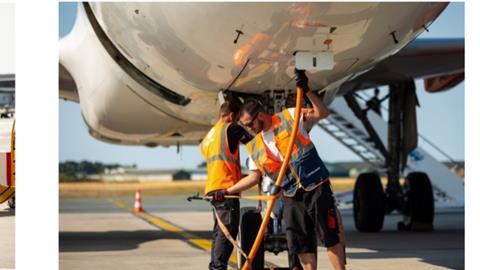
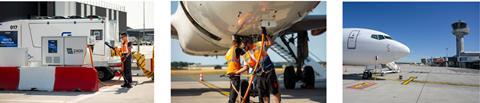
The EU co-financed project equips all 29 passenger stands with 400 Hz ground power and introduces mobile pre-conditioned air units to reduce aircraft emissions.
Bordeaux-Mérignac Airport (BOD) has completed a project to supply electrical power to aircraft on the ground. Airlines can now switch off their auxiliary power units (APUs) at the stand, which reduces direct emissions from their operations.
The project cost approximately €6.5 million and received financial support from the European Union through the Alternative Fuels Infrastructure Facility (AFIF). Banque des Territoires also contributed a €2.2 million mezzanine loan.
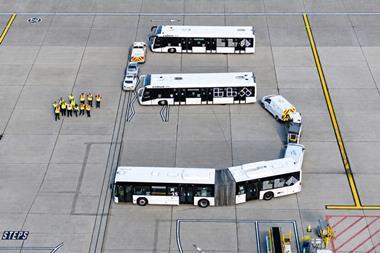
The airport has electrified 20 additional aircraft stands, so all 29 stands serving passenger flights now have 400 Hz electrical power connections. It has also brought 20 mobile pre-conditioned air (PCA) units into service. These provide on-board air conditioning without fossil fuels.
Ground power electrification targets Scope 3 emissions
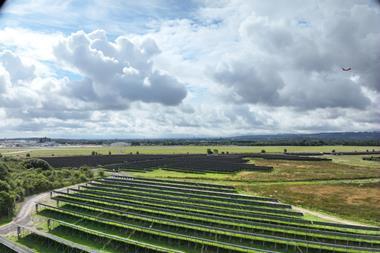
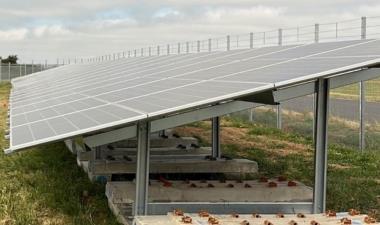
The airport says that replacing fossil fuels with electricity sourced entirely from renewables will avoid approximately 4,100 tonnes of CO₂ equivalent per year from 2027 onwards.
The initiative targets Scope 3 emissions, which are those generated by the airport’s partners and customers. The airport says these are key to reducing its overall carbon footprint. The project is part of Bordeaux Airport’s commitment to decarbonising all aircraft ground operations, a central objective of its Ressources 27 strategy, which a consortium of regional banks is financing.
Simon Dreschel, Chairman of the Executive Board of Bordeaux Airport, said: “This project reflects our determination to transform our operations in response to climate challenges. By equipping the airport with state-of-the-art infrastructure, we are preparing for the future of air transport while meeting environmental requirements.”
The project is in line with the European Green Deal and meets the requirements of the EU’s Alternative Fuels Infrastructure Regulation (AFIR), which will require aircraft stands to have electrical power supplies. According to the airport, the work anticipates these requirements and those arising from the Fit for 55 legislative package.
To mark the milestone, Carlo Coppola joined members of the airport’s Economic Development Committee. He represented the European Climate, Infrastructure and Environment Executive Agency (CINEA), which co-financed the project.
Richard Ferrer, Head of the Alternative Fuels Sector at CINEA, said: “Airports play an important role in decarbonising air transport. By electrifying ground services at aircraft stands, Bordeaux–Mérignac Airport is taking concrete steps to reduce its carbon footprint. With financial support from the European Union, this project, which delivers clear environmental benefits, makes a significant contribution to Europe’s goal of achieving climate neutrality by 2050.”

No comments yet