


International Airport Summit roundtable co-chair Davide Bassano, Head of Sustainability at Gruppo Save, explores why airport decarbonisation must be viewed as far more than an environmental challenge.
For airports, decarbonisation is no longer simply an environmental commitment. It has become a strategic challenge that influences investment decisions, operational resilience, stakeholder relationships and ultimately the long-term value of airport assets. The experience of Venice Marco Polo Airport (VCE) shows that success depends as much on leadership, partnerships and trust as it does on technology.
Net zero is no longer a sustainability issue alone
A decade ago, airport sustainability was often viewed as an environmental programme running alongside the core business. Today, it has become part of the business itself.
Investors, regulators, airlines, local communities and passengers increasingly expect airports to demonstrate tangible progress towards decarbonisation. At the same time, energy efficiency, climate resilience and environmental performance are becoming important indicators of asset quality, access to capital and long-term competitiveness.
For airport operators, this changes the nature of the conversation. The challenge is no longer whether to pursue decarbonisation, but how to do so while continuing to guarantee safe operations, financial sustainability and service excellence.
This is particularly complex because airports are not isolated industrial facilities. They are ecosystems composed of infrastructure owners, airlines, ground handlers, retailers, concessionaires, suppliers and transport providers. Every sustainability decision affects a broad network of stakeholders, each with different priorities and investment horizons.
The transition to net zero is therefore not simply about reducing emissions. It is about transforming an entire ecosystem while ensuring that the airport remains efficient, resilient and competitive.
The cost of decarbonisation
Public discussion around net zero usually focuses on environmental benefits. Far less attention is given to the financial reality of achieving those ambitions.
Airport decarbonisation requires substantial investments. Electrifying vehicle fleets, upgrading energy infrastructure, improving building performance, deploying renewable energy systems, introducing advanced monitoring technologies and developing more efficient operational processes all demand significant capital commitments.
Many of these investments create value over time through lower energy consumption, reduced operating costs and greater resilience. However, the return on investment is often realised over many years rather than within traditional planning cycles.
This creates an inherent challenge for airport management teams. Sustainability investments must compete with other critical priorities such as safety improvements, capacity expansion, passenger experience and regulatory compliance.
Our experience at Venice Airport has shown that effective decarbonisation begins with measurement. Understanding where emissions originate, identifying the most impactful actions and monitoring performance consistently are essential prerequisites for making sound investment decisions.
Data is therefore not merely a reporting tool. It is a strategic asset.
The Scope 3 dilemma: responsibility without control
Perhaps the most complex challenge airports face today is Scope 3 emissions.
For most airports, most emissions associated with airport activity are generated not by the airport operator itself, but by airlines, tenants, contractors, suppliers and the transport systems used by passengers and employees.
This creates a unique dilemma.
Airports are increasingly expected to contribute to emissions reductions that lie largely outside their direct control. They are being held accountable for outcomes that depend heavily on the actions of others.
Traditional management approaches are therefore insufficient. Airports cannot simply impose change across the entire ecosystem. They must instead create the conditions that encourage and enable change. This requires collaboration, transparency and shared objectives.
At Venice Airport, one of the key lessons has been that decarbonisation is ultimately about building partnerships. Success depends on engaging stakeholders, aligning incentives and creating a common understanding of long-term goals.
In many ways, the airport operator is evolving from infrastructure manager into sustainability co-ordinator, helping different actors move in the same direction.
Decarbonisation cannot stop at the airport boundary
One lesson that has become increasingly clear is that airport decarbonisation cannot be confined within the perimeter fence.
Airports are often described as ecosystems because they bring together airlines, handlers, concessionaires, suppliers and service providers. While this is true, it is only part of the picture. Airports are also deeply embedded within broader territorial ecosystems that include local communities, municipalities, regional authorities, educational institutions and businesses. For this reason, any meaningful decarbonisation strategy must look beyond the airport itself.
Too often, sustainability programmes focus exclusively on emissions generated within operational boundaries. However, airports do not operate in isolation. Their success is closely linked to the success and wellbeing of the territories that surround them.
Without a shared vision involving local administrations, public authorities and neighbouring communities, the path of transformation risks becoming difficult, slow and frequently conflictual. Even the most ambitious sustainability initiatives can encounter resistance if they are perceived as creating value only for the airport operator while imposing costs or constraints on the wider community.
The challenge, therefore, is not only to reduce emissions. It is to create shared value.
At Venice Marco Polo Airport, we increasingly view sustainability as an opportunity to strengthen the relationship between the airport and its territory. Decarbonisation investments can generate benefits that extend well beyond environmental performance. They can support local economic development, stimulate innovation, improve the quality of infrastructure and contribute to creating skilled employment opportunities within the surrounding area.
This broader perspective is essential because airports are often among the largest economic engines of their regions. Thousands of jobs, directly and indirectly, depend on their activity. As a result, sustainability strategies must be designed not only to protect the environment but also to support long-term prosperity for the communities that host airport infrastructure.
From this perspective, engagement becomes just as important as technology. Communities, local administrations and regional stakeholders should not simply be informed about sustainability strategies after decisions have been made. They should be involved in the journey from the beginning, understanding both the challenges and the opportunities associated with the transition.
Transparency, dialogue and participation help transform sustainability from a corporate objective into a shared regional ambition. When airport and territory move in the same direction, decarbonisation becomes more than an environmental goal. It becomes a platform for economic development, innovation and social cohesion.
Ultimately, the strongest sustainability strategies are those capable of creating value beyond the airport itself. Because the future of an airport cannot be separated from the future of the community that surrounds it.
Technology enables change, but leadership drives it
The aviation sector rightly places significant expectations on innovation.
Electrification of ground support equipment, renewable energy systems, smart buildings, advanced energy management platforms, digital twins and artificial intelligence all have the potential to accelerate emissions reductions while improving operational efficiency.
At Venice Airport, this vision has translated into a range of initiatives over recent years. Investments in energy efficiency, progressive electrification of operational assets, enhanced monitoring of energy consumption, renewable energy solutions and the integration of sustainability into infrastructure planning have all become important building blocks of our decarbonisation pathway.
These initiatives have produced environmental benefits, but they have also generated operational value through improved efficiency, better resource management, greater resilience and a deeper understanding of how resources are consumed across the airport ecosystem.
Yet technology alone is not enough.
Every successful sustainability programme ultimately depends on leadership, governance and organisational culture. New technologies create opportunities, but people and organisations determine whether those opportunities become tangible results.
Technology can provide the tools. Leadership provides the direction.
Decarbonisation starts in the boardroom
One of the most underestimated aspects of airport decarbonisation is the role of top management and shareholders.
The transition to net zero requires substantial long-term investment. Many of these investments cannot be justified solely through short-term financial returns. They require conviction from leadership and confidence from ownership.
For this reason, sustainability cannot be treated as a standalone environmental initiative. It must become an integral part of corporate strategy.
At Venice Airport, we have learned that meaningful progress is only possible when sustainability objectives are embedded in broader business planning and supported at every level of the organisation.
Some of the most important decisions are not technical decisions. They concern capital allocation, investment priorities and the ability to maintain a consistent strategic direction over time.
Increasingly, investors, infrastructure funds and financial institutions are evaluating assets not only on current financial performance but also on their future resilience. Climate preparedness, energy efficiency, operational flexibility and environmental credibility are becoming indicators of long-term value.
Viewed through this lens, decarbonisation is not simply a cost. It is an investment in asset quality, competitiveness and future enterprise value.
The airports that successfully navigate this transition will not simply reduce emissions. They will strengthen their market position, improve access to capital, enhance the attractiveness of their assets and create long-term value for shareholders and stakeholders alike.
Navigating uncertainty without losing direction
If there is one lesson the past few years have taught us, it is that long-term plans must increasingly be implemented in short-term uncertainty.
Airports invest with horizons measured in decades. Yet the environment in which those investments are made can change dramatically within months.
Energy crises, inflationary pressures, financing conditions, geopolitical conflicts, supply chain disruptions and evolving regulatory frameworks can all reshape priorities and alter business assumptions.
Many of these factors are entirely outside the control of airport operators.
This creates a significant challenge. Decarbonisation requires long-term commitments and substantial investments, but uncertainty makes it difficult to determine precisely when, where and how capital should be deployed.
The temptation is often to wait for greater certainty before acting. However, certainty rarely arrives. The greatest risk for airport operators today is not investing in the wrong decarbonisation technology. It is losing strategic direction while waiting for certainty that will never arrive.
The real challenge is to combine strategic consistency with tactical flexibility.
Airports must maintain a clear long-term trajectory while remaining agile enough to adapt individual initiatives as technologies, markets and regulations evolve. This means prioritising actions that create value under multiple scenarios, strengthen competitiveness and improve resilience regardless of external circumstances.
At Venice Airport, this principle has become central to our approach. Sustainability commitments must remain stable and credible over the long term, even when implementation plans need to adapt to changing conditions.
Stakeholders understand that circumstances will evolve. What they expect is consistency of purpose and the determination to honour commitments over time.
From emissions reduction to value creation
The conversation around net zero often focuses on carbon reduction targets. While those targets remain important, they represent only one dimension of the challenge.
The broader objective is to create airports that are more efficient, more resilient and better positioned for the future.
Many decarbonisation initiatives deliver benefits that extend well beyond emissions reduction. They improve operational reliability, reduce energy dependency, strengthen risk management and enhance the attractiveness of airport assets for investors and business partners.
Ultimately, sustainability should not be viewed as a constraint on growth. It should be viewed as a catalyst for creating stronger businesses, better infrastructure and more resilient territories.
The experience of Venice Airport has reinforced a simple but important lesson: successful decarbonisation is not about finding one perfect solution. It is about maintaining a clear vision, making consistent decisions and bringing an entire ecosystem along the journey.
This ecosystem includes shareholders and employees, airlines and suppliers, institutions and regulators, but also local communities and the territories that host airport infrastructure.
Every airport will follow its own path, shaped by geography, business model and regulatory context. Yet one principle increasingly applies across the industry.
The question should not be whether airports can afford to decarbonise. The real question is whether, in the long term, airports can afford not to.
Because sustainability is no longer only about reducing emissions. It is about building resilient assets, stronger businesses and airports that will remain relevant, competitive and valuable for future generations.
And it is about creating value that extends beyond the airport boundary, strengthening the territories and communities that make airport growth possible in the first place.
The most successful airports of the future will not be those that decarbonise alone, but those that bring their entire ecosystem, from shareholders to local communities, along the journey.
How much does airport decarbonisation really cost - and how far does an airport’s responsibility extend?
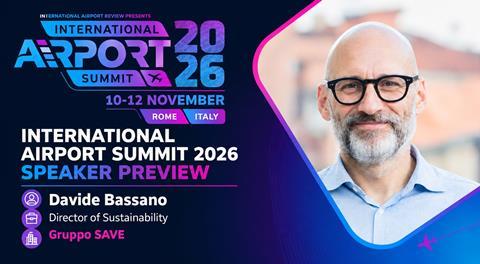
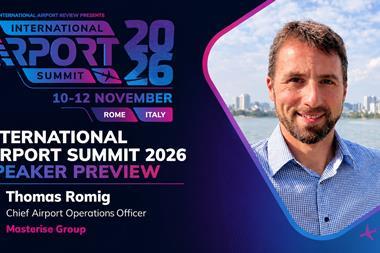
These are the questions Davide will be taking to the table at the International Airport Summit 2026, where he will co-chair two dedicated roundtable discussions for airport leaders.
On Day 1, join the conversation on ‘Net zero on the ground: what decarbonising airport operations actually costs’, exploring the real capital and operational implications of fleet electrification, renewable energy and infrastructure retrofitting, and how airports can make the financial case for investment.
On Day 2, the discussion turns to one of the industry’s most complex challenges: Scope 3 emissions. When airlines, ground handlers, concessionaires and surface transport providers generate a significant proportion of an airport’s footprint, what influence do airport operators really have, and where do the limits of responsibility lie?
If you are a CEO, sustainability leader or senior airport executive navigating the realities of decarbonisation, join Davide and fellow industry leaders for an open, practical discussion on the challenges, costs and decisions shaping the path to net zero.
Join us at the International Airport Summit 2026 and take your seat at the table.


The energy transition at Venice Marco Polo Airport: A Q&A with Davide Bassano, Director of Sustainability part 2

The energy transition at Venice Marco Polo Airport: A Q&A with Davide Bassano, Director of Sustainability, part 1
Venice Marco Polo Airport’s road to net zero: designing an energy future in harmony with the lagoon






No comments yet