
Dr. Jan-Henrik Andersson, Chief Commercial Officer & Chief Security Officer of Munich Airport and a speaker at this year’s International Airport Summit in Rome, explains how CT screening, automation and remote operations are delivering stronger security, greater efficiency and a smoother passenger experience.

Munich Airport (MUC) began evaluating next generation security screening technologies at an early stage to develop a clear vision of the future configuration of its passenger screening checkpoints. The Free State of Bavaria is responsible for providing aviation security screening operations, acting as the competent aviation security authority.
Thanks to the long-standing, highly collaborative partnership between the aviation security authorities and the airport operator, screening processes and checkpoint design have been continuously enhanced. The shared objective of both the Aviation Authority of Southern Bavaria and Munich Airport has been to maintain the highest levels of security effectiveness while simultaneously improving passenger experience and reducing stress throughout the screening process.
A long-term vision for next generation screening
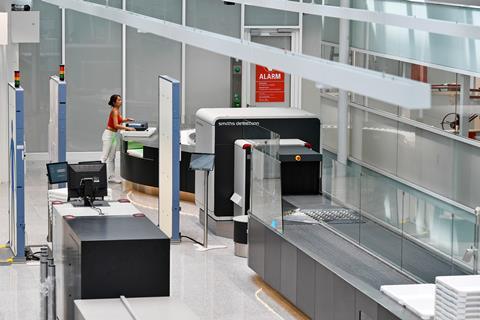
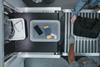
As a major international hub airport, Munich recognised early on that there were strategic benefits of adopting the C3 standard as the future foundation of passenger screening operations. The transition represented a significant commitment in terms of infrastructure adaptation, investment, and workforce training. In retrospect, this decision has proven highly successful. Passenger waiting times have been substantially reduced while the number of trays required per passenger has decreased significantly, contributing to a smoother and more efficient screening process.
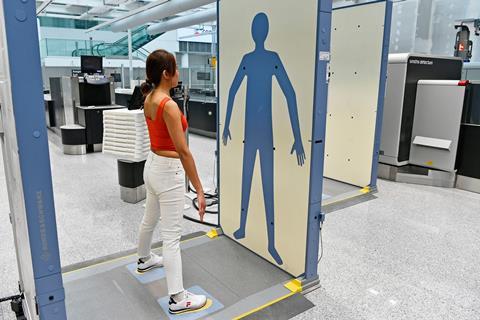
Munich Airport was also among the first airports in Europe to introduce security scanners as the primary screening method in combination with CT technology. Today, throughput levels achieved per screening lane rank among the highest within the European airport sector.
Balancing efficiency with the passenger experience
A frequently raised question concerns why Munich Airport does not seek to maximise throughput at all costs. As a premium hub airport, Munich deliberately pursues a different approach. Our objective is not simply to achieve the highest possible throughput figures, but rather to improve operational efficiency through innovative, sustainable, and passenger-centric solutions while maintaining robust security standards.
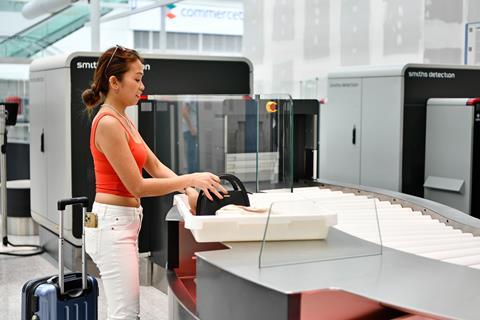
One example is the significantly reduced need to relocate screening personnel between checkpoint areas. By transmitting screening images to centralised remote screening facilities, screening lanes with lower passenger demand can effectively support those with higher demand. As a result, more screening officers remain available directly at the checkpoint where passenger interaction and operational support are most needed. This operating model has proven particularly effective in Munich due to the centralised management and co-ordination of screening operations.
Automation supporting security personnel
Further enhancement is achieved through the implementation of Automated Prohibited Item Detection Systems (APIDS). This technology is expected to further support screening personnel, reduce workload, and enhance the overall effectiveness and efficiency of screening operations.
A modern CT-based screening lane can achieve a throughput that is almost two and a half times greater than that of conventional screening systems
Overall, Munich Airport has achieved highly positive results by deploying CT technology and next generation screening lanes. At the same time, the importance of system availability and resilience has increased significantly. A modern CT-based screening lane can achieve a throughput that is almost two and a half times greater than that of conventional screening systems. Consequently, the operational impact of a single lane outage is considerably greater than in a traditional screening environment.
Nevertheless, the challenges associated with the implementation of advanced screening technologies vary considerably from airport to airport. For many smaller airports, securing the necessary funding remains a major obstacle. In addition, substantial modifications to existing infrastructure are often required, resulting in further investment needs and implementation challenges.
The future of checkpoint innovation
Overall, the introduction of CT technology represents a major advancement for aviation security, airport operational performance, and passenger experience. At the same time, the technological evolution of checkpoint screening is far from complete. Significant opportunities remain for further innovation, automation, and efficiency improvements that will continue to strengthen both security performance and passenger clearance in the years ahead.
I will be speaking about this topic in more depth during my session ‘Delivering throughput with CT, automation and realistic regulatory models’ at the International Airport Summit 2026 taking place on 10-12 November.
Make sure you are in the room to hear our discussion first hand, ask questions of the panel and network with us afterwards.
Register for your complimentary aviation leader ticket today.
*Complimentary aviation leader tickets are applicable to senior managers and above from airports, airlines, regulatory bodies and aviation authorities.

No comments yet